
In the Media
The following is a sample of where Wealth Within has been profiled in the media.

New Years Resolutions
Australian Financial Review - 18 Dec. 10
Dale Gillham, Chief analyst, Wealth Within says “reducing debt” is financial author and adviser Dale Gillham’s new year’s resolution, but there’s a twist: apart from his credit card, paid off each month, he has no debt in his name. His house, car and investment properties are in a family trust. “No asset is in my own name except my clothes,” he says. But he wants to be cashed up for a savage sharemarket correction he’s expecting within 18 months. “I’m happy to stay in shares in my super fund for the next six months but then I want to hold much more cash. My goal is preparing for the profitability of the market coming back in 2012 to its 2003 level,” he says...

Mighty Rise of The Small Caps
Courier Mail - 20 Nov. 10
Fund manager Dale Gillham, from Wealth Within, also warns that some people may swing too far toward the risk side of the market. "Essentially, we are seeing the groundswell and the start of a repeat of the tech boom, where investors with little or no knowledge are buying into small-cap shares hoping to make a killing," he says. "This is greed or emotional investing at its worst and should be avoided...

Stock Market Firmly in The Red
PR Newswire Cision - 19 Nov. 10
An analyst at Wealth Within, Janine Cox, said the falls were unsurprising as the market was due to pull back after recent strong trade. "We expected we would get two weeks down on the market, and it is looking like it is happening now," Ms Cox said. "I think our market is quite strong and is just doing its thing." Ms Cox said the downward run would not last long and she expected the market to break through 5,000 points over the festive season. "The market has been like a steam train over recent weeks," she said. It is not going to stop and do an about face. Even with the news about China, the Chinese economy is...

Australia the Lucky Country
Have a Go News - 20 Oct. 10
We are consistently told we live in the lucky country, yet constantly we see evidence to the contrary. I would not call it lucky that we have some of the highest interest rates in the world or that we pay more in bank fees and other essential services than many Western countries. Added to this is the fact that Australia's average age is increasing and baby boomers who represent more than 30 per cent of our population are now retiring. The facts are that 75 per cent of all retirees are still reliant on some form of government pension, with 50 per cent of these people relying on a full pension at around $14,000...

Poll Impact
Money Management Magazine - 19 Oct. 10
Dale Gillham, head of education and advisory firm Wealth Within, says the main challenge for investors is not the existence of a minority government in Australia, but adjusting to the continuing global economic and investment uncertainty. “Too many investors still run with the herd, which usually means doing the wrong thing at the wrong time. Success in the current environment depends on avoiding this mentality and instead keeping a level head as you look for good buying opportunities...
Making A Difference
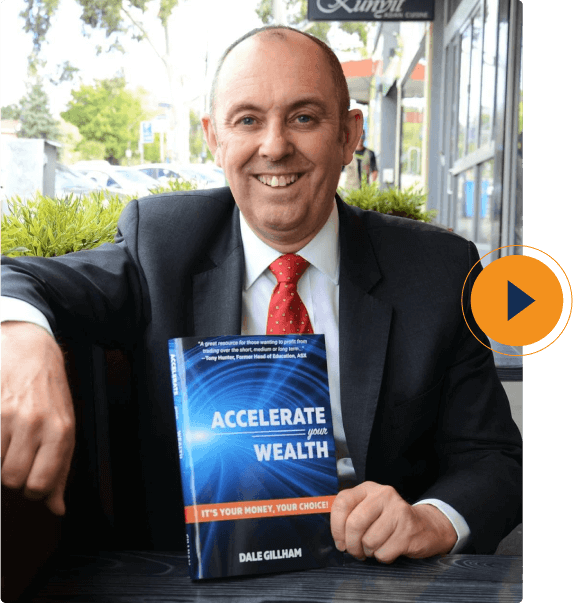
Wealth Within was co-founded in 2002 by Dale Gillham to provide a range of solutions to support our clients achieve their financial goals.
Our mission has always been "customer first in everything we do" – which means breaking down a lot of the myths in the market that hold individuals back from achieving their financial goals.

How We Can Help You Grow
 Trading Courses
 Carefully curated educational courses from Australia's most independently recognised share trading educator.
View Courses Learning Center
 Our extensive library of world-class education accumulated from decades of experience and expertise.
Keep Reading Investment Shop
 Accelerate your wealth with simple DIY investment strategies that let you take control of your investments.
View Investment Shop5 Stars
Years in business delivering high-quality education
of students rate the quality of education as excellent or very good
of students recommend Wealth Within