T3: for and against
Published in The Age, October 2006
Jesse Hogan
FOR: T3 may well prove a good call over long term
ONE of the biggest barriers to the Federal Government's plan to sell at least $8 billion of Telstra shares has nothing to do with the offer that opens to retail investors today, but everything to do with the preceding offer seven years earlier.
And, according to Steve Johnson, telecommunications analyst for The Intelligent Investor, the lingering resentment from investors who paid $7.40 a share in T2 in 1999 and who have watched the value of their investment halve, may prevent them from making a rational decision on T3.
"There's a lot of anger out there about Telstra at the moment, about Telstra 2 and the price that they paid versus the price it is now, but that has absolutely nothing to do with how T3 is going to perform," he says. At the launch of the offer on October 9, Finance Minister Nick Minchin said the sharemarket had "essentially got it right on Telstra" by dragging down its share price, which had been inflated during the technology boom of the late 1990s.
Senator Minchin believes investors now have a better understanding of Telstra's value, and that this has been reflected in the lower cost of T3 shares compared with T2.
"We're selling into a well-informed market, and this is the fair price for the stock," he said. Like T1 and T2, the third Telstra offer has been loaded with sweeteners to entice retail "mum and dad" investors.
For T3 the payment will again be split into two instalments, payable 18 months apart, with the initial $2 payment for retail investors representing a 10¢ discount compared with financial institutions. The cost of the second instalment will not be known until after T3 applications close on November 9, and will depend on how much institutions will be prepared to pay.
Existing Telstra shareholders will be guaranteed the greater of 3000 T3 shares or one T3 share for every Telstra share they already own. T3 shareholders who do not sell their holding before the second instalment will also be given a loyalty bonus of one additional T3 share for every 25 they initially bought.
The major sweetener is the yield on the initial investment over the first 18 months, with investors to receive the full dividend payments — expected to remain at 28¢ for the current year at least — despite their not having to pay for their allocation in full.
Mr Johnson rates Telstra as a long-term buy and is recommending T3 to his clients, but warns it is "very, very dangerous" for investors to invest in T3 for short-term gain, because a significant decline in share price would offset the yield.
Fat Prophets senior analyst Greg Canavan describes T3 as a "long-term investment with a short-term yield to keep you in there". He is not concerned by the Telstra board's non-binding decision to maintain the dividend at 28¢.
"Doomsayers will say, 'well, they're borrowing to pay a dividend — it's the end of the world, let's get rid of it', but … plenty of other companies do the same thing and don't cop the same sort of negative treatment," Mr Canavan says.
Baker Young Stockbrokers associate director Mark Potter, on the other hand, expects Telstra will reduce its dividend payments after next year, but says that would not necessarily be bad news for shareholders.
"It depends how they want the business run," he says. "You could milk the cow for all it's worth and be left with very little at the end of the day, or you could reinvest a good proportion of your profit and look to grow the business in the long term."
Mr Canavan believes the expected positive impact of Telstra chief Sol Trujillo's five-year transformation plan, which involves overhauling the company's complex internal networks and cutting its workforce by 12,000, is yet to be reflected in the telco's share price.
"I'm a non-techie, and it took me a long time to understand the magnitude of the potential for a turnaround," he says. "For those investors who really look at this completely objectively, without putting the emotion of the past government stitch-up in there, I think they'll participate (in T3)."
While Telstra will have to cope with declining revenues from its fixed-line telephone network, due to the declining cost of mobile phone calls and the increasing popularity of cheap internet-based calls, Mr Johnson believes the company will offset this by moving customers to bundled, flat-rate plans for all their telco services.
"The technology is definitely moving towards free phone calls and calls over the internet, which a lot of people see as the death of Telstra, whereas we see it as an opportunity for them to have a broadband internet connection in every person's house in the country and to be providing a whole lot more services as well," he says.
Mr Johnson believes long-term investors will eventually look back at T3 as being a "reasonable offer".
"T3's half the price T2 was and it's the same company you're buying into, so … it's a much better deal than the previous one was," he says.
AGAINST: prime shares don't need sweeteners
THE generous terms offered to retail investors to participate in the third Telstra share offer are the very reason why financial adviser Graham Middleton is telling his clients to steer clear.
"Good shares don't require all this bullshit around them," he says. "A good share issue comes out and walks away."
Mr Middleton, a director and principal of Synstrat Management, likens the inducements in the T3 offer to developers who offer rental guarantees when selling apartments off the plan, in that it implies the rent will fall once the guarantee period finishes.
The 2.15 billion Telstra shares on offer for T3 represent only about a third of the Federal Government's 51.8 per cent shareholding (an additional 322.5 million shares could be sold if there is strong demand from institutional investors).
The remaining shares will be transferred into the Government's independently run Future Fund, which has a mandate to begin selling down its multibillion-dollar Telstra shareholding some time after a two-year escrow period.
T3 investors will initially receive only an instalment receipt, which probably will be able to be traded on the stock exchange. The receipts will be converted into a full Telstra share once the second instalment is paid in May 2008.
Sale organisers are trying to dissuade investors from selling out before the part-payment period has ended by promising one bonus share for every T3 share they still own after that period ends.
Mr Middleton expects many shareholders will then plan to sell out of Telstra due to the prospect of the Future Fund selling huge parcels of shares, which would make other investors' shares less sought after.
"What the danger is, at 18 months plus one day, is that there'll be a rush of all these people that have got their bonus share and discount … who will sell their shares," he says.
"Whenever you try and dam up market forces by having some trickery, it comes out at some other time and place. It's pure economics — water finds its way to the lowest point."
Mr Middleton believes the Government should instead transfer all its 51.8 per cent shareholding into the Future Fund, and instruct the fund's manager to sell 1 per cent of the shares each month at prices determined by the market.
The main risks listed in the T3 prospectus — besides Telstra's concerns about the appointment of former prime ministerial adviser Geoffrey Cousins to its board — are the prospect of increased telecommunications regulations and the possibility chief executive Sol Trujillo's extensive five-year transformation plan may not succeed.
The day after the prospectus was released, investment bank Morgan Stanley — part of the T3 institutional sales team — downgraded its recommendation on existing Telstra shares to "underweight".
The bank's telecommunications analysts, Andrew Hines and Sachin Gupta, cut their 12-month share price target for Telstra by 23¢ to $3.46 in the belief the telco's recent investor briefing had left "too many questions unanswered".
They were concerned about the revenue threat from the unconditioned local loop declaration, which gives rivals the right to install their own broadband equipment in telephone exchanges, effectively bypassing the Telstra network.
The analysts also said the rise in Telstra's share price in the weeks before the T3 prospectus was released was due to anticipation of the offer. "Once the T3 dust has settled, Telstra's relatively high valuation, operating risks and transformation execution risks will result in share price pressure," they wrote in a note to clients.
A research report from Macquarie Bank released on the same day set a 12-month price target of $3.50, highlighting the regulation and competition risks in the T3 prospectus.
"The negative impact of these over the next few years will outweigh any benefits management can extract from its transformation program," the report said.
While Mr Middleton is supportive of Telstra management, he says the Government's influence will continue to affect the company after the T3 sale.
"You're still going to have the National Party out there screaming that they want a phone box in every cow paddock, and you're still going to have the regulatory things … and you're going to have the political tensions with the Government."
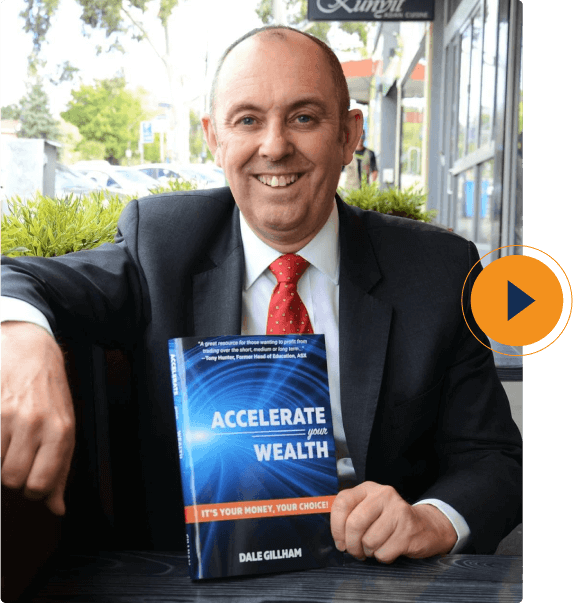
Dale Gillham, chief analyst for investment adviser Wealth Within, says the extensive promotion of T3 is like "the Government going out on a snake-oil salesman tour around the country trying to sell something that's got no real value in it to people".
"They're doing this huge $20 million advertising campaign to get mum and dad to buy it because the institutions don't want to buy it, and to me if institutions don't want to buy it why the hell would I buy it?"
He expects Telstra shares will fall below $3 in coming years. As such, he is advising clients to avoid T3, then "wait and get a better deal later on".