10 ASX Stocks Everyone Should Be Watching After the Market Crash
By Dale Gillham and Fil Tortevski
Reading Time: 16 minutes
General Advice Disclaimer
This article is for general educational purposes only and does not take into account your personal financial circumstances, objectives or needs. Before making any investment decisions, consider your individual circumstances and seek independent financial advice if necessary.
The Australian stock market has crashed almost 10% in less than a week, and if you are asking whether now is the time to buy the dip, you are not alone. In a special episode of the Australian Stock Market Show, Wealth Within's Dale Gillham was joined by senior analyst Filip Tortevski and head of Blueberry Markets sales Zoran Kresovic to break down ten ASX stocks that could represent the best rebound opportunities of the year.
Alongside the stock analysis, the team also tackled what is happening with oil prices, the Australian dollar, a major warning sign from BlackRock's private credit fund, and the real estate sector, all of which have direct implications for your portfolio.
For anyone still getting their feet wet in the market, understanding the basics of how prices move and what drives them is essential before acting on opportunities like these. Wealth Within's comprehensive guide on the stock market for beginners is a great place to start building that foundation.
Oil, Currencies, and the Macro Picture
Before diving into individual stocks, the team set the scene for the current market environment. Oil had spiked above $100 per barrel on the back of escalating Middle East tensions, though Filip noted that spare capacity in global oil reserves remained relatively healthy, suggesting the spike was driven more by fear than by a genuine supply crunch.
He expected oil to settle down over the coming weeks, but acknowledged that day-to-day volatility would remain elevated as long as the geopolitical situation continued to evolve.
Zoran brought a currency perspective, explaining that the US dollar was gaining significant strength as other currencies weakened during the crisis. He linked this back to inflation, noting that if oil prices remained elevated, headline inflation numbers would rise, particularly because volatile items like petrol are included in the consumer price index.
For Australia, this added another layer of risk, with the RBA potentially forced to hike interest rates further if inflation reaccelerated. However, Zoran was careful to note that things can change very quickly, pointing out that developments around sanctions, diplomatic talks, and troop movements can shift the outlook overnight.
Dale reinforced a critical point for viewers: you do not need to understand global oil markets, currency dynamics, or geopolitical strategy to trade profitably. What you need is to understand what you are doing with your own portfolio, have clear rules, and stick to them regardless of the noise.
Aussie Broadband: A Clean Trending Stock
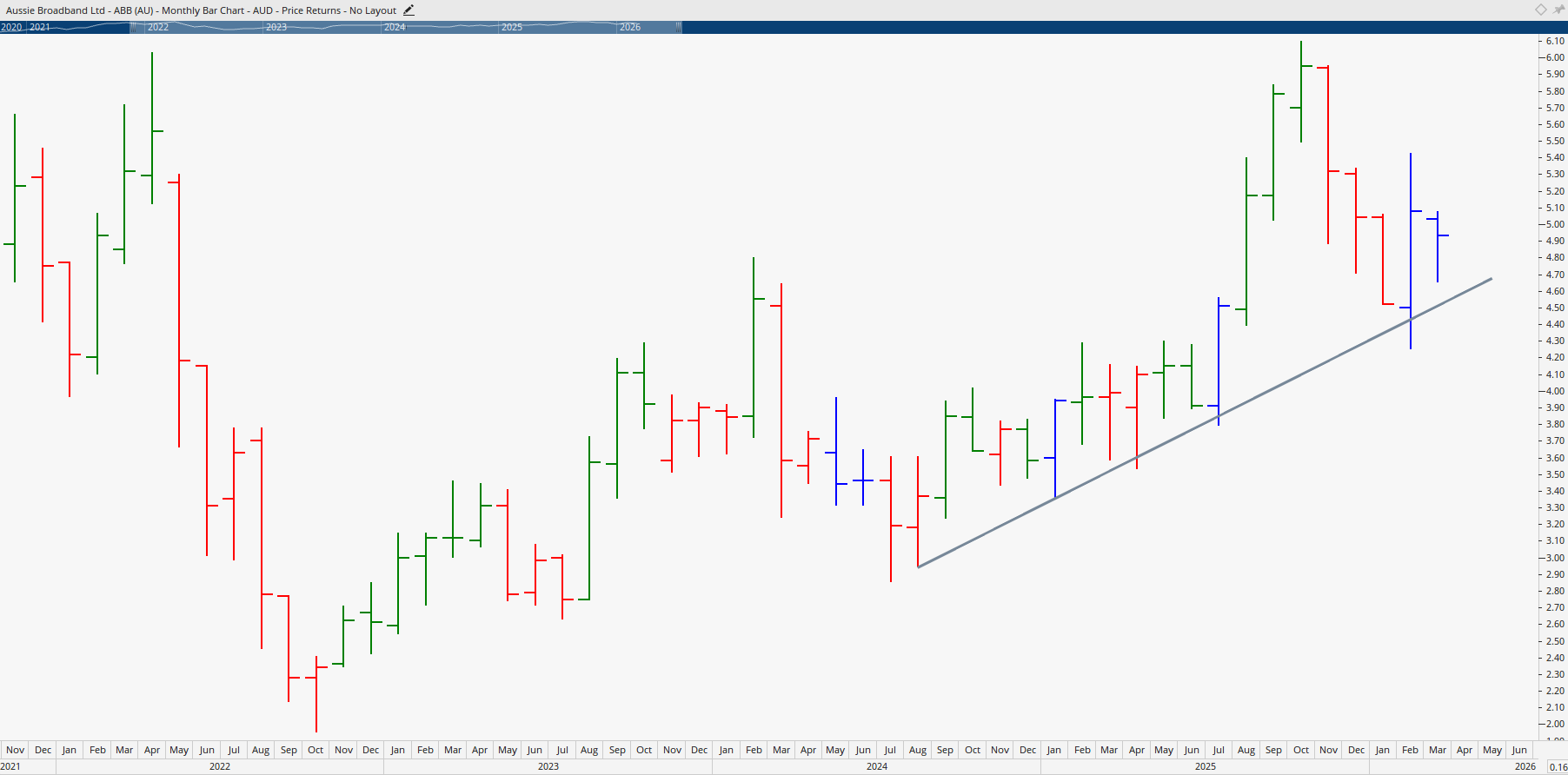
The first stock analysed was Aussie Broadband, and Filip was clearly enthusiastic about it. The stock had broken through to a new all-time high in October 2025 and was now pulling back in line with the broader market correction. What stood out was the quality of the trend. Filip described the price action as super clean and super easy to trade, making it an ideal candidate for newer traders looking for straightforward setups.
The key observation was that despite the significant weakness across the market during February and March, Aussie Broadband was still holding well above its earlier lows and remained on its momentum line. The buying that had come through strongly in the preceding months had not been meaningfully undone by the selling pressure.
Filip estimated that even just a return to the all-time high represented roughly 30% upside from current levels, and as long as the stock maintained its trend and support levels, the bullish case remained intact. If it broke below those levels, the view would change quickly, but for now, this was being treated as a dip within a strong uptrend.
Aristocrat Leisure: A Falling Knife to Avoid
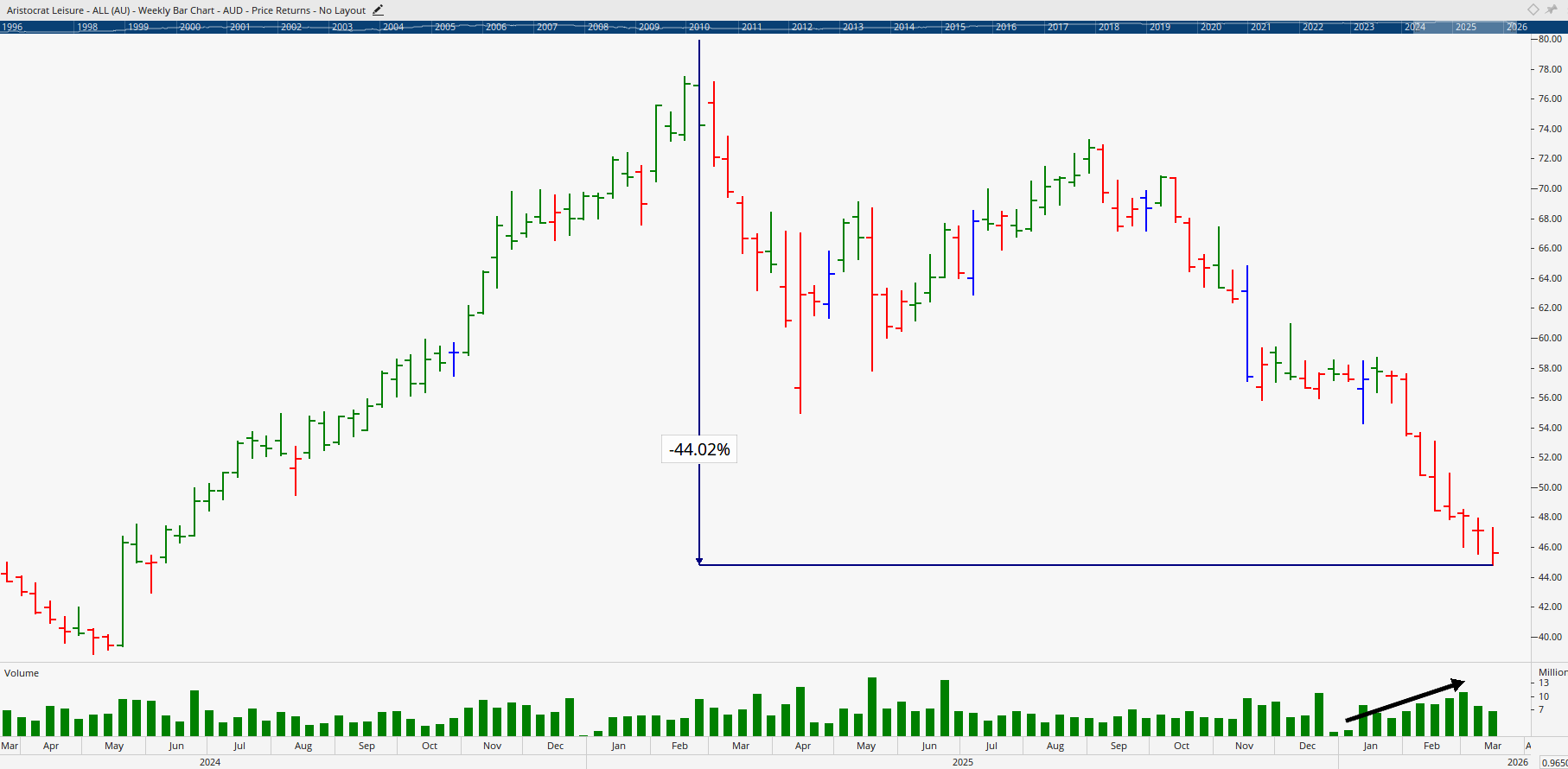
Zoran took the reins on Aristocrat Leisure, and the verdict was blunt. Down 43 to 44% from its all-time high, the stock was in a long-term downtrend with no signs of a reversal. Volume was increasing as the price fell, indicating sustained selling pressure with more sellers than buyers. Despite a period of sideways consolidation around the $55 level in early 2026 that may have tempted some investors to buy, the stock subsequently broke down aggressively and continued lower.
Zoran placed Aristocrat firmly in his red category, which includes stocks that are not to be bought and only reviewed once a month at most. He noted that even if the stock eventually bottoms out, it takes a long time for a new trend to form, and patience is critical.
Filip added context by noting that historically for top 20 or top 30 stocks, corrections of 40 to 50% often do present eventual buying opportunities, but the key word is eventual. You need to wait for the stock to stop falling and start rising before committing capital.
For anyone still learning how to distinguish a dip from a crash, the Short Course in Share Trading teaches the foundational techniques for identifying trends, reading volume, and knowing when to buy and when to step aside.
Challenger: A Breakout Worth Watching
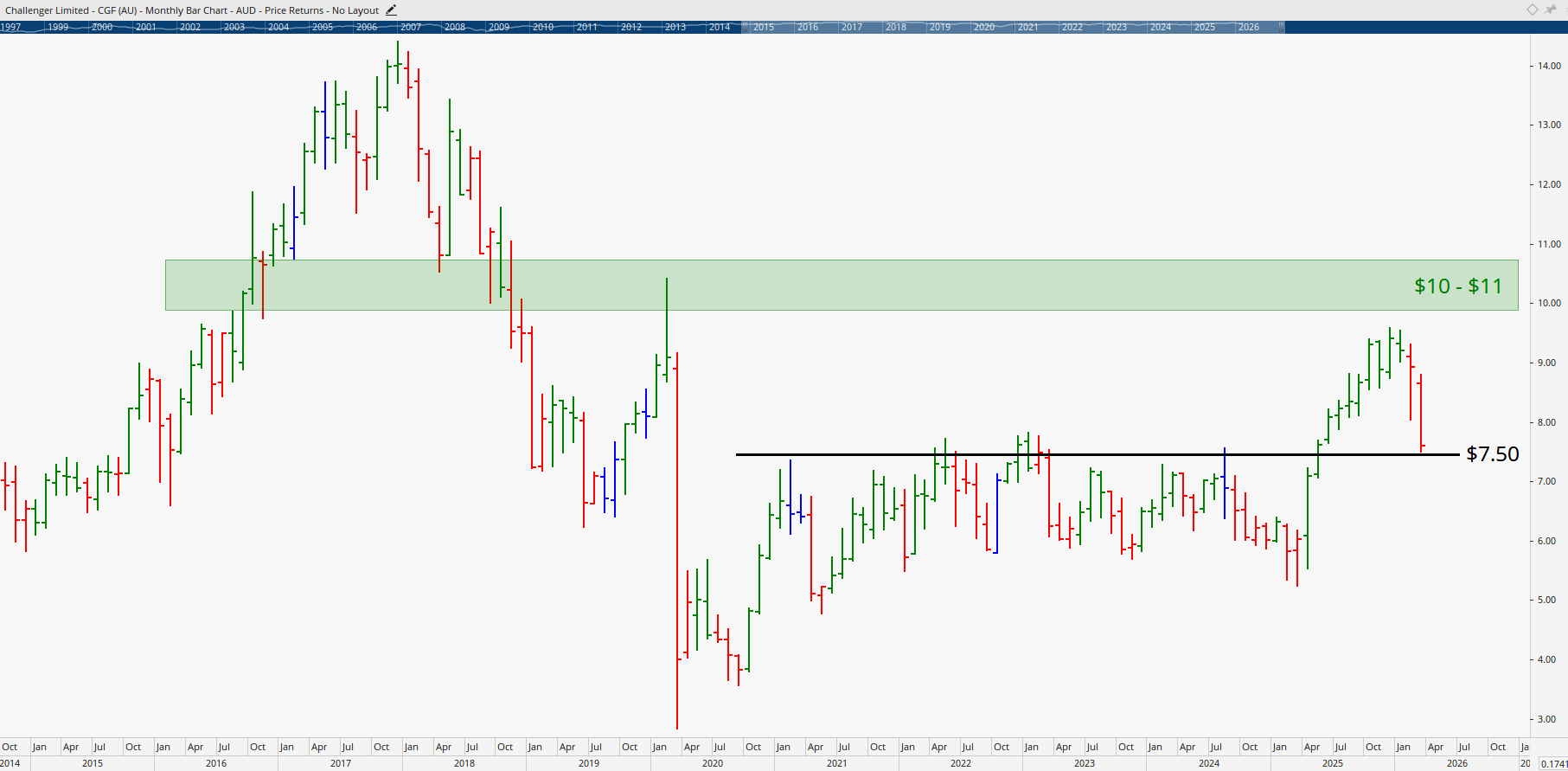
Challenger presented a very different picture. Filip highlighted that the stock had spent years being capped at the $7.50 level, with repeated attempts to break through failing. This time, however, it had finally broken out convincingly, and the current market pullback was bringing the stock back to test whether that former resistance would now act as support. This is what Filip called the moment of truth.
If $7.50 holds as a new base and the stock begins to rise again, Filip saw potential for it to move up into the $10-11 range, representing significant upside. The pattern forming was clean, and the breakout from a multi-year consolidation is exactly the kind of setup that professional traders look for.
Dale used the opportunity to reinforce the importance of patience, waiting for confirmation that the new support level is holding rather than jumping in prematurely and catching a falling knife.
Insurance Australia Group: Another Red Flag
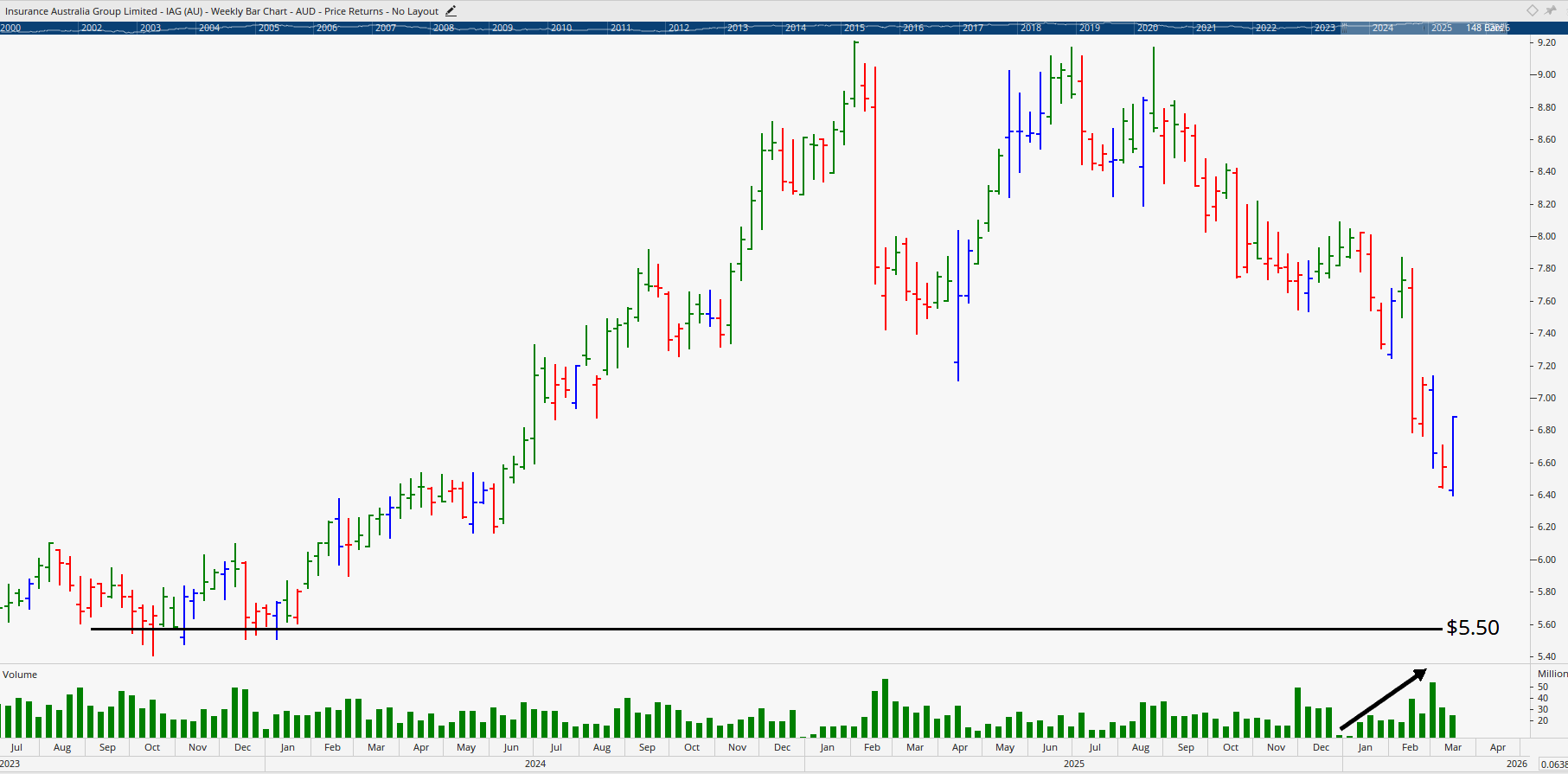
Insurance Australia Group was the second stock that fell into the bearish camp. Zoran described it as being in free fall on both the monthly and weekly charts, with a double top reversal pattern confirming the downtrend. Volume was again increasing on the downside, signalling that sellers were firmly in control. The level Zoran was watching on the downside was around $5-$5.50.
Filip added an important technical note: the stock had been sitting at a price level that had been hugely significant since 2005, acting as a launchpad for major moves or reversals on multiple occasions over a twenty-year period.
While the stock was not a buy right now, it was worth monitoring closely because if this long-term level does eventually hold, it could set up a major opportunity down the track. For now, however, both analysts agreed it belonged on the watch list, not in the portfolio.
Develop Global: The Favourite of the Night
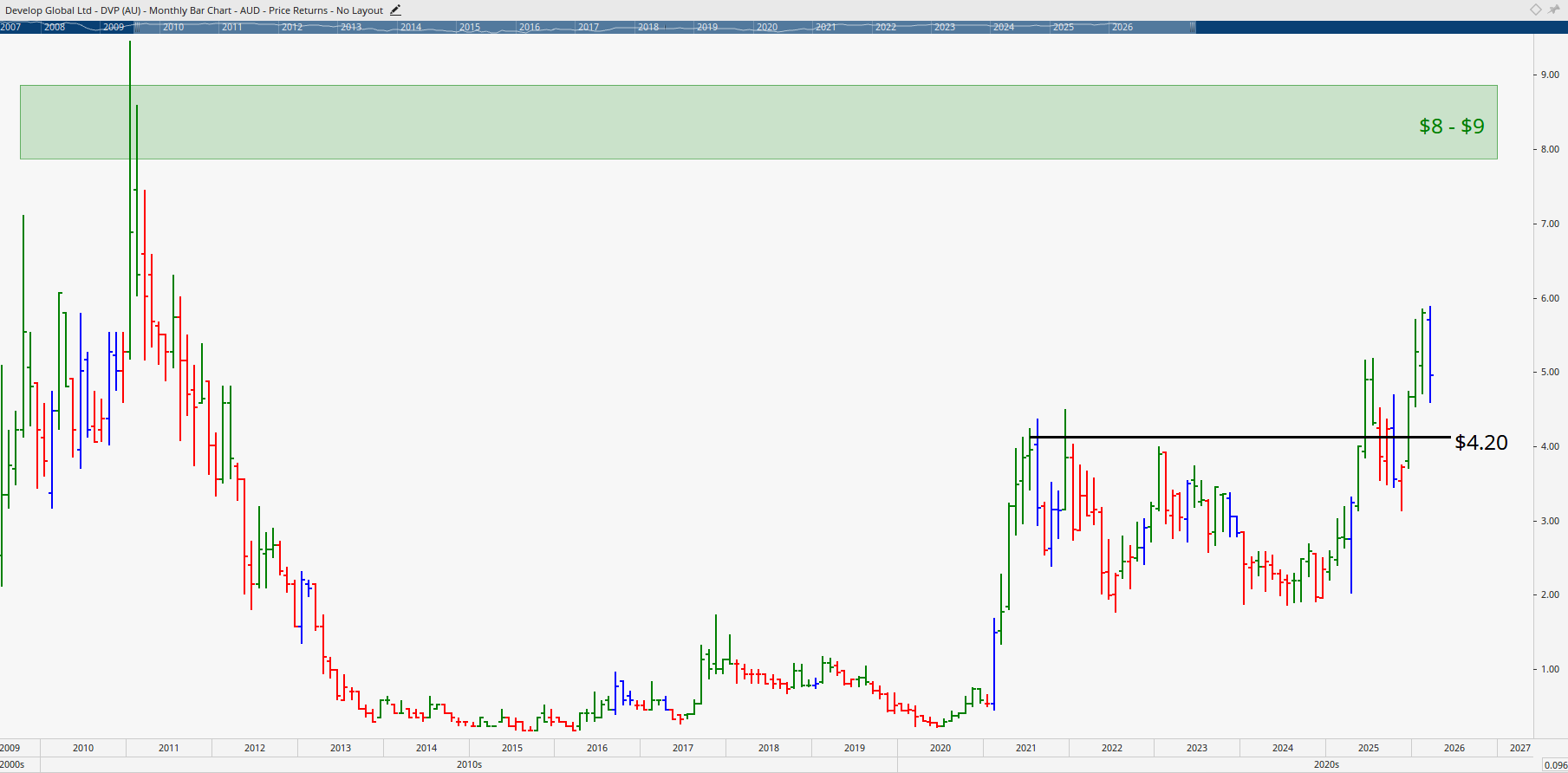
Develop Global emerged as the clear favourite among the analysts. Filip walked through the classic lifecycle of the stock, from its initial IPO hype and subsequent settling period, through a prolonged accumulation phase and now into what appeared to be a new expansion phase. The stock had broken through key previous highs and was holding above its $4.13-$4.20 level, which Filip identified as the critical support to maintain the bullish outlook.
If the expansion continued, Filip saw a potential test of the $8-9 level, representing a significant move from current prices. What made this stock particularly compelling was the textbook-like setup. Every phase of the stock's lifecycle was clearly visible on the chart, and the current breakout above new highs, supported by volume, told a story of genuine institutional interest building.
Both Zoran and Dale agreed that DVP was their top pick from the evening's analysis, with Zoran calling it his favourite stock of the entire session.
Nickel Industries: Momentum Building at the Lower End
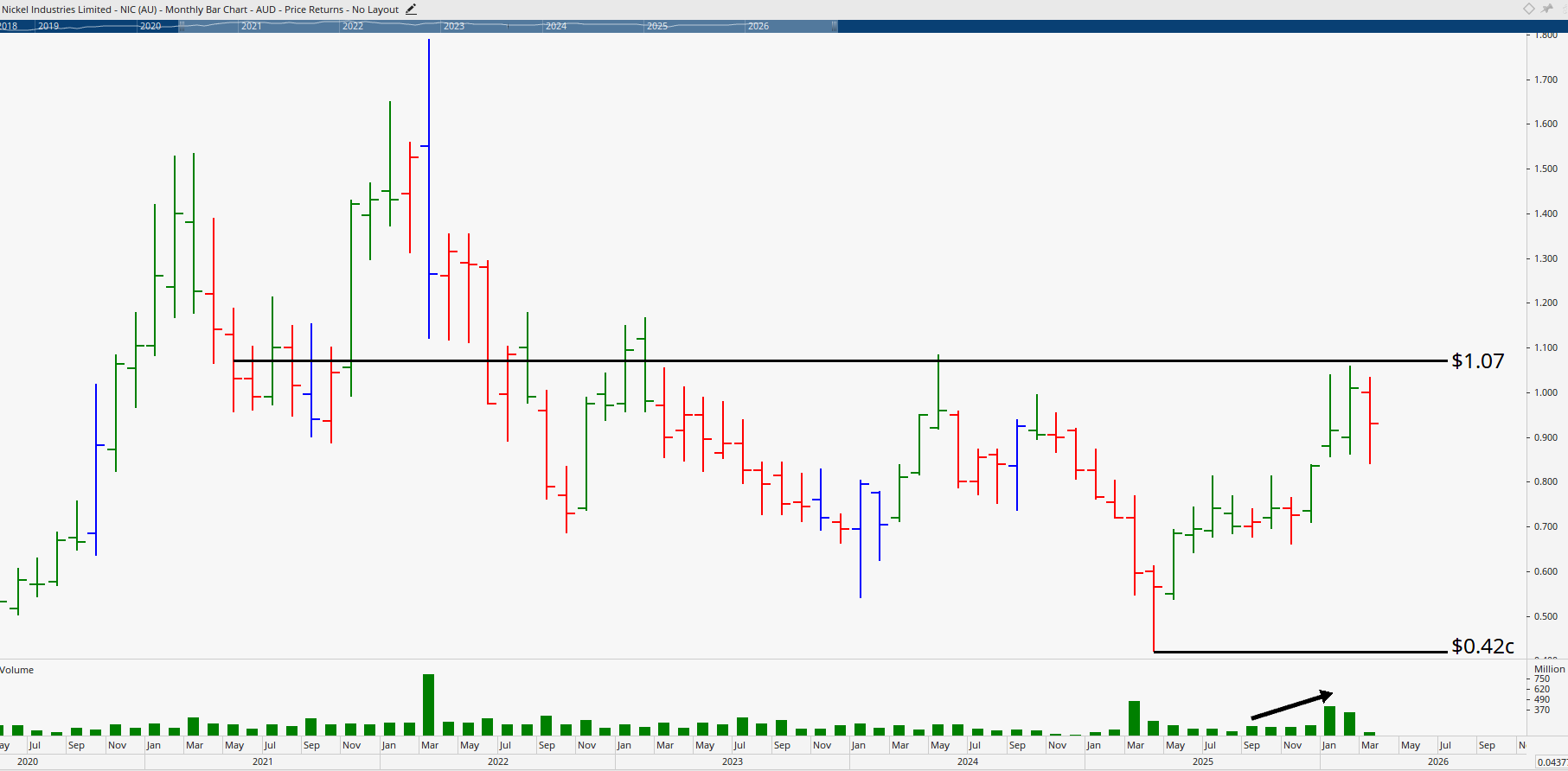
Nickel Industries presented an interesting opportunity in the materials space. Zoran noted that the stock appeared to have pinned its low at around $0.42 in April 2025 and had been gaining momentum since then. The stockgapped up on the monthly chart and then closed that gap, which Zoran considers a positive sign of healthy price action rather than unsustainable speculation.
Volume was following through on the weekly chart, adding conviction to the move. The key level to watch was the February high around $1.07, and breaking above the psychological $1.00 mark would be an important signal. If the stock could achieve this, Zoran saw potential for a test of the all-time high at $1.80.
However, he was careful to note that this was a more volatile stock at the lower end of the market-cap spectrum, making it better suited to traders with more experience and a clear understanding of risk management.
Paladin Energy: The Controversial Uranium Play
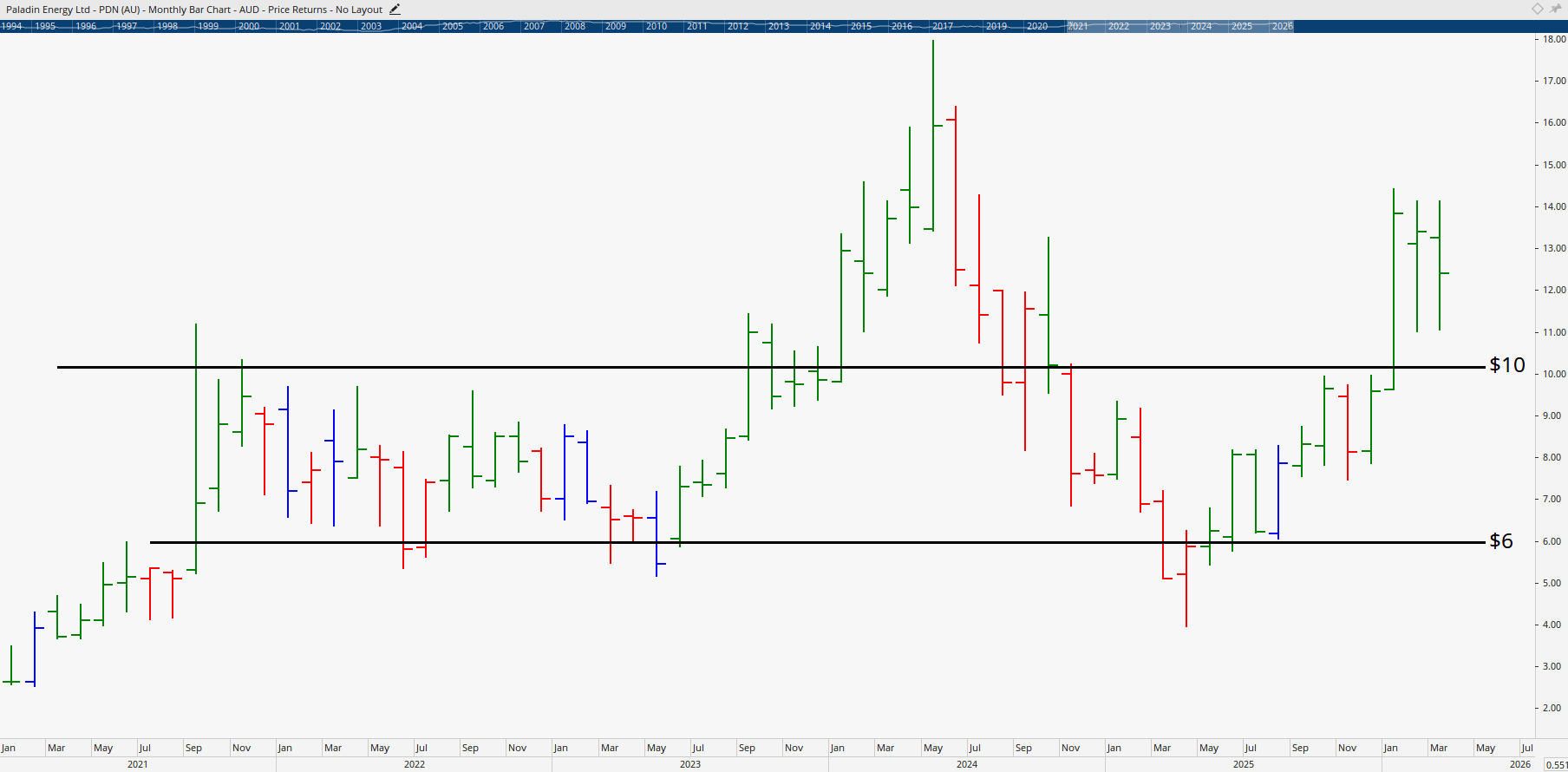
Paladin Energy was Dale's personal pick from the evening, and it generated plenty of discussion. Filip noted that the stock had attracted significant FOMO-driven interest from viewers during its recent run-up, with many asking whether they had missed the opportunity. By zooming out to the monthly chart, Filip demonstrated that if the stock was indeed at the beginning of a new expansion phase, there was still plenty of upside potential.
The confirmed base sat around $6, with the next key level at $9. On the weekly chart, the stock was pulling back toward its momentum line around $10, and as long as it held that level, the trend remained intact.
Filip highlighted that Paladin offered opportunities across short, medium, and long-term timeframes due to its volatility, but choosing which timeframe to operate on was critical. Dale also noted the broader tailwind from the materials sector, with Zoran confirming that commodities tend to perform well during periods of geopolitical conflict, supporting the case for stocks like Paladin.
Washington H. Soul Pattinson: The Berkshire Hathaway of Australia
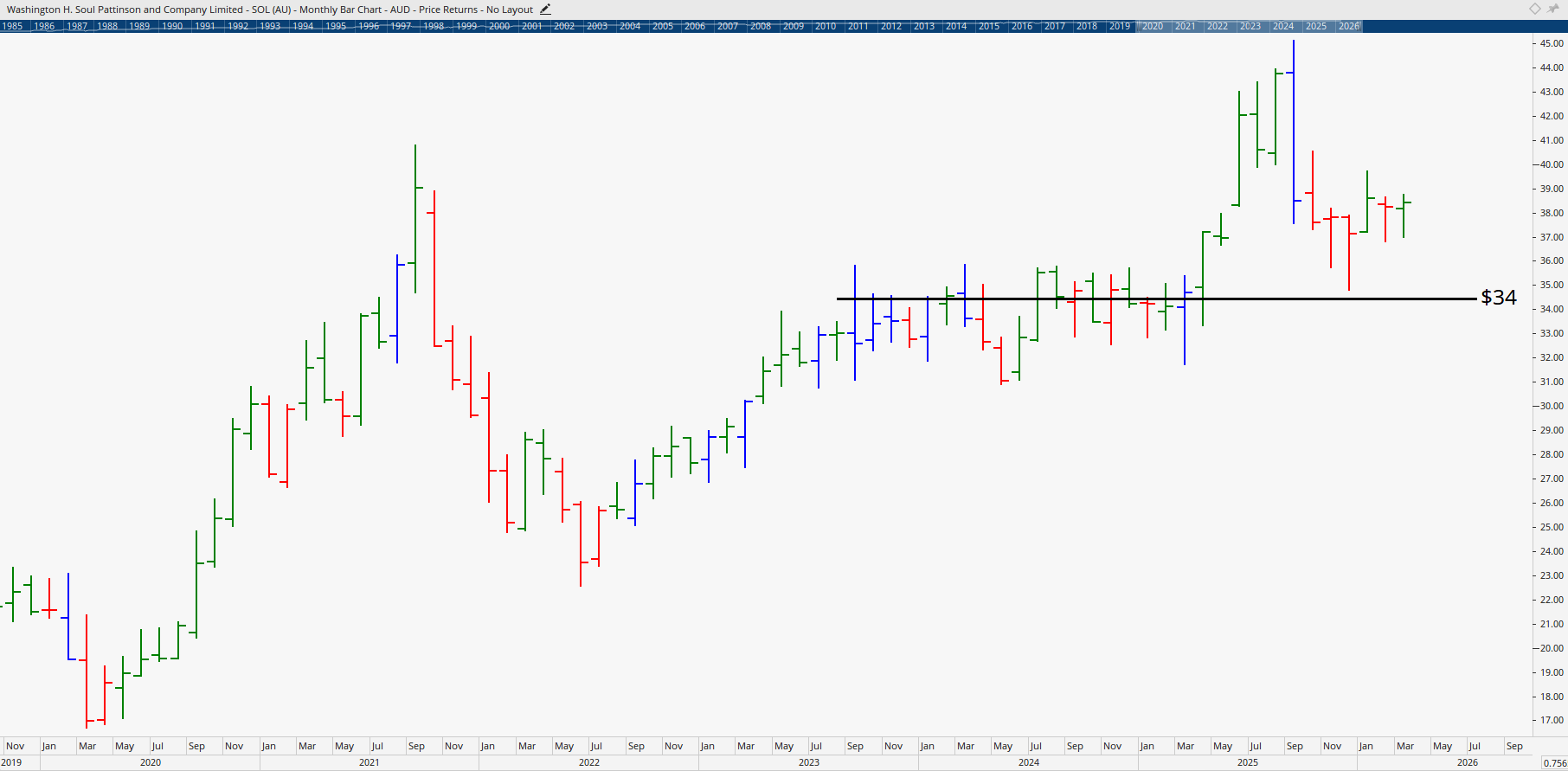
Filip made a strong case for Washington H. Soul Pattinson as a stock that arguably belongs in every Australian portfolio. Since its inception in 1985, the company has paid dividends consistently, without ever missing a payment, and has shown continuous price appreciation over nearly four decades. Filip referred to a previous article in which they called it the Berkshire Hathaway of Australia, and the comparison is apt.
The stock had pulled back roughly 20%, which Filip noted was within the historical normal range of corrections for this stock. It was now approaching the $34 level, where strong buying had previously come through, presenting what he described as a nice discounted opportunity for at least a short to medium-term trade. Dale attributed part of the company's success to its history as a family-driven business with major shareholding interests that provided stability and consistency in management, contrasting it with companies where revolving-door CEOs chase short-term bonuses at the expense of long-term value creation.
Zip Limited: Caution Required Despite the Hype
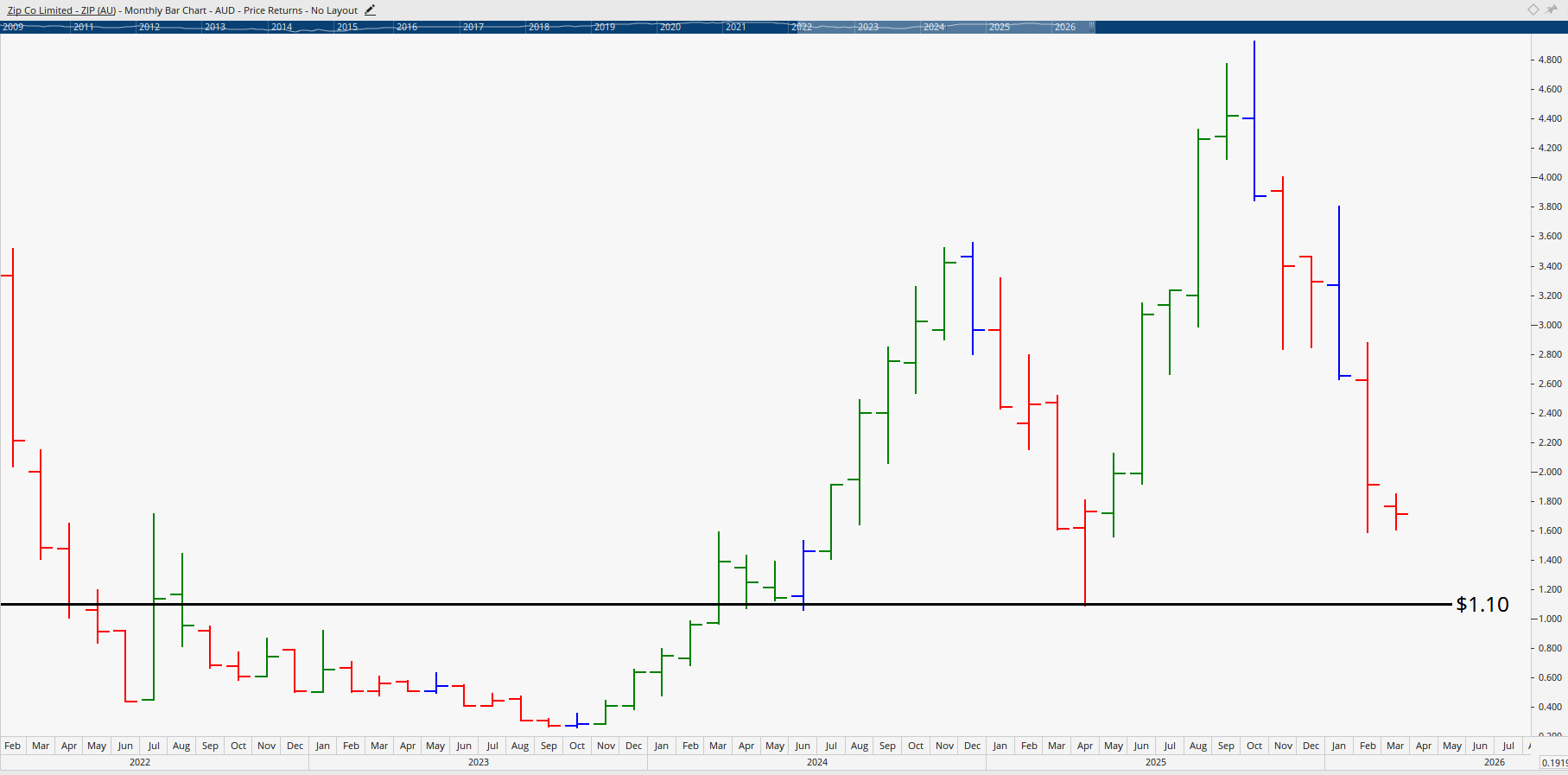
Zip was one of the most frequently requested stocks from viewers, but Zoran urged caution. Despite admitting he had been a big fan of the stock over the years and had traded it frequently, he was currently staying out because it was in a medium-term downtrend and correcting aggressively. The critical level to watch was around $1.08-1.10, and if the stock could hold that level and consolidate, there might eventually be room for a recovery.
Zoran shared a candid personal lesson, admitting he had bought near the all-time high a few years earlier, which had been very painful. He emphasised that just because a stock looks cheap does not mean it is a bargain, because it can always fall further. For less experienced traders, he recommended avoiding Zip entirely due to its extreme volatility and the aggressive nature of both its rallies and declines.
For those with more experience and solid risk management rules, it could offer opportunities, but only with proper confirmation and discipline. Developing that discipline and those rules is exactly what the Diploma of Share Trading and Investment is designed to teach, taking students through a proven five-step approach to trading with confidence in any market condition.
Patriot Battery Metals: Limited Data but Watching Closely
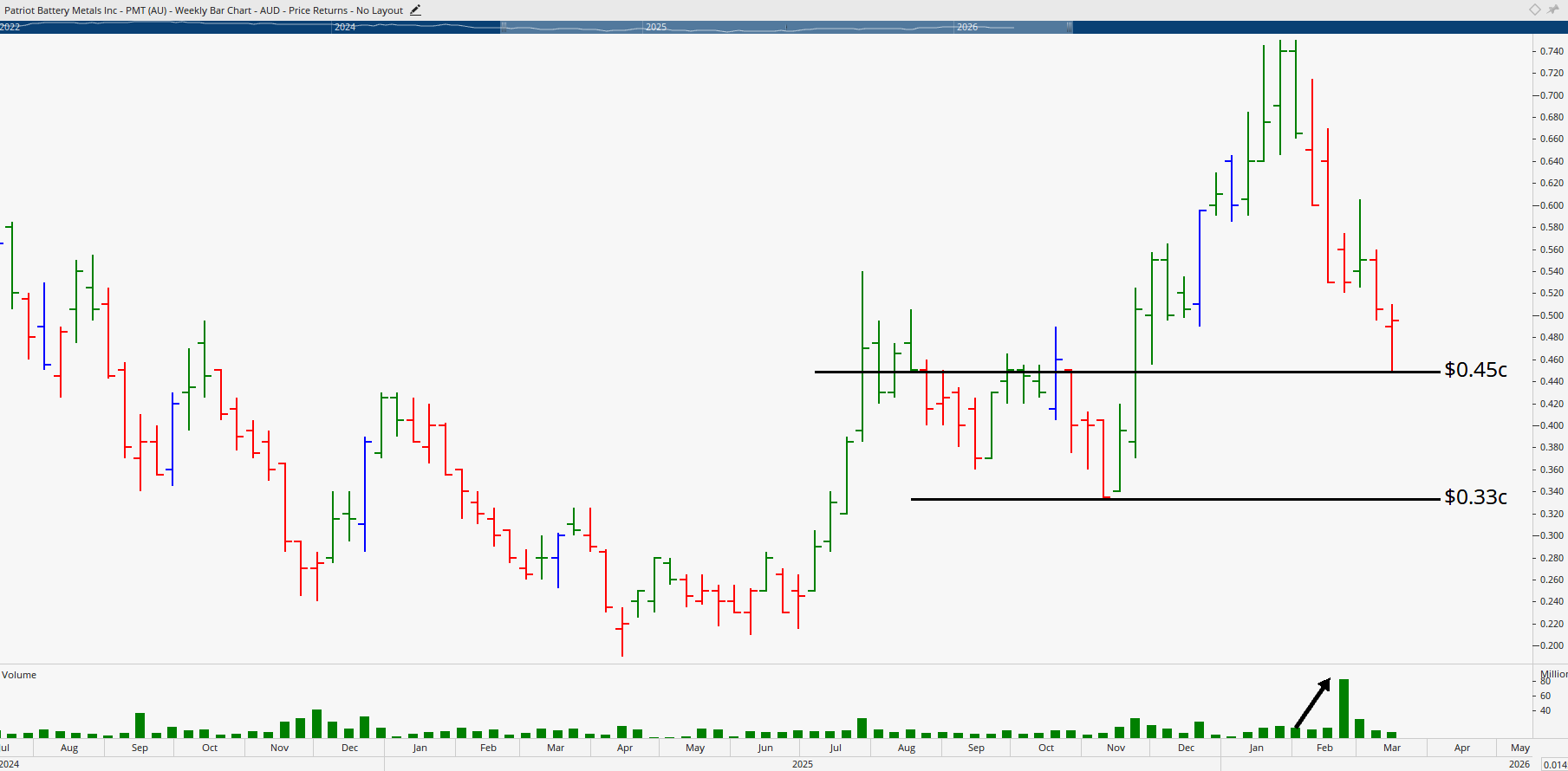
Zoran analysed Patriot Battery Metals and expressed mixed feelings. While the stock appeared to be finding some support around $0.45 and volume was picking up, the overall picture on the weekly chart was quite bearish, with a significant selloff having occurred. If it could hold current levels, there was a possibility of a reversal, but any further downside could see the stock test $0.33 or even its all-time low near $0.20.
Zoran's biggest concern was the limited historical data available. With only 2 to 3 years of price history, there was not enough information to properly backtest strategies or understand the stock's personality across different market cycles.
Dale explained that probability is central to successful trading as the more historical data you have, the more confident you can be in your strategy's likelihood of success. With a stock this young, you simply cannot generate enough sample trades to build that confidence.
Hot Stock Tip: Telix Pharmaceuticals
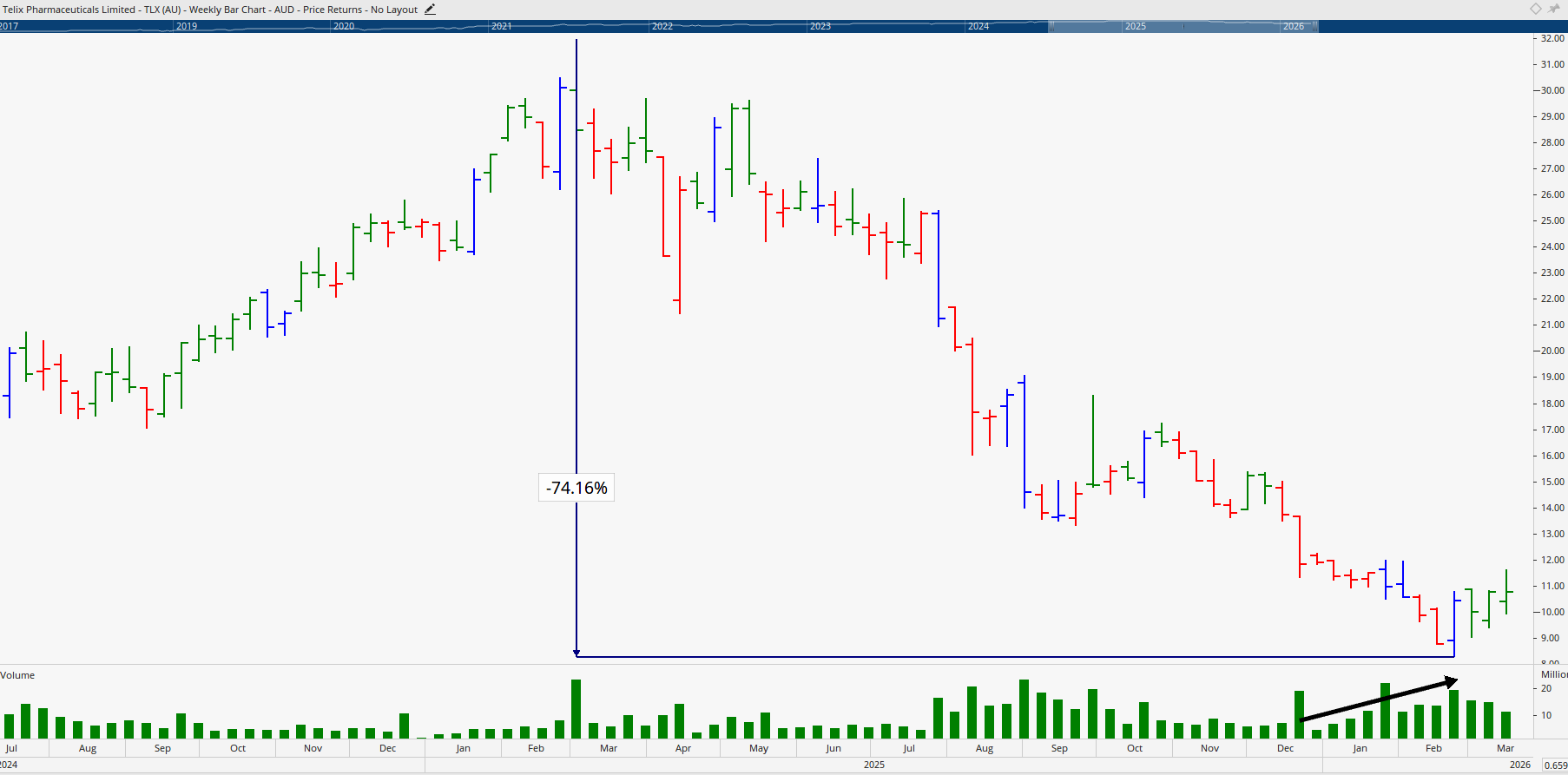
The episode's hot stock tip was Telix Pharmaceuticals, which had released significant news that day. The company announced that part 1 of its global Phase Three ProAct trial had met its primary objectives, with safety data allowing the study to progress to its larger randomised expansion phase for its prostate cancer therapy. This was positive news that signalled regulatory progress and potential future commercialisation.
However, the chart told a sobering story. The stock was down 74% from its all-time high and remained in a significant downtrend. While volumes were picking up on the weekly chart and the stock appeared to be finding some support at key momentum levels, Zoran was clear that it was not a buy at current levels.
He noted that pharmaceutical stocks are inherently volatile because everything can hinge on a single trial outcome, and he recommended allocating only a very small portion of capital to such stocks.
Filip added that these deeply beaten-down stocks are often where the best opportunities eventually emerge, drawing a parallel to Mineral Resources, which they had analysed in a similar position and subsequently recovered strongly. For now, it was one to watch rather than one to buy. You can watch the full analysis of this stock and all the others discussed in our Stock Market Show.
The BlackRock Warning and What It Means for Real Estate
Beyond individual stocks, Filip brought attention to a developing risk in the financial system. BlackRock, the world's largest asset manager, had limited withdrawals from its HPS Corporate Lending Fund after investors requested roughly 1.2 billion dollars in redemptions, about 9.3% of the fund's 26 billion dollars in assets. The fund only allowed 5% to be redeemed per quarter, forcing a cap on withdrawals.
While redemption gates are not unusual for private credit funds, Filip explained that the sheer size of the private credit market, now approaching 1.8 to 2 trillion dollars globally, means that a liquidity mismatch could have far-reaching consequences.
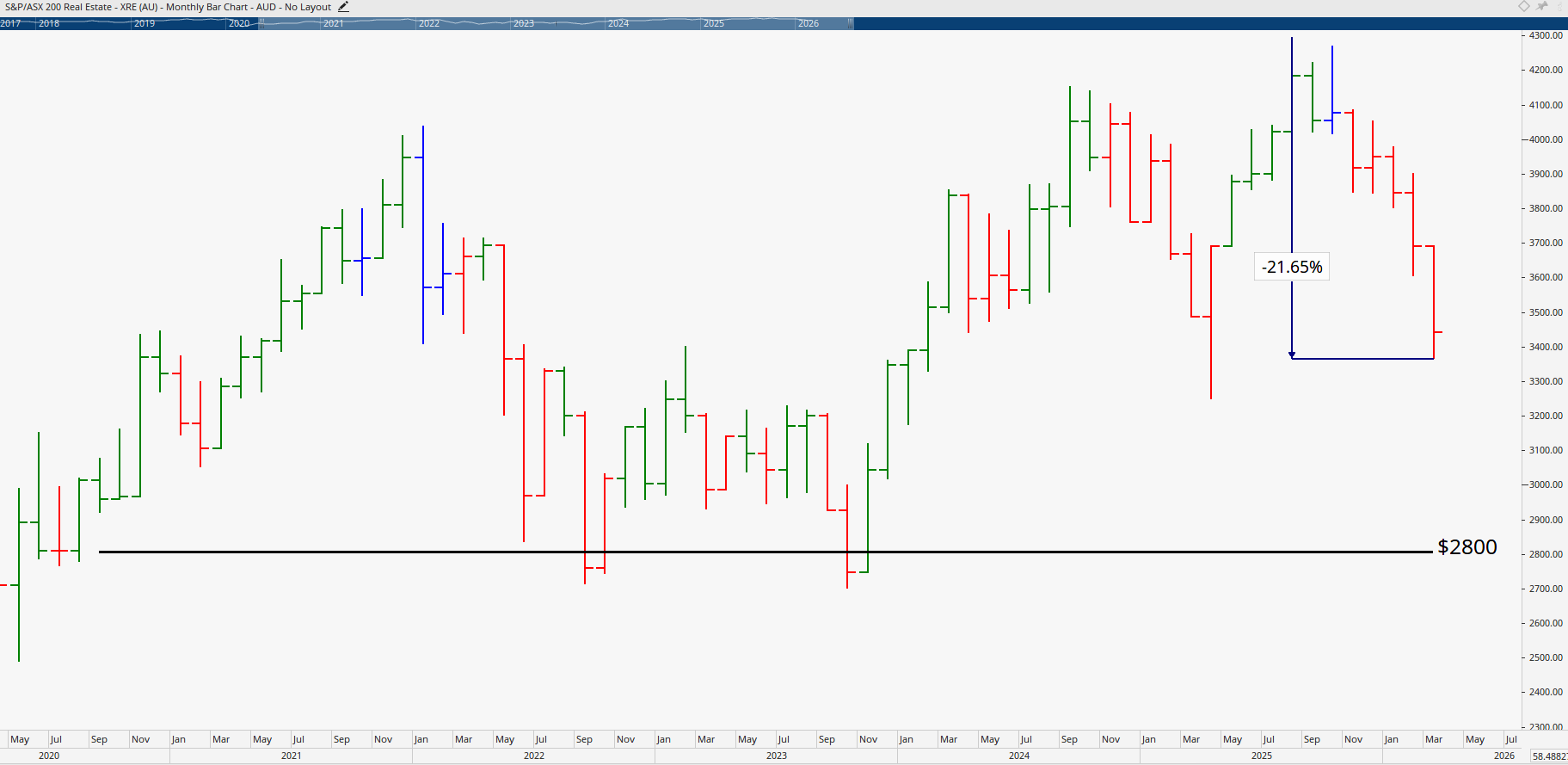
If too many investors try to exit at once, funds may be forced to sell assets at steep discounts, and one area that could feel the impact quickly is commercial real estate.
The real estate sector chart on the ASX was already down 20%, and Filip noted that if buying did not come in relatively quickly at current support levels, the next obvious target was a push down to the 2,700 to 2,800 level.
Dale drew parallels to the pre-GFC period, noting that the current environment felt reminiscent of 2005 to 2008 in terms of the economic dynamics building beneath the surface. He also flagged concerns about superannuation funds with significant exposure to commercial property and private credit, suggesting this could become a larger issue if the credit squeeze intensified.
The Power of Simple Strategies and Disciplined Rules
A fascinating discussion emerged midway through the episode about what separates successful traders from everyone else. Dale, Filip, and Zoran all agreed that the best traders use the simplest strategies, not the most complex ones.
Zoran, drawing on his experience working with hundreds of traders, noted that many people fall into the trap of letting losses run while cutting profits short, which is the exact opposite of what they should be doing. This happens because of an emotional attachment to being right and a reluctance to admit that a trade is not working.
Filip expanded on this, explaining that some of the most profitable strategies have win rates well below 50%. A trader who wins only 3 out of 10 trades can still be highly profitable if those 3 winners are large and the 7 losers are kept small through disciplined stop-losses. Zoran illustrated with a simple example: if your stop-loss limits each losing trade to 1%, 7 losses cost you 7% total, but if your 3 winners each return 5%, your net result is 8% positive.
Lessons From the Q&A: Why Buying a Falling Stock Without a Strategy Is Dangerous
The viewer questions provided some of the most valuable teaching moments of the episode. One viewer, John, described buying a stock called Lovisa multiple times around Liberation Day, watching his position swing from 0 to an 80% profit, before crashing back down to a 20% loss. Filip was direct in his assessment: buying a stock multiple times as it falls is not a strategy at all, and the only scenario where it works is if you have an unlimited supply of money.
The chart showed clear technical signals that it was time to sell during the initial euphoric run-up, including exhaustion patterns, failed rallies, and gaps to the downside. Yet John had been buying more instead of selling. Dale connected this back to the psychology discussion, noting that John appeared to be hoping the stock would recover rather than following any defined rules for when to exit.
The lesson was clear: without a proper exit strategy and money management rules, even a stock that initially moves in your favour can end up costing you significantly. It reinforced why having structured education matters, not just learning when to buy, but critically, knowing when to sell.
Where to From Here for the ASX
Both Zoran and Filip offered their outlook on the broader Australian market. Zoran viewed the current selloff as a natural cyclical pullback rather than the beginning of a crash, noting that the Australian market had been relatively resilient compared to global peers and had arguably underperformed markets like the Nasdaq and European indices over the past couple of years.
With the materials and commodity sectors performing well and likely to continue doing so through 2026, he believed the Australian market would hold up reasonably well, though stock selection remained critical.
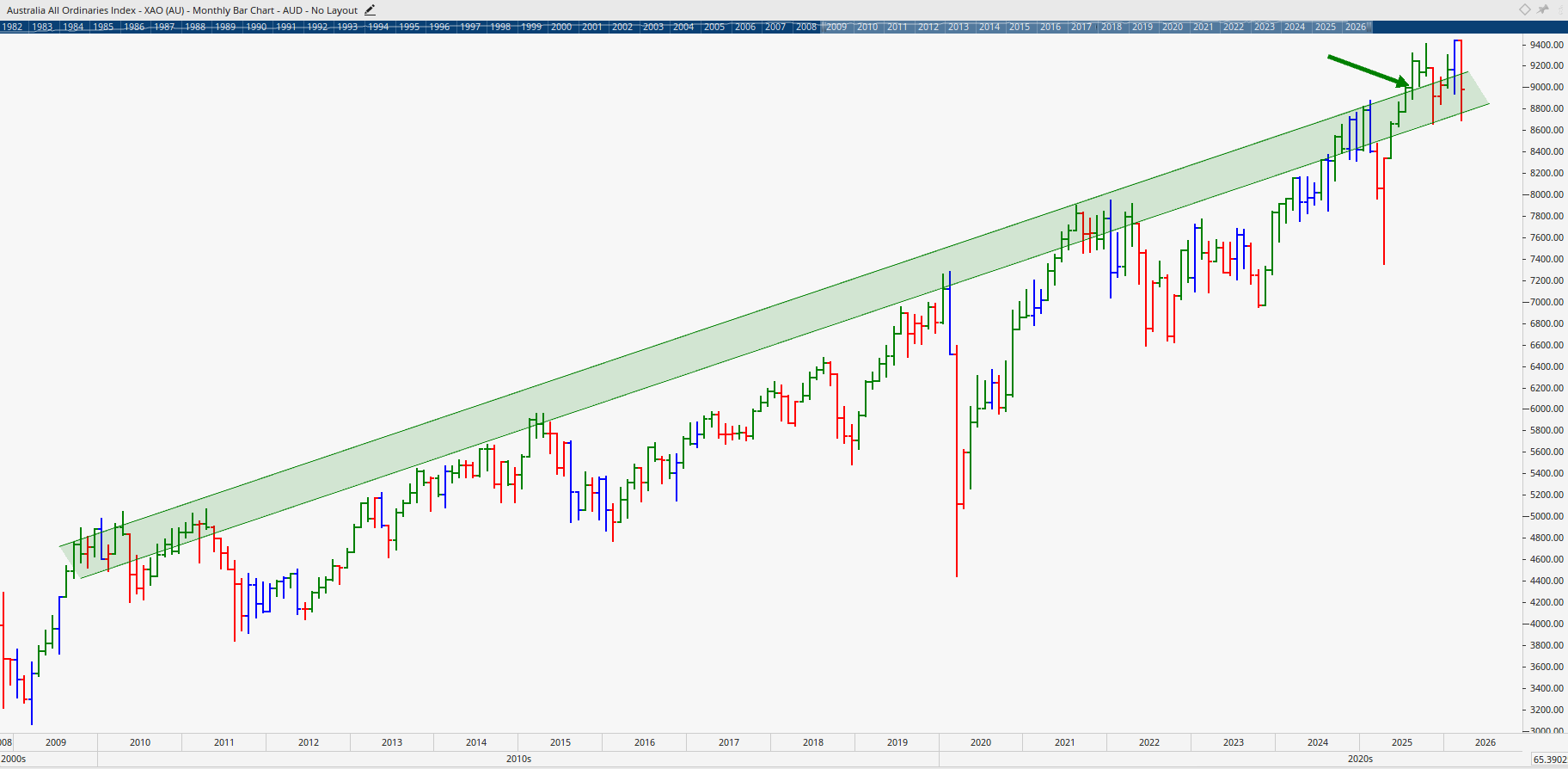
Filip pointed to the long-term chart of the All Ordinaries, showing that the market had broken out of a pattern it had been trading within since 2008, similar to the breakout that occurred in 2005 before the pre-GFC rally. As long as the market held current support levels, he saw potential for it to reach 10,000 points relatively quickly.
If it failed to hold, a deeper pullback would be expected. The message from both analysts was consistent: this is a time to be active, to monitor your opportunities closely, and to have clear rules that allow you to act decisively rather than react emotionally to headlines.
Take Control of Your Trading With Wealth Within
This episode perfectly illustrated why having the right skills and knowledge makes all the difference in volatile markets. While most investors were panicking and media headlines screamed about billions being wiped from the market, the team at Wealth Within was calmly identifying opportunities, applying proven techniques, and distinguishing between genuine dip-buying opportunities and dangerous falling knives.
Whether it was recognising the clean trend in Aussie Broadband, the classic breakout in Challenger, the textbook expansion phase in Develop Global, or knowing to stay away from Aristocrat Leisure and IAG, every decision was grounded in a structured, repeatable process.
At Wealth Within, our team of investment professionals with over 80 years of combined experience has helped thousands of clients learn to trade shares with confidence and consistency. If you are ready to stop guessing, stop reacting to headlines, and start trading with the kind of certainty that turns market crashes into opportunities, get in touch today to find out how our courses can help you take control of your financial future.