Time to Buy: 3 Cheap, Beat Up Large Cap ASX Stocks

By Janine Cox and Fil Tortevski
Reading Time: 7 minutes
What if some of the biggest and best stocks on the ASX were trading at unusually cheap prices right now? History shows these names rarely stay cheap for long, and there's a reasonable chance you already own at least one of them. The bigger question is whether now is genuinely the right time to pounce, or whether patience could deliver better entry prices in the weeks ahead.
In the latest episode of the Australian Stock Market Show, Wealth Within's Janine Cox and senior analyst Pedro Banales broke down three large cap ASX names that have been beaten up but could be setting up for serious moves. Each tells a different story, and each requires a different approach.
Stock 1: Fortescue Metals (ASX: FMG)
Fortescue is one of the world's lowest cost iron ore producers, with strong cash flow, high dividends, and a green energy investment portfolio that adds long-term growth optionality. Despite all of that, FMG has been the laggard of the big cap miners, while BHP and Rio Tinto have been screaming higher into blue sky territory.
The Lag That Could Become an Opportunity
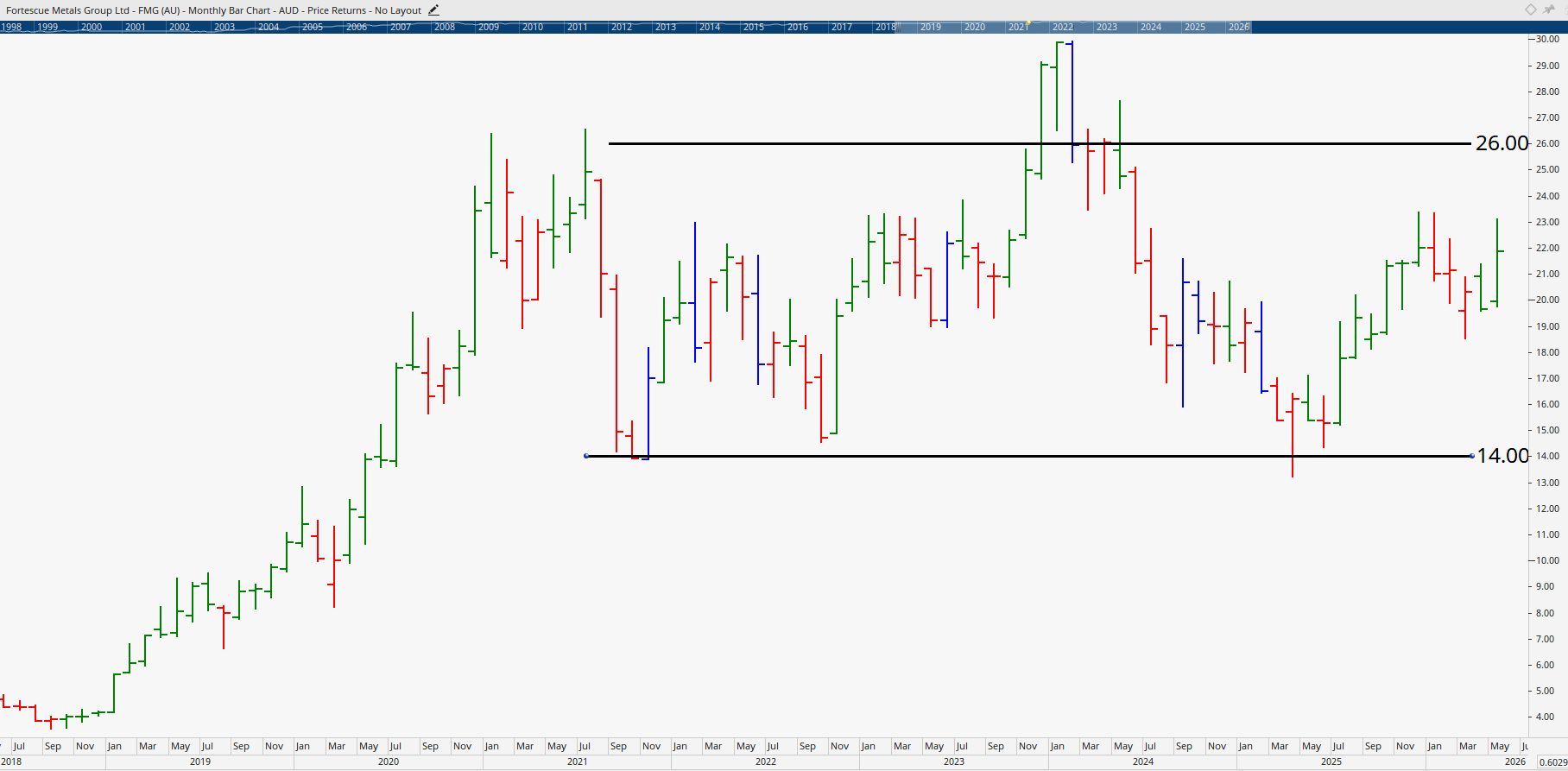
When you overlay BHP's chart against FMG's, the two have historically moved together with one notable exception. Back in 2016, BHP rose while FMG actually traded lower, only for FMG to eventually catch up and deliver roughly a 200% rally from its lows. We could be seeing a similar setup right now.
The Levels That Matter
FMG has been in a huge sideways consolidation between roughly $14 and $26 for an extended period. The stock has just broken out of a short term consolidation that formed in March 2026, and is now pushing through resistance with genuine volatility behind it. If FMG can sustain the move above $23, the door opens to a retest of $26, and beyond that, potential new all-time highs above $30.
The risk case, which Janine flagged, is a possible pullback to retest the lower band around $18.50, but current price action is telling a different and more bullish story.
Stock 2: Goodman Group (ASX: GMG)
Goodman Group is a global leader in logistics and data centre property, sitting at the intersection of two of the strongest structural themes in markets right now: AI infrastructure buildout and e-commerce growth. With a strong development pipeline and significant institutional backing, GMG is positioned for sustained long-term growth, even though the stock itself has had a rough recent run.
What the Long-Term Chart Reveals
Looking at the long-term chart, GMG has been on a powerful uptrend since the 2009 GFC lows, but the angle of rise has steepened considerably since the 2020 COVID lows. The stock has just had roughly a 38% pullback from its highs, which is well within the normal volatility range for this name historically.
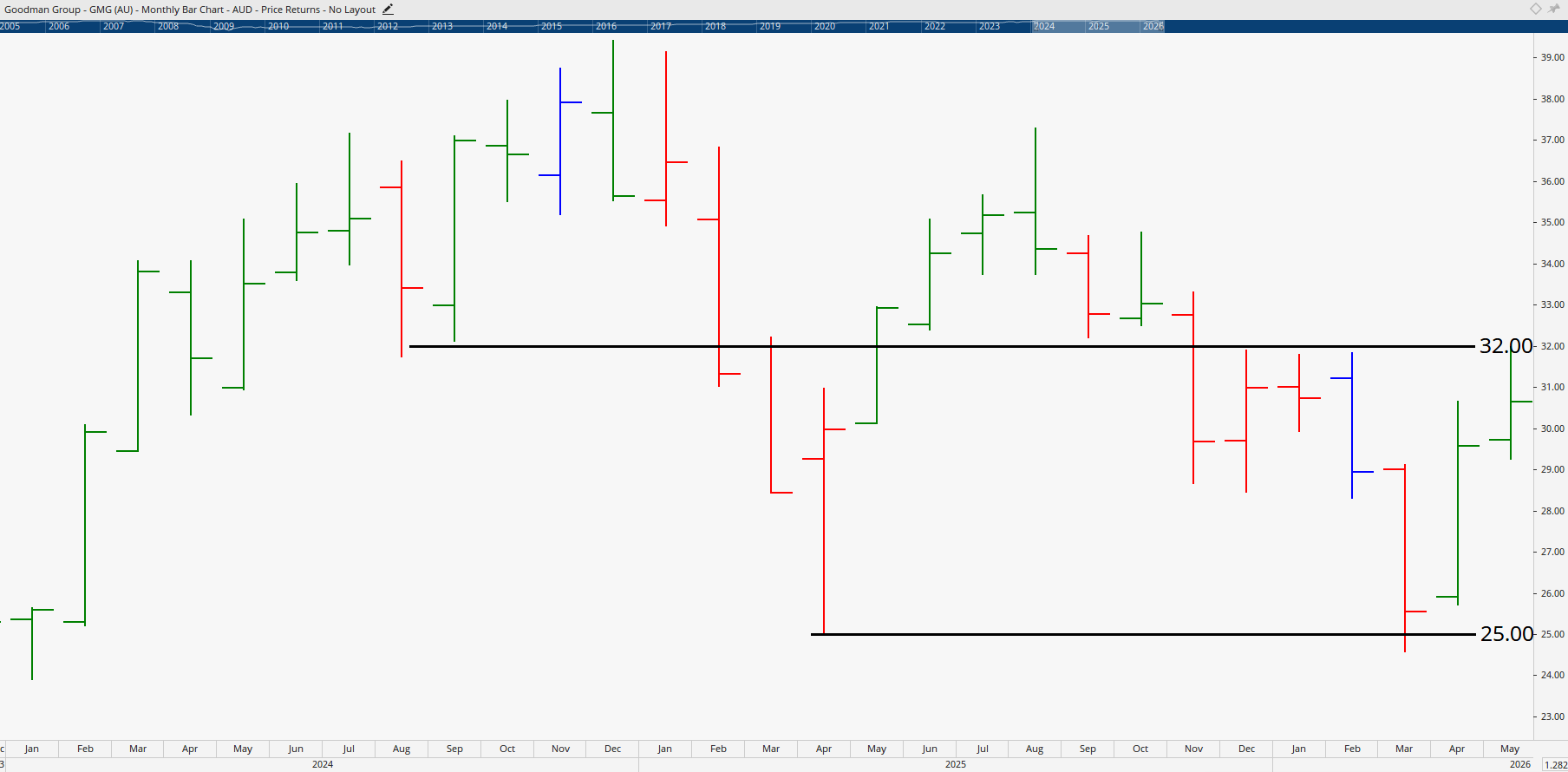
The good news is that the $25 area has held as strong support, and the structural case for GMG remains intact. Both AI infrastructure and warehouse logistics are sectors with strong compound annual growth ahead. People aren't going to stop buying online, and the AI race is only accelerating the need for more data centres globally.
The Levels That Matter
For more conservative traders, the trigger is a clean break above $32, which would invalidate the current downward momentum and signal the next leg up. On the weekly chart, very strong support sits around $24, which would be the ideal pullback level for a second-chance entry. Resistance overhead sits around $34. History shows that when GMG breaks downward momentum, it tends to deliver sustained, clean uptrends with reliable dividends along the way.
This is exactly the kind of setup that proper trading courses prepare you to identify and act on with confidence. Wealth Within's Short Course in Share Trading and government-accredited Diploma of Share Trading and Investment teach exactly how to read trend changes, identify entry triggers, and avoid the costly mistake of buying too early.
Stock 3: Commonwealth Bank (ASX: CBA)
CBA is the third name on the list, and the chart action tells a fascinating and slightly concerning story. Last week's roughly 10% sell-off was the largest single move in CBA's history, which is a remarkable statistic when you consider the stock has been listed for decades and traded through both the dot-com crash and the GFC.
What the GFC Comparison Tells Us
Looking at CBA's GFC fall is instructive. From the 2007 high, the stock fell gradually, with individual sell-offs typically in the 2 to 3% range, never anywhere near 10% in a single move. That makes last week's drop genuinely unusual and worth paying close attention to.
What the GFC chart also shows is how powerful basic technical tools can be in protecting capital. Anyone applying a simple momentum line or trend break rule would have exited well before the worst of the damage. Investors who thought CBA was "cheap" at $40 watched it fall all the way to $26. The lesson, as Janine pointed out, is that what looks cheap can always get cheaper.
The Levels That Matter
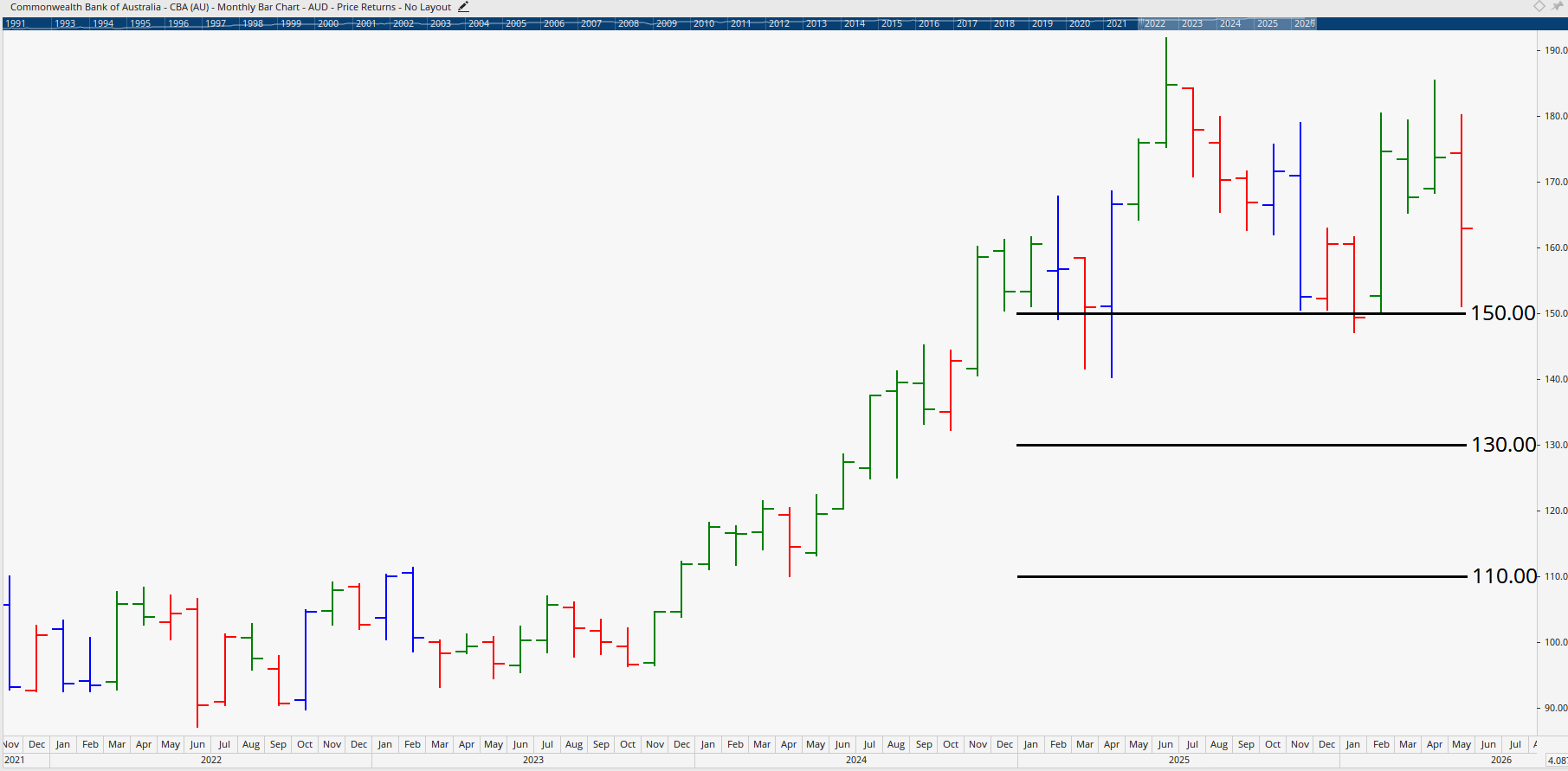
CBA dropped from around $159 to a low of $150.90, a much faster sell-off than expected. The first key level to watch is whether $150 holds as support. If it does, this could simply be a sideways consolidation phase similar to the one CBA went through in 2021. If $150 fails, however, the next significant support sits around $130 to $140, with a worst-case theoretical scenario as low as $110.
There are several macro pressures at work here, including the recent budget changes affecting banks, ETF-driven institutional trading dominating the market, and superannuation flows that amplify both directions of any move. CBA remains a fundamentally solid bank with reasonable valuation metrics and reliable dividends. The question is purely one of timing and entry price.
For investors who don't already own CBA, patience is likely to be rewarded with cheaper prices in the weeks ahead.
Why These Setups Matter
Three different stocks, three different setups, three different decisions. FMG looks like a confirmed breakout play. GMG is a potential reversal trade waiting for confirmation. CBA is a "wait for better prices" situation. Recognising which type of setup you're trading is exactly what separates traders who consistently profit from those who consistently struggle.
The single most expensive mistake retail investors make is treating every stock the same way. They buy on the dip without distinguishing between a healthy pullback and the start of a sustained downtrend. They confuse cheap prices with bargain prices, when the two are very different things. They hold buy-and-hold positions through structural breakdowns that proper risk management would have flagged early.
This is precisely why Wealth Within's free book How to Beat the Managed Funds by 20% has been such a game-changer for so many investors over the past two decades. During the GFC, countless people credited the book's simple momentum and trend line techniques with saving their retirement savings, because the techniques are timeless and they work in all market conditions.
You can also explore the full Hot Stock Tips for ongoing weekly market analysis, or learn more about Wealth Within and our 24-plus-year track record.
Final Thoughts
Three of Australia's biggest stocks are trading at prices that look unusually cheap compared to recent history. Whether or not they deliver substantial upside from here depends on what happens at very specific technical levels. Fortescue needs to hold its breakout, Goodman Group needs to break its downward momentum at $32, and CBA needs to either bounce from $150 or pull back to a more attractive entry around $130.
The traders who profit from setups like these aren't the ones who guess. They're the ones who wait for confirmation, respect technical levels, manage risk with defined stops, and recognise that being patient is often the highest-paying skill in markets. With the right analytical framework, beaten-up blue chips can become some of the most rewarding opportunities the ASX offers.
Disclaimer: This article is general in nature and does not constitute personal financial advice. Always conduct your own research or consult a licensed adviser before making investment decisions.