Why ETFs are Dragging Down Your Returns in 2026

By Dale Gillham and Fil Tortevski
Reading Time: 5 minutes
General Advice Disclaimer
This article is for general educational purposes only and does not take into account your personal financial circumstances, objectives or needs. Before making any investment decisions, consider your individual circumstances and seek independent financial advice if necessary.
Have you ever stopped to ask yourself whether ETFs are helping you build wealth, or whether they’ve just become the easy default? ETF investing is sold to you as a smart, simple “set and forget” investment, which, for many people, sounds reassuring. You buy the market, you forget about it, and you feel diversified. However, when you look at the numbers, the picture changes dramatically.
Let’s consider the returns on ETFs
In 2025, the All-Ordinaries Index returned 7.11 per cent, which is not bad. But think about the companies you already know. BHP returned 15.16 per cent, Telstra delivered 21.75 per cent, Coles gained 13.86 per cent, ANZ rose 27.82 per cent, while Rio Tinto climbed 24.76 per cent. Across those five well-known names, the average return was 20.67 per cent, before dividends.
If you held the index only through an ETF, you would have earned a 7 per cent return, but if you had owned a focused selection of quality businesses, you would have almost tripled your returns.
The reality is, you do not need insider information to spot companies like these, and you do not need to sit in front of a screen all day. One disciplined hour each week reviewing company updates, earnings results and price trends can dramatically change what ends up in your portfolio. The real question is whether you are willing to trade a bit of time for a potentially much stronger result.
ETF management fees play a key role
Then there are the fees, which may look small. For example, the Vanguard Australian Shares Index ETF charges 0.07 per cent per year, which may seem insignificant, but that fee quietly reduces your compounding every year. Over a decade or two, even small percentages matter and many other ETFs charge more. Over the past 10 years, that same ETF averaged around 9.39 per cent annually. That’s solid, but if you can select companies that consistently deliver higher growth and income, why settle for average returns?
You might also be tempted by specialised ETFs, such as gold miners, clean energy, or large-cap United States technology funds. That feels more active, but you are still paying fees, and you are still exposed to full sector cycles. Booms and busts come either way.
Why investing directly means better returns
Think about this. If you are already researching themes, watching charts and following sectors, you are halfway to direct ownership anyway. Owning individual shares gives you control as you choose the companies and their weightings in your portfolio, and you can see the dividends clearly. Of course, you will pay brokerage when you transact, but you won’t pay an ongoing management fee each year.
We’re not saying ETFs are bad, as they do serve a purpose, but you need to ask yourself what you really want. Do you want convenience and average returns, or are you prepared to put in a little focused effort to aim for above average? Your portfolio will reflect whichever choice you make.
What were the best and worst-performing sectors last week?
The best-performing sectors included Utilities, up 9.38 per cent, followed by Financials, up 5.41 per cent and Materials, up 5.10 per cent. The worst performing sectors included Health Care, down 12.61 per cent, followed by Information Technology, down 5.37 per cent and Consumer Discretionary, down 0.97 per cent.
The best performing stocks in the ASX top 100 included AGL Energy, up 16.42 per cent, followed by James Hardie, up 12.57 per cent and Lynas Rare Earths, up 11.91 per cent. The worst-performing stocks included Pro Medicus, down 25 per cent, followed by Cochlear, down 20.37 per cent and CSL Limited, down 16.89 per cent.
What's next for the Australian stock market?
The All-Ordinaries Index roared back to life last week, surging more than 3 per cent by Thursday in one of the strongest weekly moves in months. But by Friday, sellers stepped in hard, trimming the gain to just over 2 per cent. The key takeaway wasn’t the selling itself, but it was where it happened: the 9,300 Point level
We’ve been highlighting 9,300 as the critical battleground for weeks, and once again it held firm. Until that level is broken with conviction, a push toward the all-time high looks unlikely. In fact, repeated failures at 9,300 increase the risk of a deeper pullback.
Encouragingly, participation was broad, though the heavyweights did most of the lifting. Materials led again, supported by strong reporting from Northern Star and South32. Utilities surged on a standout move from AGL, while Financials added strength as Commonwealth Bank and ANZ delivered solid earnings-driven gains. When Materials and Financials fire together, the index typically follows.
We’re now deep in reporting season, and the market has shifted into stock-by-stock mode. Earnings misses are being punished swiftly, while beats are rewarded decisively which is a classic reporting-season environment.
Not all sectors joined the rally. Technology remained under pressure, and Healthcare slipped after softer profit numbers and a chief executive transition at CSL, reinforcing that sector averages offer little protection in this market.
Next week’s results from Westpac, National Australia Bank, BHP and Rio Tinto could prove decisive, determining whether 9,300 becomes a launchpad or remains the ceiling once again.
For now, good luck and good trading.
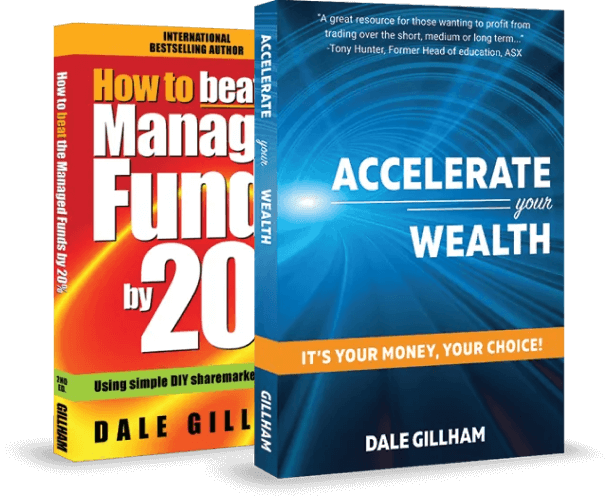
Dale Gillham is the Chief Analyst at Wealth Within and the international bestselling author of How to Beat the Managed Funds by 20%. He is also the author of the award-winning book Accelerate Your Wealth—It’s Your Money, Your Choice, which is available in all good bookstores and online.