Why Buy and Hold Is Dead: How to Navigate the ASX's Next Correction
By Dale Gillham, Janine Cox and Fil Tortevski
Reading Time: 9 minutes
General Advice Disclaimer
You acknowledge that the information provided by Wealth Within is intended for general use only and does not take into account your investment objectives, financial situation or advisory needs, nor does the information provided constitute investment advice. For this reason, any individual should consider the appropriateness of the information, having regards to the individual's objectives, financial or taxation situation and needs before acting on this information, and, if necessary, seek appropriate professional advice. In addition, it is important to understand that the risk of investing in the stock market is that you could lose some or all of your money. For more information please refer to our Terms and Conditions.
Markets have started falling, and if you're wondering whether now is the best time to buy and hold your stocks, think again. With the US market struggling to push higher amid mixed mega-cap earnings, war escalating with China entering the conversation, and May and June traditionally being bearish months, the recipe for a serious correction is well and truly on the menu.
In the latest episode of the Australian Stock Market Show, Wealth Within's Dale Gillham was joined by senior analysts Janine Cox and Filip Tortevski to unpack what this next phase means for investors, which stocks are bucking the trend, and why the old buy-and-hold mentality is now one of the most dangerous approaches in today's market.
Are We Heading for a Serious Correction?
The short answer from Janine: yes, we're in the zone for a serious correction, but the major crash is likely pencilled in for next year. A shorter-term pullback, potentially a "terrible October," is very much on the cards in the meantime.
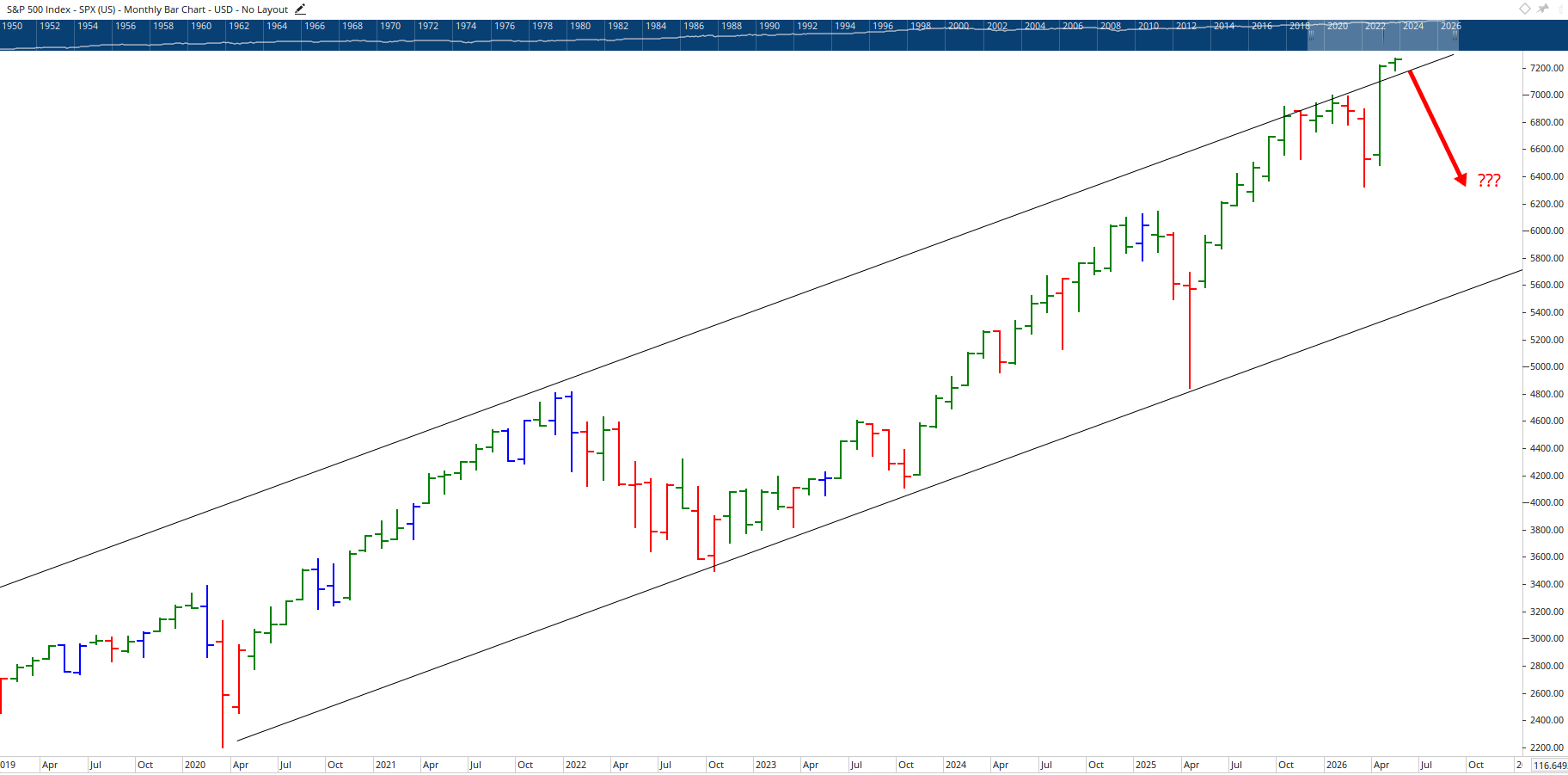
Looking at the S&P 500 chart, since the 2020 COVID low, the index has been tracking a remarkably uniform channel, and it's now sitting at the top of that band. Historically, over the last five to six years, this is exactly where the market has pulled back. A healthy correction from here could see the S&P drop back toward 6,500 in a mild scenario, or into the 5,800 range if a deeper 20% correction unfolds.
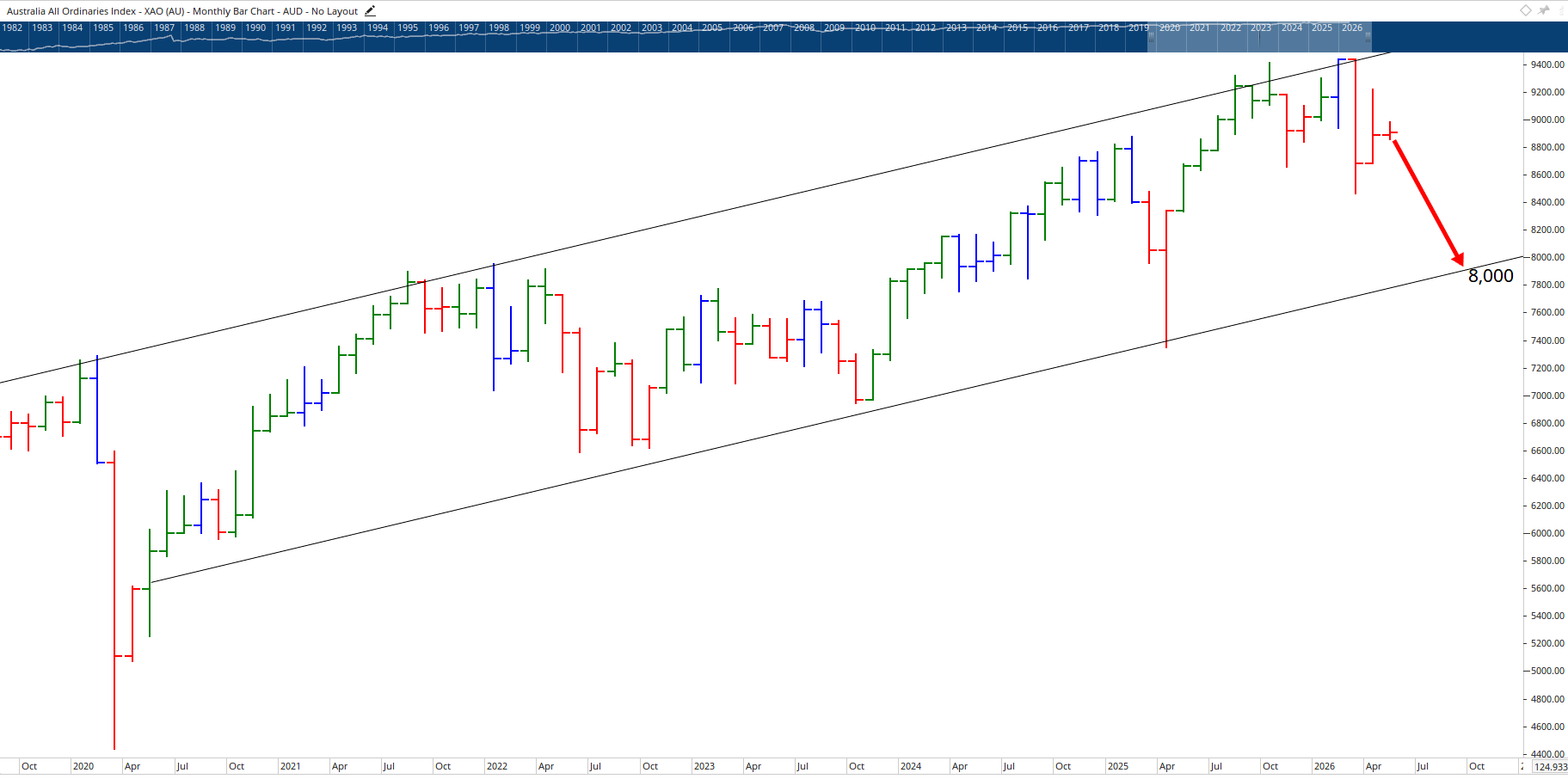
Our own market tells a slightly different story. The ASX hasn't accelerated away as aggressively as the US since COVID, but it's also testing the top of its channel, with two failed attempts in December 2025 and April 2026. A worst-case correction could take us back to 8,000, roughly a 15% pullback.
The Equal-Weighted Index Tells a Hidden Story
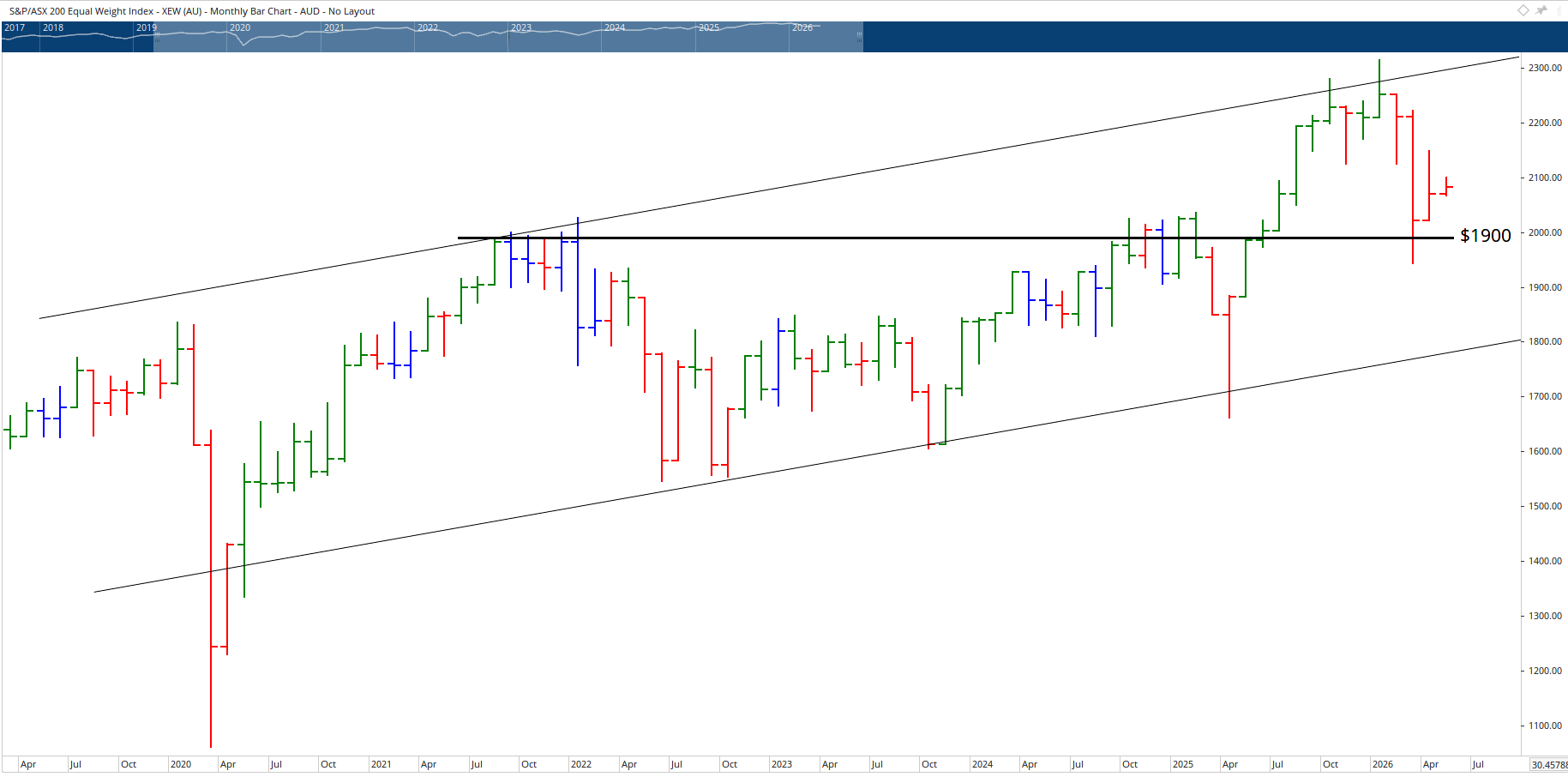
One of the more revealing charts Filip brought up was the ASX 200 equal-weighted index. Because the Big Four banks and resource giants like BHP and Rio make up over 40% of the standard index, when they move together, they distort how the "market" is really performing.
The equal-weighted version, which assumes every stock contributes equally, has already come off the top of its band and is now sitting closer to the middle, nearing support at 1,900. This suggests the broader market is actually weaker than the headline index implies, reinforcing the case that stock selection matters far more than index exposure right now.
Why this is a Stock Pickers' Market
The critical takeaway from the show was this: broad themes like "buy healthcare" or "buy the banks" are no longer enough. There are opportunities in every sector, but plenty of traditional safe havens are quietly getting destroyed even in a rising market.
Cochlear and CSL have both been pulling back sharply. The Big Four banks collectively have taken heat. Even in a bull market, getting stock selection wrong can wipe out significant capital. Timing and stock selection are the twin pillars of success in this environment, and that requires developing proper technical analysis skills through our structured trading courses rather than following tips from YouTube or chat forums.
Stock 1: National Australia Bank (ASX: NAB)
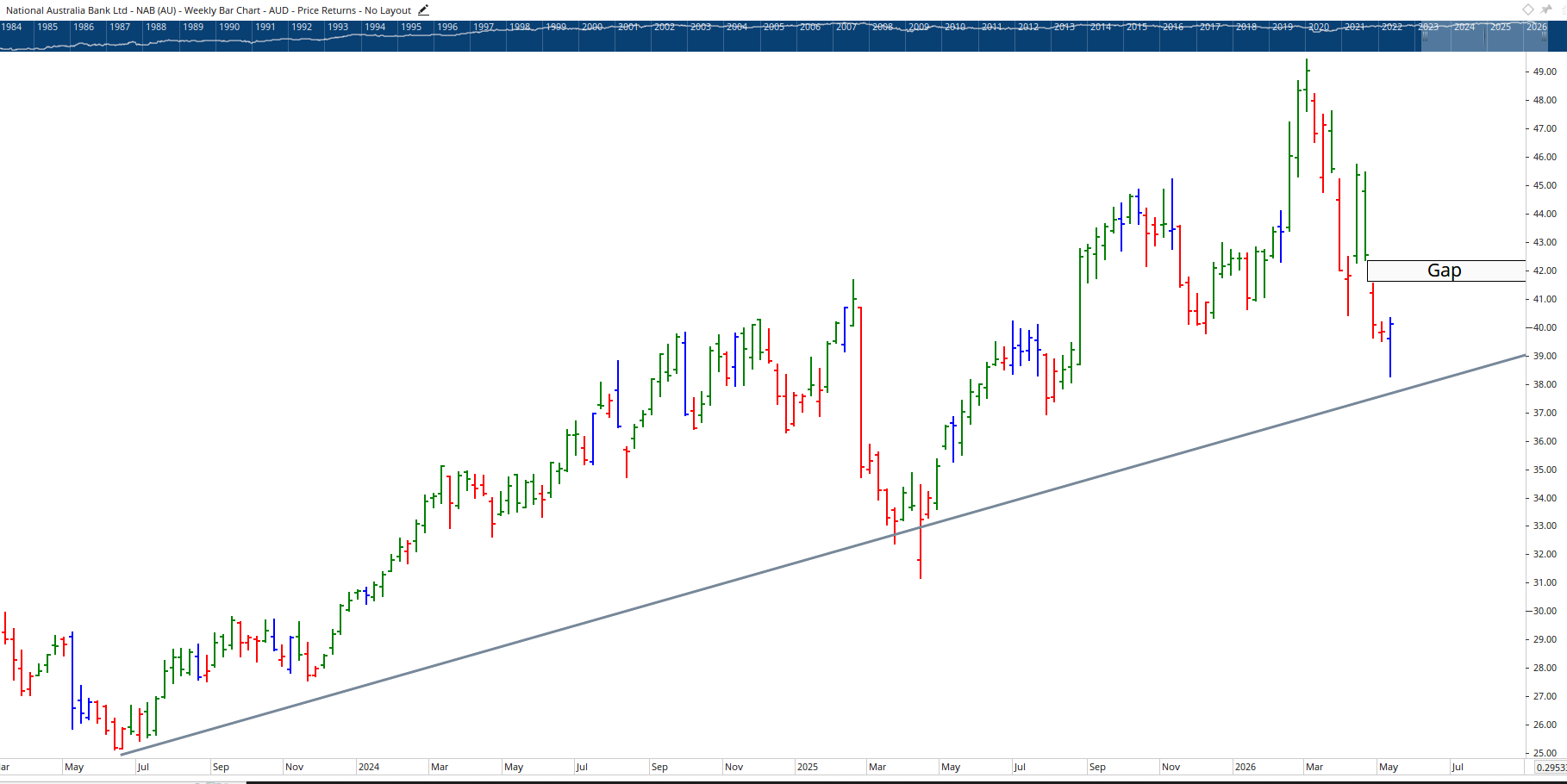
NAB has had a deeper correction than its peers, but that's exactly why it's interesting right now. The stock has pulled back to the angle of long-term support, just above the 2015 high of $37.50, an area it recently broke through and is now testing from above.
On the weekly chart there's an unfilled gap that markets typically want to close, which aligns neatly with this technical level. Rising impairments and provisioning could pressure earnings, but higher-for-longer rates continue to support banking margins. As Janine noted, this looks like a healthy pullback, not the start of something more serious, provided the level holds.
Stock 2: Fineos Corporation (ASX: FCL)
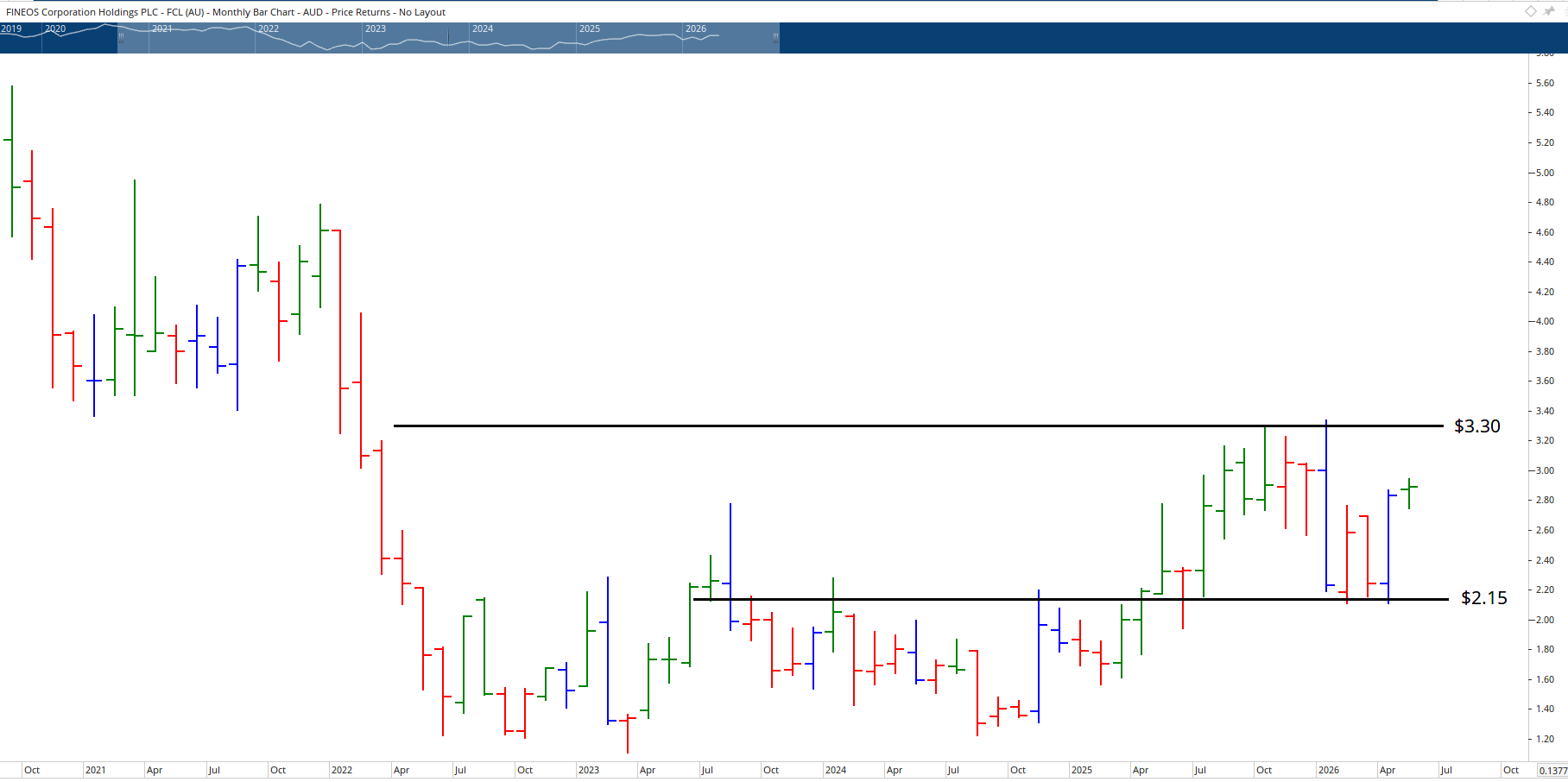
Fineos is an insurance software business growing its subscription income steadily, but it needs to prove it can turn that into serious profits. The chart is doing exactly what you'd want to see for a stock coming off long-term lows.
Since December 2025, Fineos has been in a clean uptrend, successfully testing and holding the $2.15 level, which is a strong confirmation for a stock coming out of a basing pattern. April was strong despite broader market weakness, and May has started well. The next major resistance sits at $3.30. If it breaks, this one has a real chance at $5 over the medium term.
Trending Topic: The RBA Cash Rate and What It Means for Markets
The RBA lifted the cash rate by 0.25% to 4.35% this month, with commentary suggesting an 80% probability of a hike. The economy now faces two choices: recession or inflation, and neither is palatable.
Headline inflation topped out at 4.6%, blown out by the global fuel crisis, while underlying inflation held steady at 3.3%. Governor Michelle Bullock is attempting a soft landing, but history shows the RBA has overshot the runway on multiple occasions.
The Counterintuitive Truth: Rising Rates Can Mean Rising Markets
Looking at decades of data, something interesting emerges: each time the cash rate has been rising, our market has generally risen with it. It's counterintuitive, but rate rises often reflect a strong economy with businesses making money and investors deploying capital accordingly.
The danger point has historically been when the RBA continues to raise rates after the market has peaked, as happened in May 2008, forcing rapid reversals that create massive damage. If Bullock can genuinely deliver slow-and-steady policy rather than aggressive overshoots, investors shouldn't be as worried about the cash rate as headlines suggest.
That said, there's real concern that current rate decisions are being driven by an unemployment figure largely propped up by public-sector spending, rather than genuine private-sector strength. Something to watch closely.
Stock 3: Mader Group (ASX: MAD)
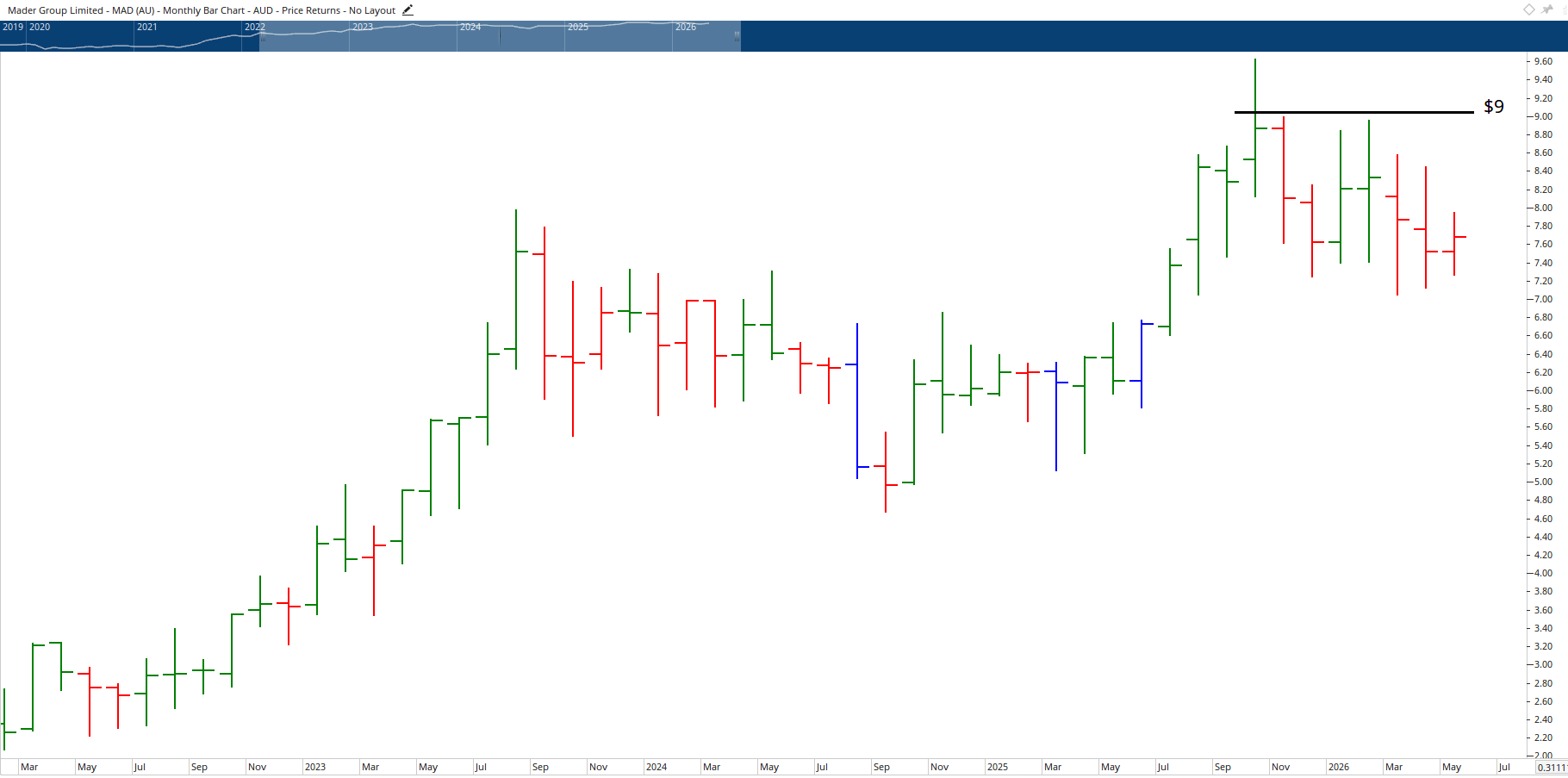
Mader Group provides mining services with strong demand from miners expanding overseas, though wage inflation is a headwind. After a sharp rise and a clean consolidation, the stock has broken out and is now testing support on the long-term angle of the rise.
If it holds the line and pushes back above $9, a new all-time high looks likely. The levels to watch are the March low and the April high of $8.45. A break below March's low would change the picture, so this is very much a case of letting the chart confirm the story before committing.
Stock 4: Fenix Resources (ASX: FEX)
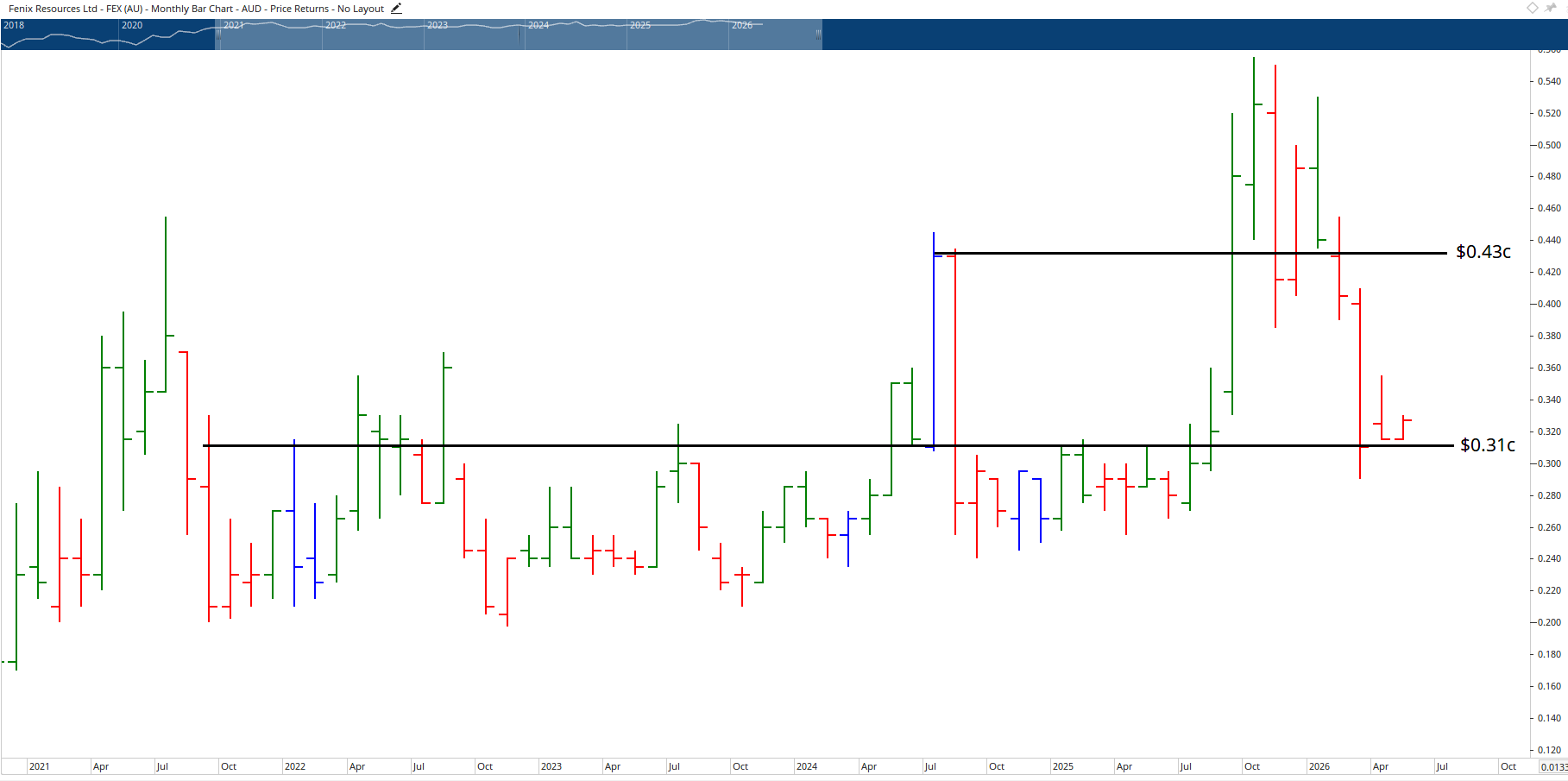
Fenix is an iron ore miner benefiting from sustained iron ore prices and increased production. It's volatile, as these smaller miners typically are, with sharp rises and sharp pullbacks since 2021.
The stock is now sitting at a key level around 31 cents, with a potential basing pattern forming. If it holds through here and takes out 36 cents, a fresh opportunity could emerge, potentially back to the 43-cent level or the all-time high. The key warning: don't chase this one. If you miss the initial entry, wait for the next setup rather than forcing a late trade into volatile price action.
Stock 5: Aroa Biosurgery (ASX: ARX)
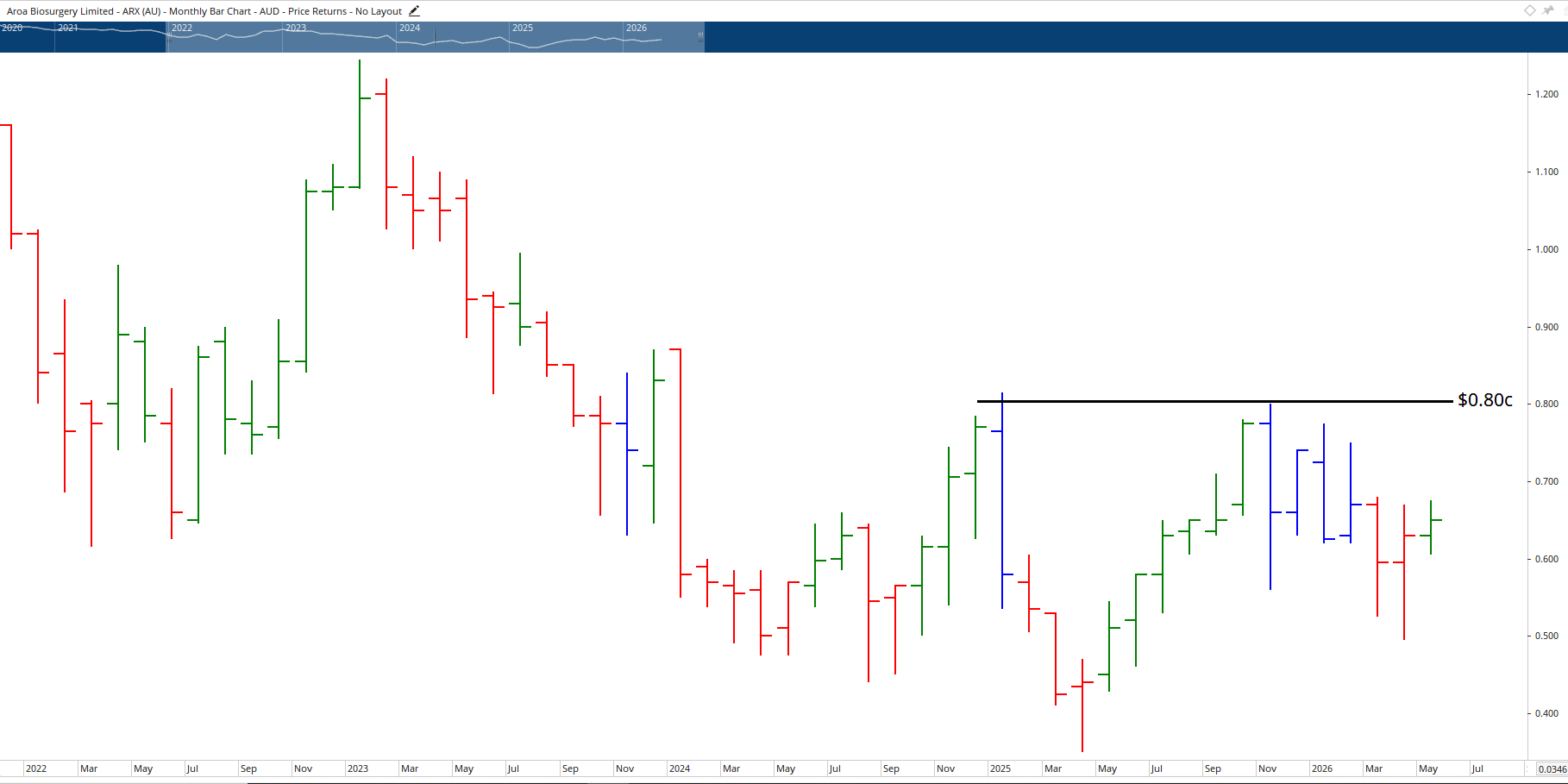
Aroa develops medical products and has reported that sales and earnings are beating expectations, with strong growth in the US from key products. Despite positive fundamentals, the chart has been trending lower, which warrants caution.
However, if this is a genuine turnaround story, the rise could be very nice. The stock is approaching the $1 level, and if it can push back above 80 cents with conviction, a move to $1.30 is on the table. For Wealth Within students, 80 cents is a classic level that should get the eyes gleaming.
Stock 6: Chrysos Corporation (ASX: C79)
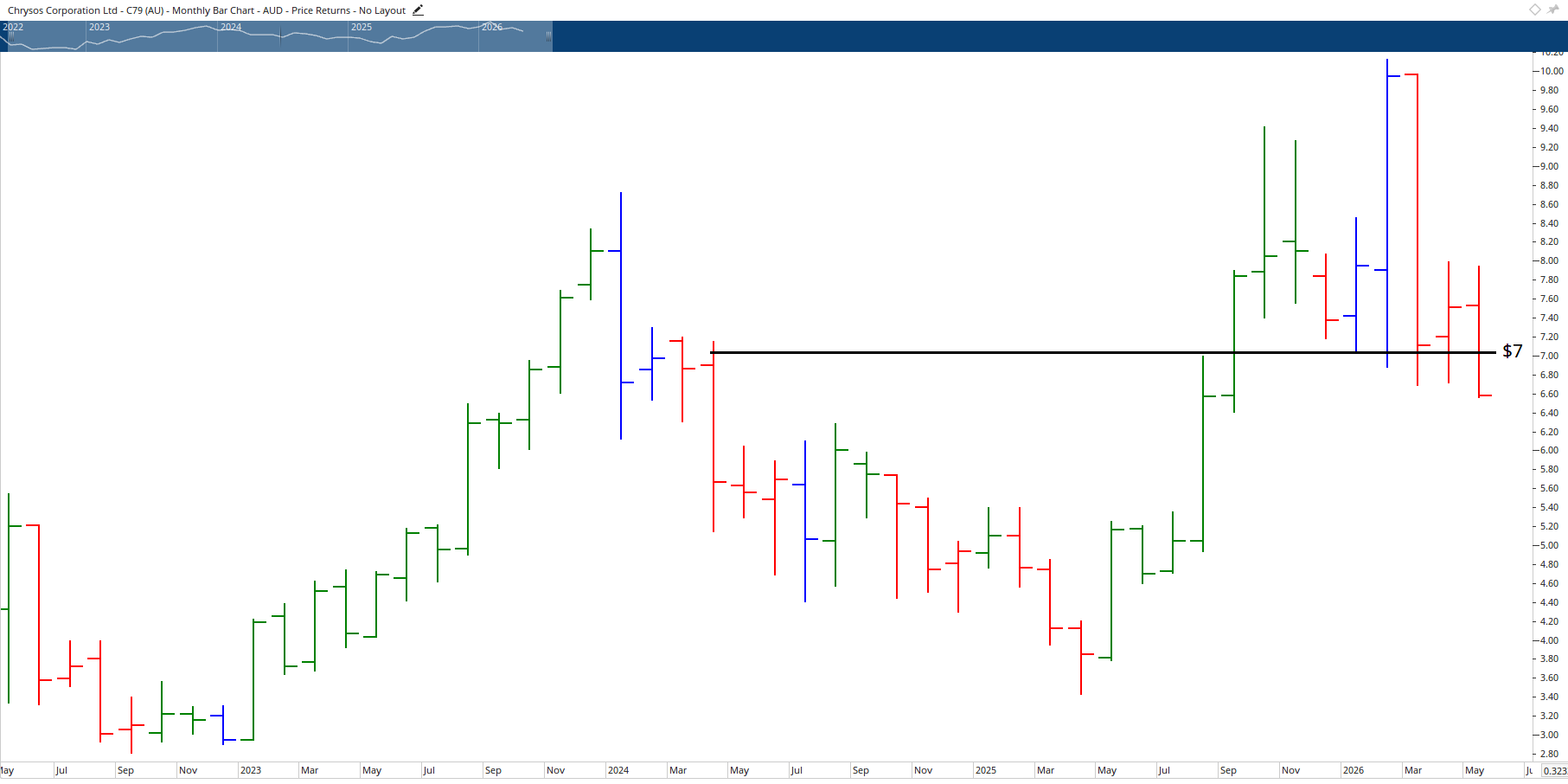
Chrysos is a mining technology company with strong global demand for its gold-testing machines. While some commentators call it overvalued, momentum and genuine support behind a stock can keep it overvalued far longer than rational analysis suggests.
The stock recently broke through its November 2023 all-time high and is now basing above that level. The longer $7 holds as support, the more confidence there is in a push back to $10. A fail at $7 would likely see it retreat into the fives or sixes, so this is very much a level-by-level trade. Taking out $8.35 to $8.40 would close the recent heavy-selling gap and signal genuine strength.
Hot Stock of the Week: Westpac Banking Corporation (ASX: WBC)
Westpac delivered a solid half-year result with $3.4 billion profit, strong lending growth, and a robust capital position, while continuing to invest in AI-driven systems (and cutting jobs in the process). However, profit was slightly lower than the previous half, and provisions increased due to global uncertainty.
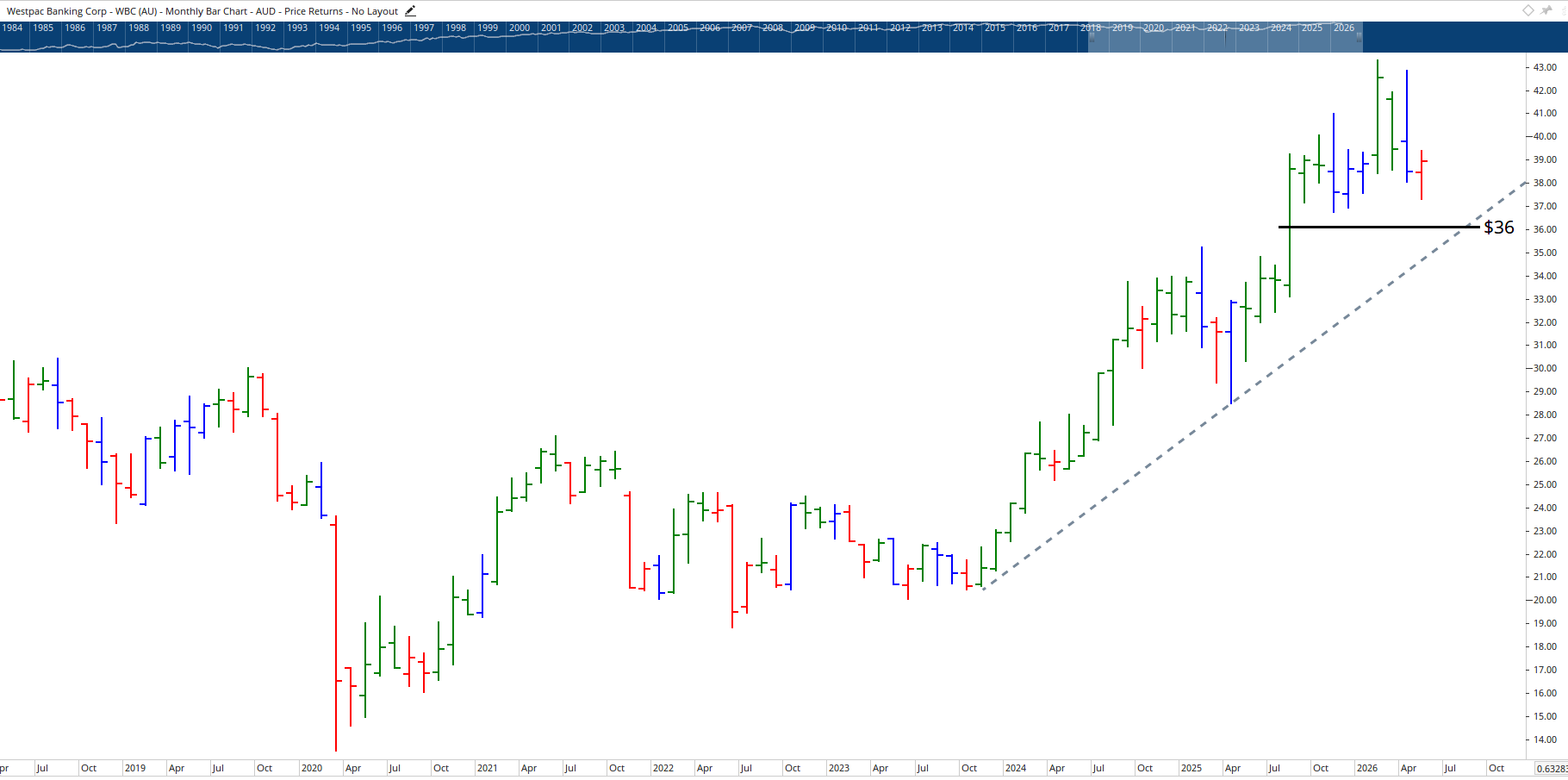
Technically, Westpac has held up better than NAB and is now breaking through to a new all-time high. But here's the caution: banks don't just go up. Westpac fell 54% during the 2009 correction and 65% during the 2020 COVID crash. The idea of simply "buying banks and forgetting about them" is exactly the kind of thinking that leaves portfolios in tatters during corrections.
The better opportunity for a lower-risk entry is likely around $35 to $36, similar to the April 2025 setup. Anything near current levels carries the risk of a short-term spike to $42 before a deeper washout. Janine's longer-term target on a clean breakout? Through $50.
Why Buy and Hold Is So Dangerous Right Now
If there's one message worth repeating from this show, it's this: the old buy-and-hold mentality is yesterday's thinking. With smartphones, AI, and algorithms driving increased volatility since 2000, the market simply doesn't behave the way it did when passive investing became mainstream.
You could have bought the Big Four banks in 2006 and been at roughly the same price today. That's two decades of capital going nowhere. Meanwhile, traders with structured strategies have been picking off short, medium, and long-term opportunities over the same period.
The alternative is simple but not easy: learn to identify high-probability setups, manage risk with defined stop losses, and exit trades with discipline rather than hope. This is exactly the framework taught through the Short Course in Share Trading for beginners and the Diploma of Share Trading and Investment for those wanting a complete, government-accredited trading education.
Final Thoughts
Markets are at a critical juncture. The S&P 500 is at the top of its multi-year channel. The ASX is testing key resistance. War tensions, rate decisions, and upcoming budget announcements are adding noise at every turn. And through all of it, the question isn't which direction the market is going; it's what you're doing about it.
Stock selection is the entire game right now. NAB, Fineos, Mader, Fenix, Aroa, Chrysos, and Westpac each present unique setups with clearly defined risk profiles. Each one demands a specific approach, specific levels, and specific timing. None of them should be bought on headlines or held blindly.
For those watching from the sidelines, now is arguably the best time to invest in your trading education before the next major opportunities arrive. You can also browse the latest Hot Stock Tips videos or learn more about Wealth Within and our 24-plus-year track record in delivering results-driven trading education.
Because in a market where buy-and-hold is broken, the traders who know how to buy, manage, and sell are the ones who will win the next decade.
Disclaimer: This article is general in nature and does not constitute personal financial advice. Always conduct your own research or consult a licensed adviser before making investment decisions.