The ASX's Biggest Stocks Just Woke Up, and Here's Why It Matters
By Dale Gillham, Janine Cox and Fil Tortevski
Reading Time: 10 minutes
General Advice Disclaimer
This article is for general educational purposes only and does not take into account your personal financial circumstances, objectives or needs. Before making any investment decisions, consider your individual circumstances and seek independent financial advice if necessary.
The ASX's biggest stocks have just woken up, and the implications for your portfolio are massive. While the broader market has been struggling to break through the July highs, the top 20 index has quietly pushed through significant resistance around the 5,000 level. That divergence is not a small technical curiosity. It is one of the most reliable signals in Australian market history that a fresh leg higher is being set up by the largest and most influential players in the market.
In the latest Australian Stock Market Show, Chief Analyst Dale Gillham was joined by Senior Analysts Filip Tortevski and Janine Cox to unpack exactly what the top 20 breakout means, why now is the moment for opportunistic investors, and to walk through six blue chip stocks setting up for the next major run.
Why the Top 20 Matters More Than Anything Right Now
The top 20 is not just another index. It represents the health, breadth, and conviction of the biggest end of town, and history shows these stocks often set the tone for the entire market. Looking at the monthly chart back through the GFC period, through 2005 to 2007, the pattern is unmistakable. When the All Ordinaries overtakes the top 20 during a rally, it is typically small cap speculation driving the move, and a correction usually follows. When the top 20 leads, as it did through the 2011 to 2019 run, the moves are healthy, sustained, and offer pullbacks worth buying.
Right now the top 20 is dominating participation. That dynamic points to a much healthier situation than the doom and gloom headlines suggest. It is also a sharp contrast to the United States, where fear is building because the Magnificent Seven stocks driving the market are actually pulling back. Australia is in a genuinely different position, which is why local investors need to pay attention to what is happening on our own market rather than importing sentiment from Wall Street.
Now is the Time to Be Opportunistic
Consumer and business sentiment sits at some of the lowest levels seen in decades. Combine that with the recent federal budget changes, and the natural instinct of most investors is to pull back, wait, and hope things settle. That is precisely the wrong response. When distractions increase and the mainstream becomes fearful, opportunities emerge for those who are informed and prepared.
We have already seen enquiries about investing and wealth building drop across the board. Comments about paying more tax on investments are everywhere. But paying more tax means making more money. A better response is to sit down with your accountant, understand how the rules apply to active investors versus passive ones, and structure your affairs to keep more of what you make. Turtling into the shell until the sun is shining again means missing the best 20 to 30 percent of any move. When the news finally turns positive, the opportunity is largely gone.
Six Top 20 Stocks Set for the Next Major Run
1. Brambles (BXB)
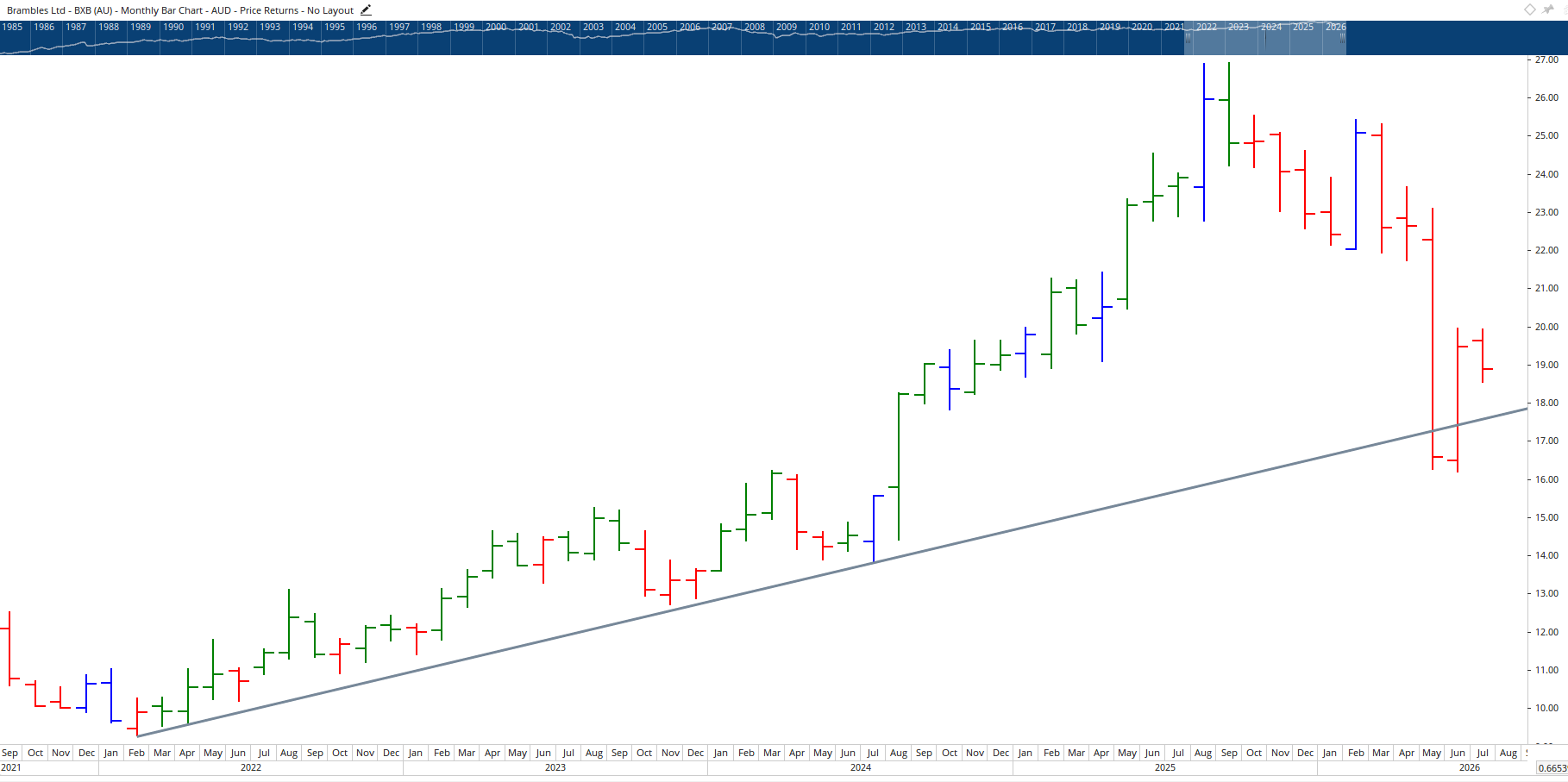
Brambles has just experienced a monster drop, falling around 40 percent from its recent highs. Currently still down about 30 percent, this kind of accelerated decline often signals a big opportunity is not far around the corner. The stock had a parabolic run through its previous move which was a classic sign that money was going to run out, and once the truth emerged, price restabilised, but critically it stabilised at a much higher price than the prior consolidation zone. It did not fall back to the $16.30 level. It is holding up nicely, which is important, giving it more time to unfold. There is a substantial opportunity setting up here for patient investors.
2. National Australia Bank (NAB)
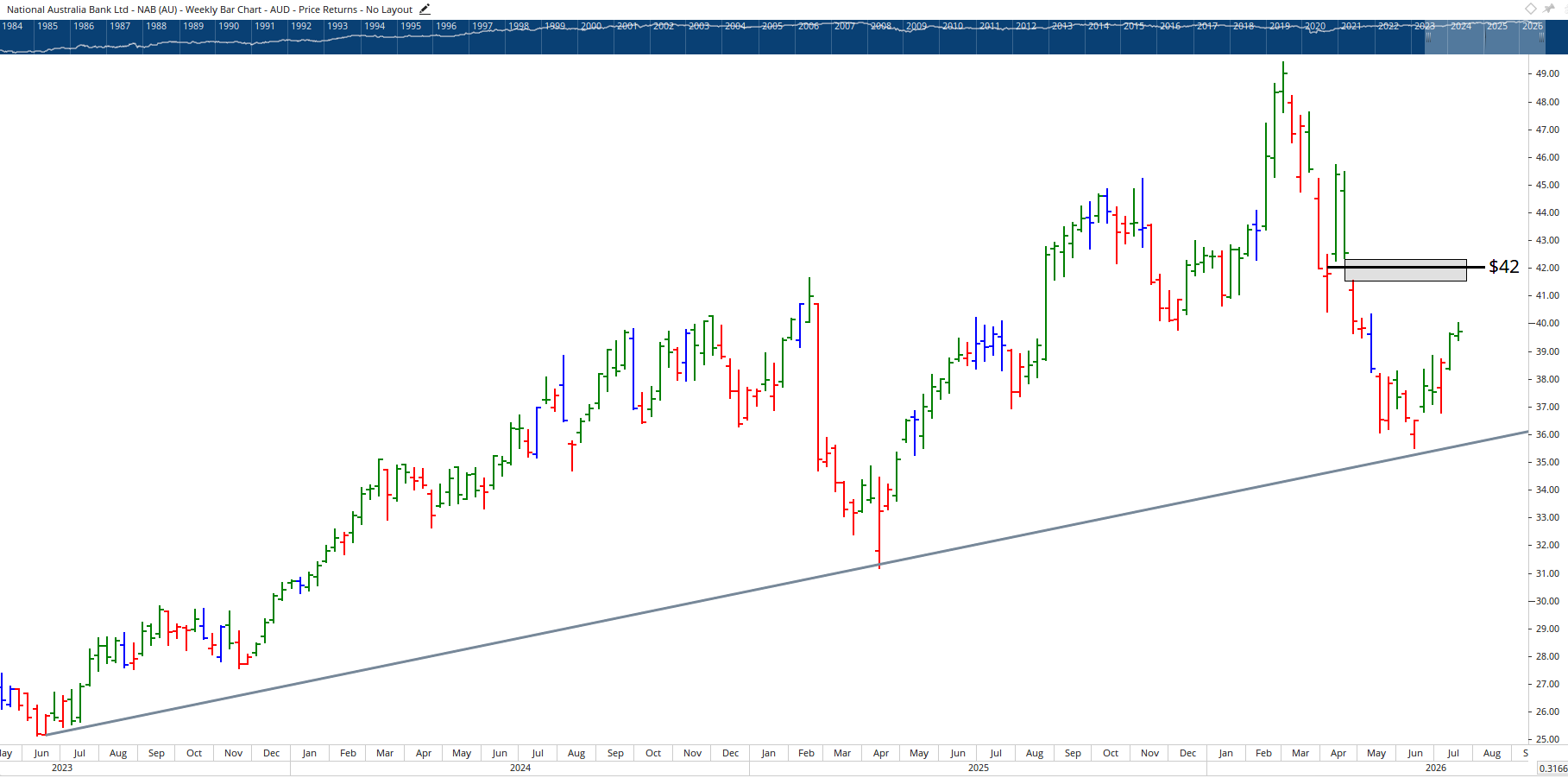
Despite recent headlines about hedge funds shorting the major banks, price action tells a different story on NAB. On the monthly chart, price has pulled back beautifully to the momentum trend, showing a healthy correction rather than a rollover. Critically, NAB is holding above its 2007 GFC high, which is a hugely important long-term technical level. On the weekly chart, there is a gap up around the $42 level that the market often likes to return and fill, providing a potential short-term opportunity even at current prices. Volume is supportive, and nothing in the price action confirms the bearish shorting narrative. When the media tells you one thing and price shows you another, always trust the price.
3. Northern Star Resources (NST)
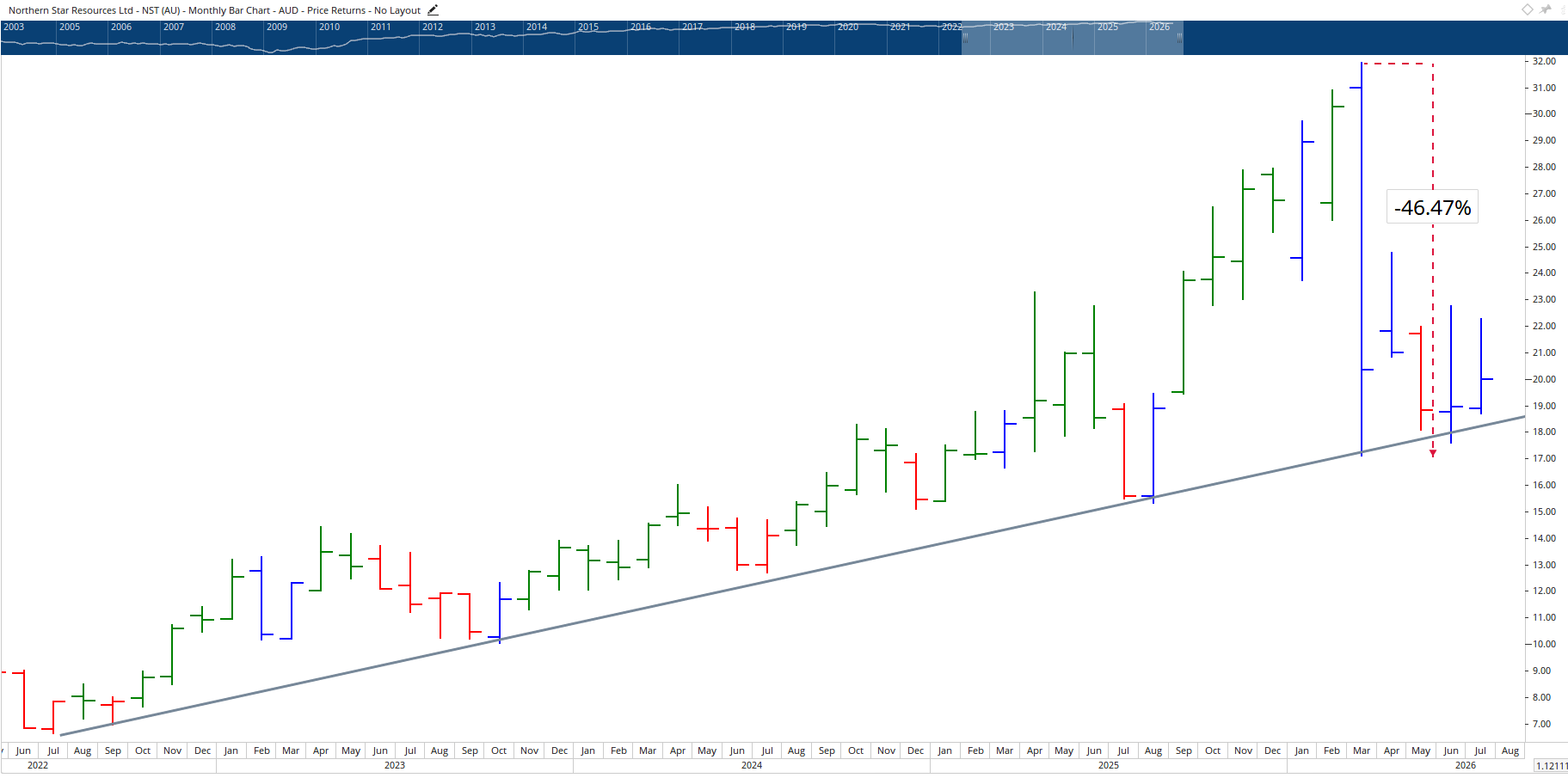
Northern Star has experienced a massive fall of around 50 percent from the highs in reaction to the gold price correction, and even now it sits about 37 percent below those levels. The beautiful angle of the current trend is telling you something significant is setting up. Direction has not yet been confirmed, but for savvy investors paying attention rather than focusing on fear, the next run in Northern Star could be substantial. The key level to watch is whether the recent low holds. If it breaks, wait for a fresh trend line to form and give a cleaner entry. This is a stock that rewards patience.
4. Rio Tinto (RIO)
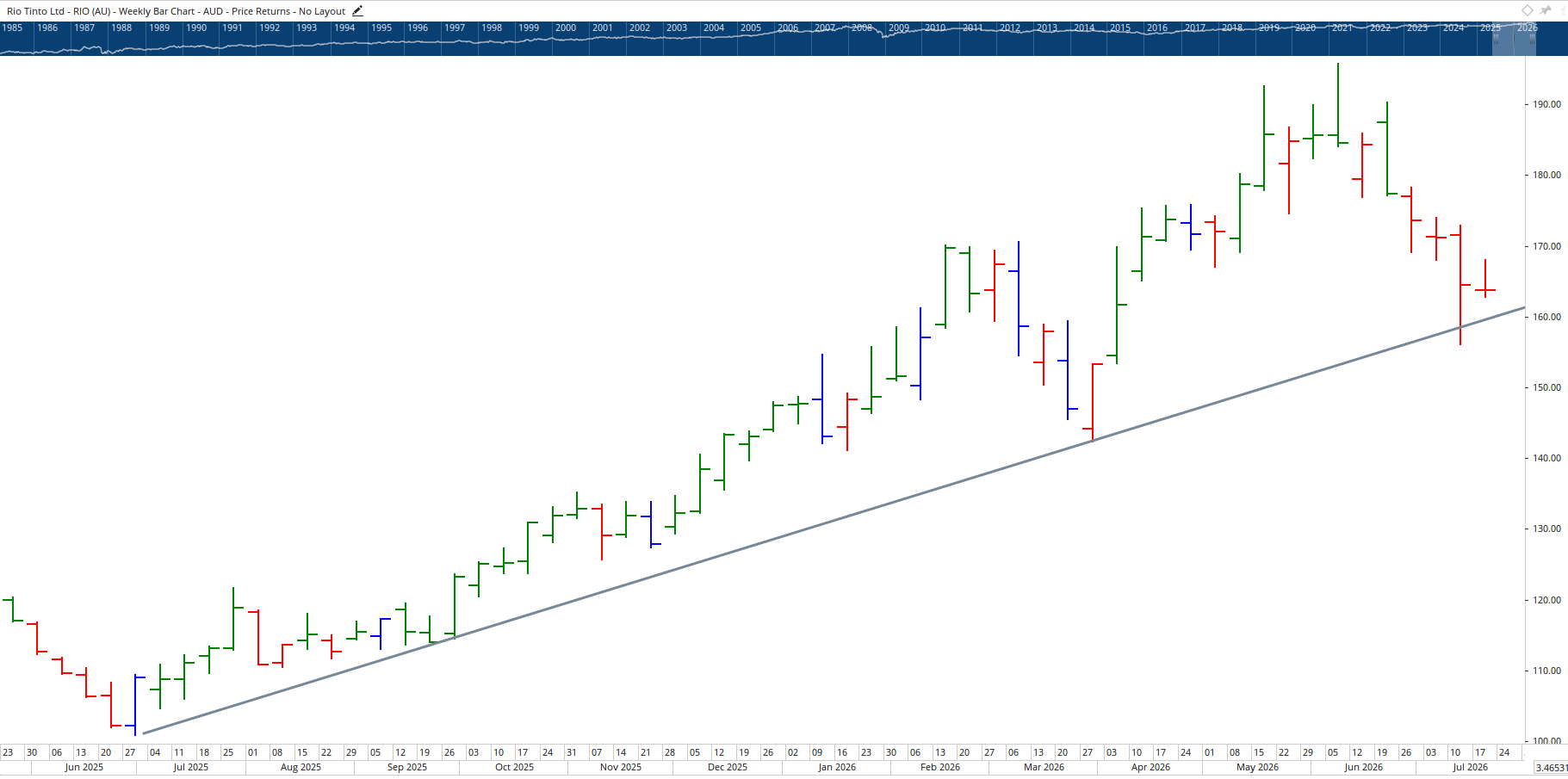
Rio had a monumental run recently, and remember how doom and gloom investors were on Rio and BHP not long ago. Well, the run is not over. Price has pulled back to a beautiful trend line and is now setting up the next consolidation. A simple trend line here allows you to see when sentiment shifts regardless of what the media is saying at the time. When Rio and BHP set up for their next runs, the opportunities will be significant, and commodity stocks historically outperform in rising interest rate environments, which brings us to an important trending topic.
5. Transurban (TCL)
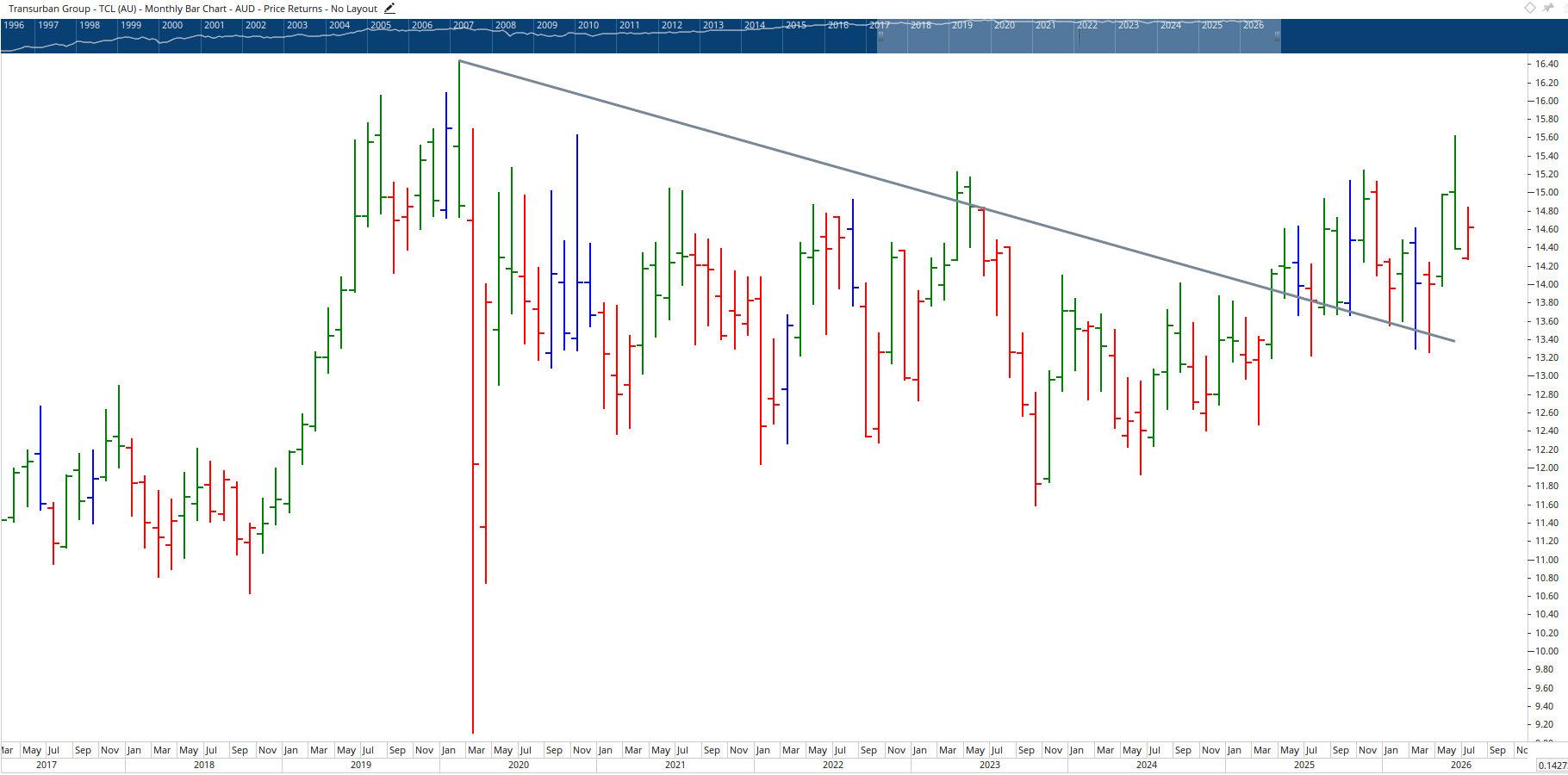
Transurban represents a classic example of a stock that has been through a slow, unexciting grind, which is often where the best risk-to-reward opportunities are found. The stock is breaking through long-term momentum, and if it can clear its November 2025 high, there is potential for a run toward new all-time highs.
6. Westpac (WBC)
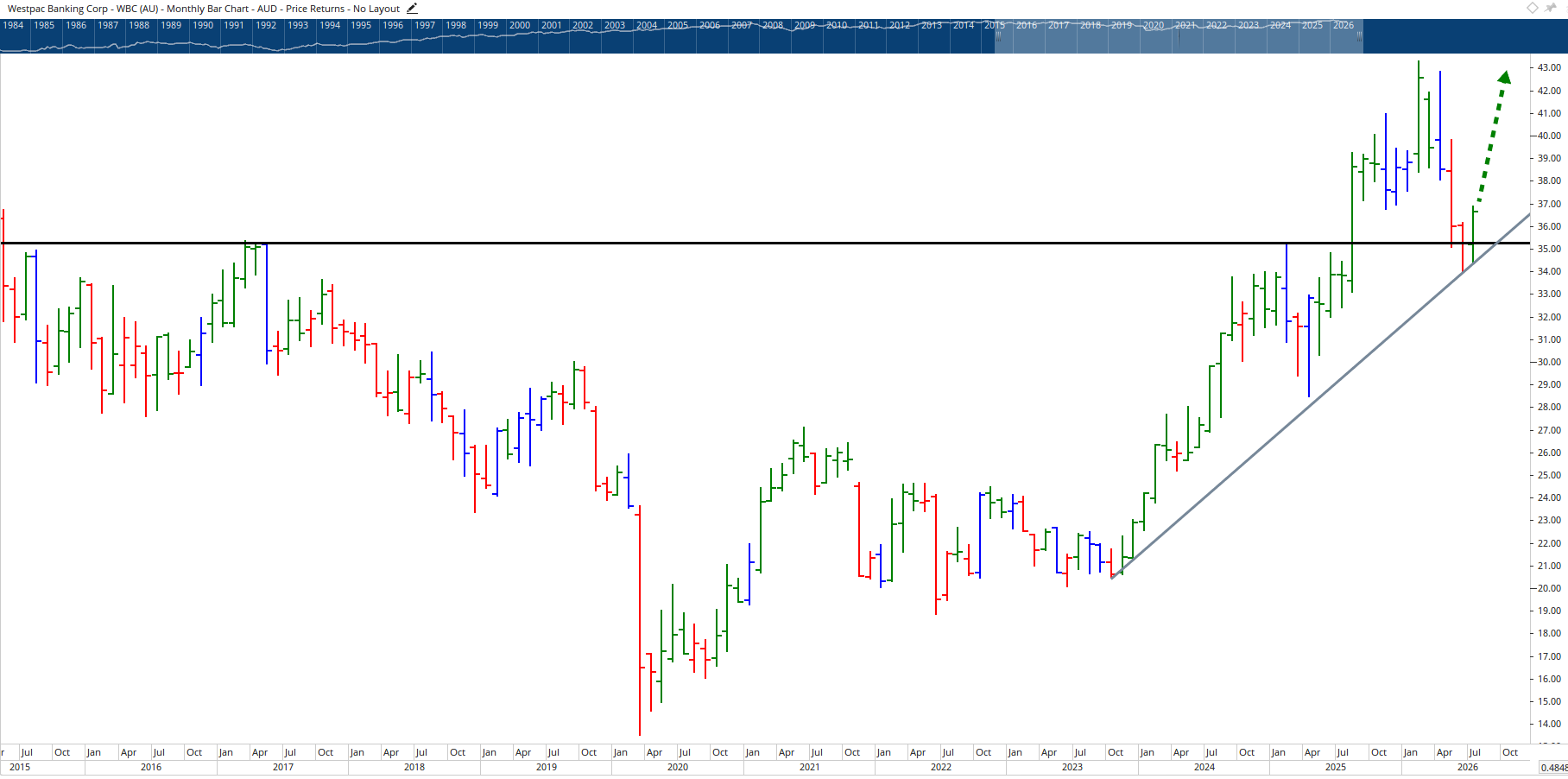
Westpac's current setup mirrors patterns seen after both the GFC and COVID, where extended consolidation was followed by a substantial rise. Remarkably, the current share price sits only around 13 to 14 per cent above its pre-Royal Commission high, suggesting there may be considerably more room to run if history repeats.
ETFs, Concentration Risk, and the Retail Advantage
A worthwhile debate came up around the record levels of money flowing into ETFs. Over 60 percent of Australian ETF inflows are going into international ETFs, and the vast majority of that is going into the US market, largely into the seven biggest technology stocks. If AI valuations suddenly wobble, ETF investors will feel that pain acutely. It is far safer to be in Australia, and even more importantly, you do not need an index tracking ETF to succeed. Consistent research shows that a portfolio of the Top 10 to top 20 Australian stocks outperforms index tracking ETFs over almost any meaningful timeframe.
Similarly, retail investors sometimes worry they cannot compete with the big end of town. That mindset is upside down. As an individual, you can move in and out of any stock without worrying about liquidity, mandates, committees, or slow decision cycles. Institutions are bound by all of those constraints. Retail can also short the market with the same tools institutions use, and with AI and information access, the gap between retail and institutional capability is closing faster than ever.
Answering Reader Questions
Three viewer questions in the show reinforced the exact skills that separate consistently profitable investors from those who leave results to chance.
1. Dino's question on Nexsen was essentially, will it keep going up?
The stock is a recent IPO with a solid base, in trend, at a good buy price. The critical question now is not whether it will keep rising, but how to sell well. Where do you take profit, where do you protect capital, and how do you avoid destroying further upside by exiting too early? While a stock is rising you have no risk. The problem is what happens on the way down, and that is where an exit strategy proves its worth.
2. Paul's question on Medibank Private centred on missing an entry after a great earlier trade
The right response is not to chase. You do not have to be in every run. Congratulate yourself for the earlier win and wait for a proper pullback of around 7 to 8 percent with a healthy sideways move confirming buyers have returned. Otherwise, look for better risk to reward opportunities elsewhere, of which there are many right now.
3. Henry's question on Cochlear captured a common dilemma
Is the correction over, or will it fall further to the $80 mark? Big picture, on the monthly chart, Cochlear has only shown really strong selling with a small amount of recent buying. Short-term traders had a great risk to reward opportunity to trade the bounce off long-term trend. For medium to long-term investors, more confirmation is needed. Wait for stronger buying to hold the April low before getting excited on the biggest timeframe. Often when a stock has fallen this far for this long, the first move higher is a dead cat bounce, and the safest place to buy comes months later.
Hot Stock Tip: Mesoblast (MSB)
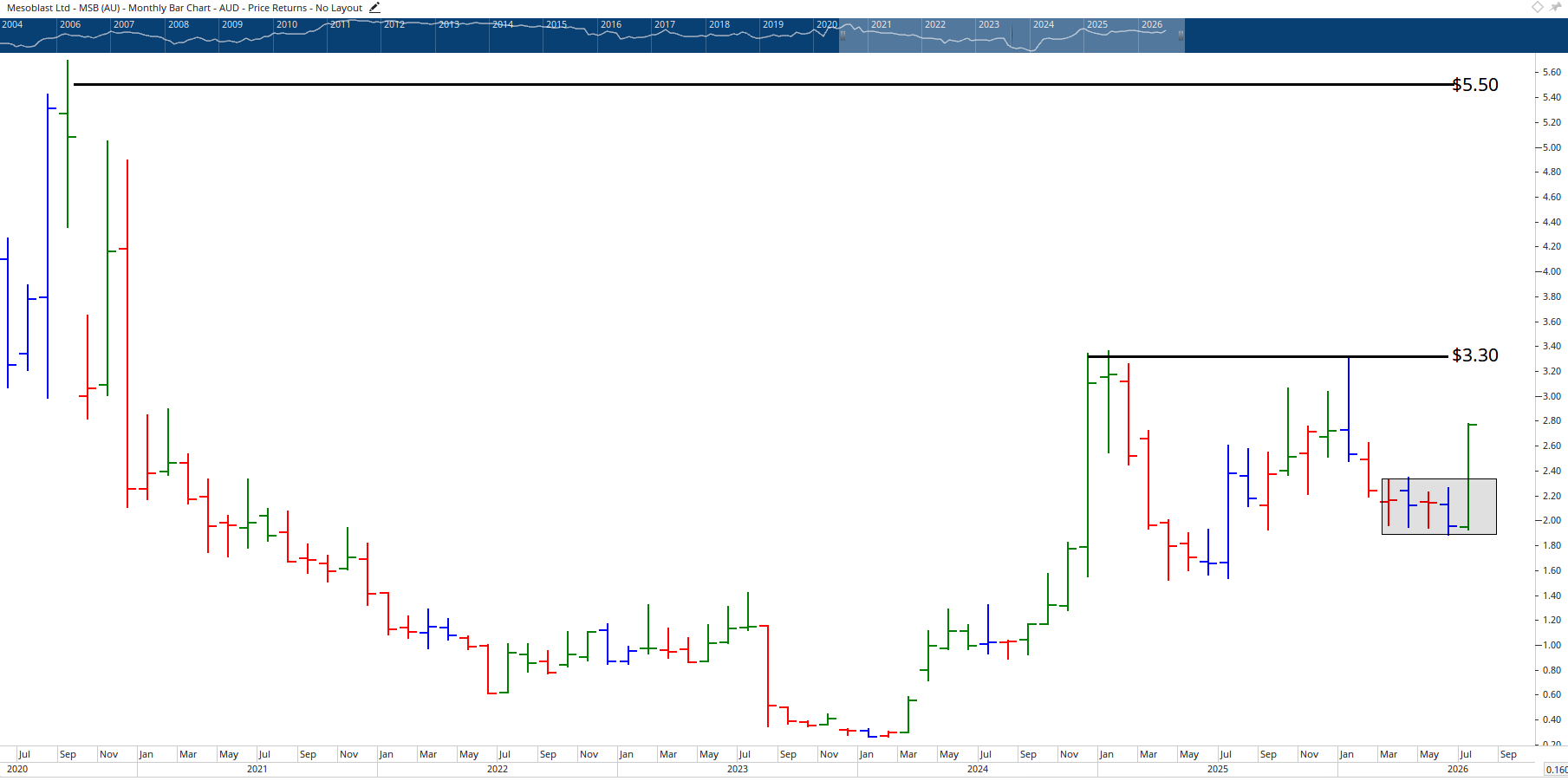
Mesoblast has just reached a major milestone, successfully treating 300 patients in its pivotal Phase 3 back pain trial. The next big catalyst is expected in mid 2027, when results could pave the way for FDA approval of a potential blockbuster therapy. Technically, the stock has broken out of a huge period of sideways congestion, and the initial reaction to the news has been positive.
Historically, once Mesoblast has managed to get back on top of these key long-term levels, big runs have followed. That happened in 2010, again in 2020, and the current break above the 2025 consolidation looks like the same setup. The initial short-term resistance sits around 333. If the stock can break through, a target zone of 540 to 550 becomes realistic. Price action does not lie. When money is being poured in, it is being poured in for a reason, and managing exposure through price is the cleanest way to participate.
The Bigger Picture: Skills Beat Sentiment
Every stock covered in this show required the same underlying skill set to identify. Reading trends, understanding volume, applying simple techniques like trend lines, and thinking in terms of risk to reward rather than just chasing returns. The retail investor's edge is precisely this. Speed, flexibility, focus, and the willingness to learn.
When sentiment is fearful and the crowd is looking the other way, this is when millionaires are made in the stock market. But only for those with the framework to identify what to buy, when to buy, and critically when to sell. That is exactly what we teach through our trading courses. Those wanting a solid foundation in trend analysis, chart reading, and money management can start with the Short Course in Share Trading. Those ready to commit to the complete government accredited program can undertake the Diploma of Share Trading and Investment, which delivers the proven five-step approach used by professional traders. To learn more about who we are, our track record, and how we teach, visit About Wealth Within.
Final Thoughts
The top 20 has broken out, the broader market is consolidating, and sentiment is bearish enough that most investors are looking the other way. That is precisely the environment where the biggest returns are made. Brambles, NAB, Northern Star, Rio, Transurban, and Westpac each offer different entry points into the same underlying theme of blue-chip Australian stocks leading the next major move. Add in Mesoblast for those willing to trade with confirmation on a genuine catalyst play, and you have a range of setups that only appear when the market is quiet.
Interest rates may still be rising, sentiment may still feel weak, and the news cycle may still lean negative. But when interest rates rise, the stock market has historically been the outperformer, and the current setup of the Australian market makes that thesis even more compelling. The question is not whether opportunity exists. It is whether you have the skills to identify and act on it before the crowd finally catches on.