Inside the Most Unloved Sector Set for Biggest Reversal in Decades
By Janine Cox, Fil Tortevski and Pedro Banales
Reading Time: 15 minutes
The most beaten-down sector on the ASX is quietly setting up for what could be the biggest reversal we have seen in decades. While the headlines have been dominated by banks, miners, and mega-cap tech, the sector that most investors have written off is showing early technical and fundamental signs of a major turnaround, and the implications for portfolios could be significant.
In the latest episode of the Australian Stock Market Show, senior analysts Filip Tortevski and Janine Cox, and Pedro Banales break down why the healthcare sector is poised for a rebound, the seven stocks leading the setup, and the trending question of whether Coles and Woolworths represent the hottest short-term opportunity on the ASX.
Why Healthcare is the Sector to Watch
The ASX sector rankings tell a very clear story. Consumer staples are sitting at the top of yearly returns, and drilling all the way to the bottom you find healthcare. It has been the most unloved sector on the market, and history shows that when a defensive sector reaches these levels of neglect, the setup for a rebound becomes increasingly attractive.
The evidence is not just technical. Analysts at Simply Wall Street are forecasting annual earnings growth for the healthcare sector at almost 25% annually for the next five years, higher than any of its peers on the ASX. On top of that, the sector is currently trading well below its five-year median price-to-earnings ratio. The fundamental case for a major turnaround is genuinely building.
Then there is the macro tailwind. The demographic story alone is extraordinary. Australians aged 65 and over are projected to rise from 4.3 million in 2021 to 6.7 million by 2041, an increase of more than 50%. Even more striking, Australians aged 85 and over are expected to double past one million by 2042. That gives the healthcare sector a runway of structural demand that few other sectors can match. When you combine sector-level neglect with structural tailwinds and improving fundamentals, the conditions for a multi-year reversal come sharply into focus.
1. CSL Limited (CSL)
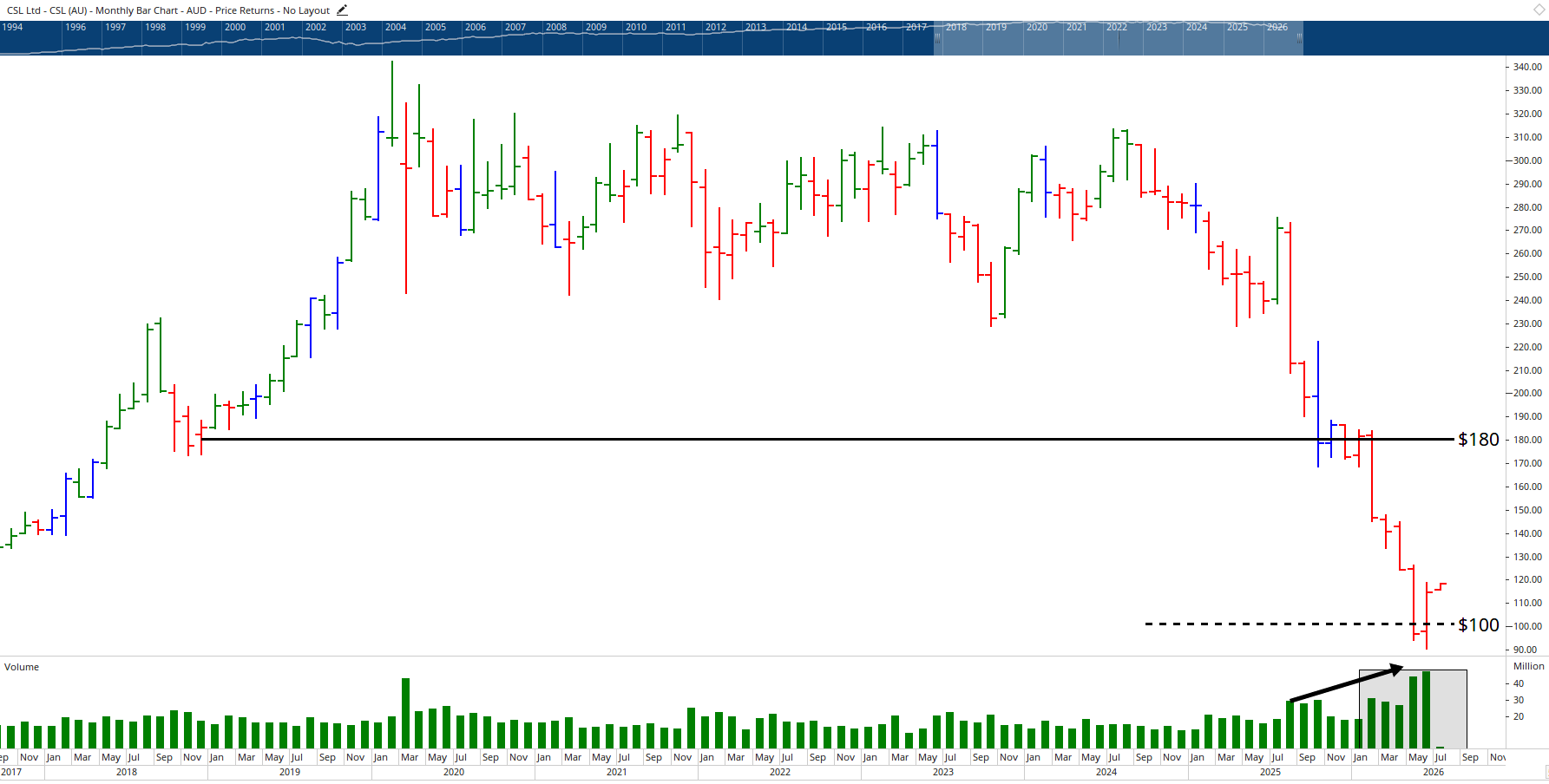
CSL has come off a critically important bottom, and the technical picture is genuinely exciting. Volume has been rising into the low and remains high on the exit, which is exactly what you want to see when a stock is turning. Some of that volume is likely short covering, which explains the strength of the bounce, but the underlying pattern is constructive.
The stock has come back to the $100 level that has been discussed for a long time, both on this show and across the podcast. The key from here is patience. Waiting for the retest of the low before committing is the professional approach, because the retest is what confirms whether the bottom is genuine or just a temporary bounce.
The upside potential is significant. A pullback closer to $105 followed by a push higher would set up a move back toward the $180 zone, which represents roughly 50% upside from current levels. Short-term resistance sits around $117 to $120, which is worth watching carefully as the first hurdle.
What makes this move different from previous bounces is the alignment of price, pattern, and time. When those three elements line up together, the probability of a major turn increases meaningfully. Fundamentally, CSL is trading at a price-to-earnings multiple around 25, which is well below its historical range. The $92 support has held all the way back to 2006, and this is the kind of level that rewards patient buyers who wait for confirmation.
2. Ramsay Health Care (RHC)
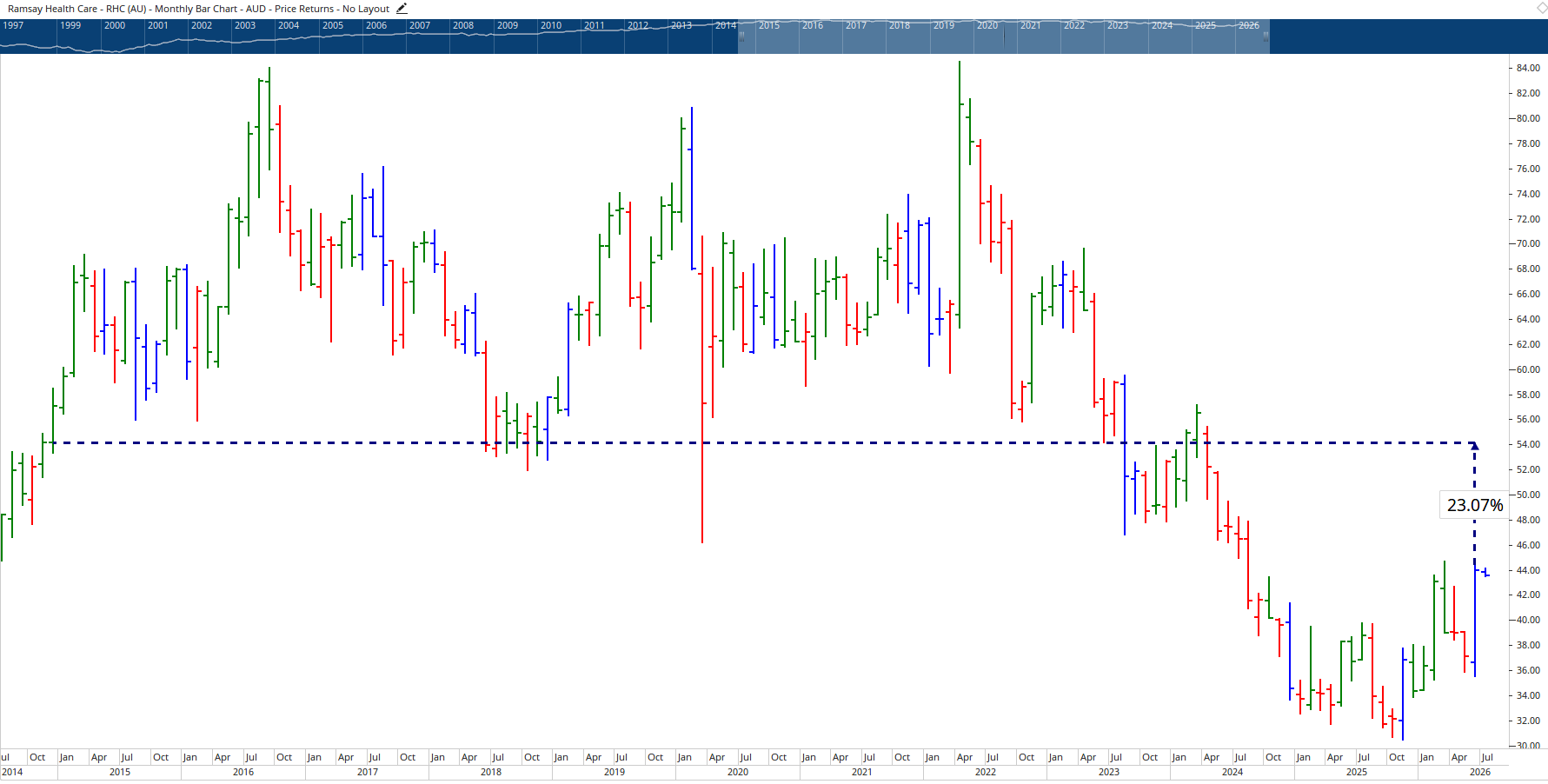
Ramsay is further along in its reversal than CSL, which makes the technical picture more advanced but also easier to interpret. The stock fell to $30 in November, which is remarkable given where the business was trading only a few years ago. However, the pattern of successive tests at similar support levels tells a compelling story about accumulation.
The key insight here relates to structure. Many traders take a position on Ramsay, get stopped out on one of the early attempts to bottom, and then walk away from the stock entirely. This is one of the biggest mistakes investors make. When a quality business is bottoming, the entries often take several attempts. If your risk-reward on each attempt is three, four, or five times your risk, you can afford two or three goes at the level and still come out profitable overall.
Ramsay has now bounced off the low, tested it, and turned back up again. The technical structure suggests around 23% upside, and possibly more if the move extends. The strength this month in the share price is a strong signal that the accumulation phase may be transitioning into a genuine trend.
The lesson from Ramsay is simple. Having a structured framework for entries and exits is what separates traders who catch the turn from those who miss it entirely. Without structure, you attack the market willy-nilly and miss the next run. With structure, you know the plan, you know the risk, and you can pull the trigger again when the setup presents itself.
3. Sonic Healthcare (SHL)
Sonic Healthcare has been one of the great growth stories of the ASX since 1996, delivering approximately 6,000% from its inception low to the all-time high. That kind of long-term compounding is exactly what investors want in a portfolio, and the current pullback offers a rare opportunity to buy back into that trajectory at value pricing.
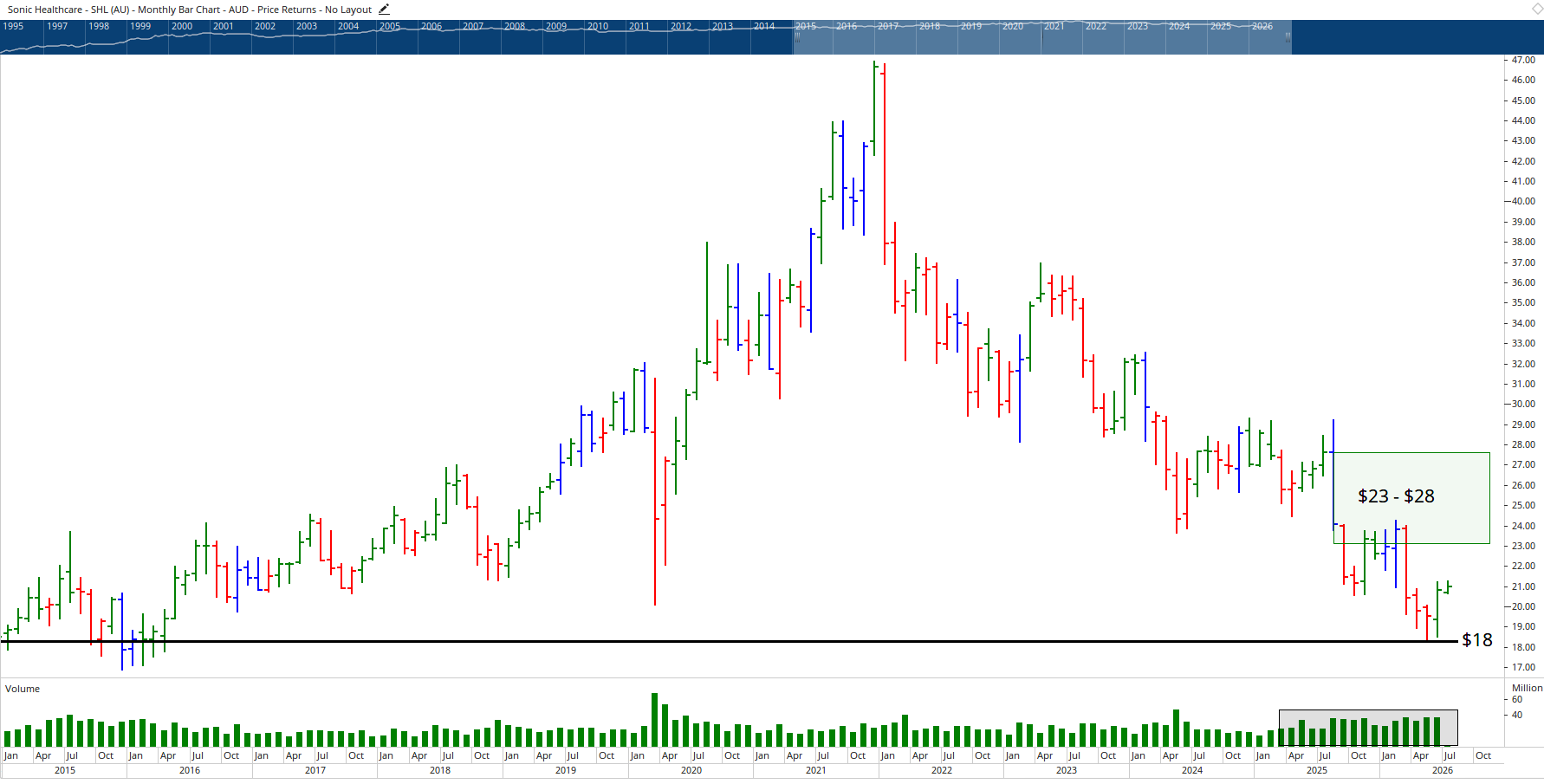
The stock has retraced roughly 60% from the top, which is deeper than its previous major corrections of 45% and 51%. That extension in both price and time typically signals that the stock is due for a meaningful bounce, and the $18 level has been an incredibly important support zone throughout its history.
On the weekly chart, volume is sustained rather than spiking, which is characteristic of accumulation rather than distribution. The stock may still come back to fill the recent gap around $23 to $28 before the next leg higher, but the fundamentals and technicals are lining up. This is one of the best stocks on the ASX for students of pattern analysis, because it offers a plethora of clean cycles, uptrends, and downtrends across multiple decades of price history.
4. Telix Pharmaceuticals (TLX)
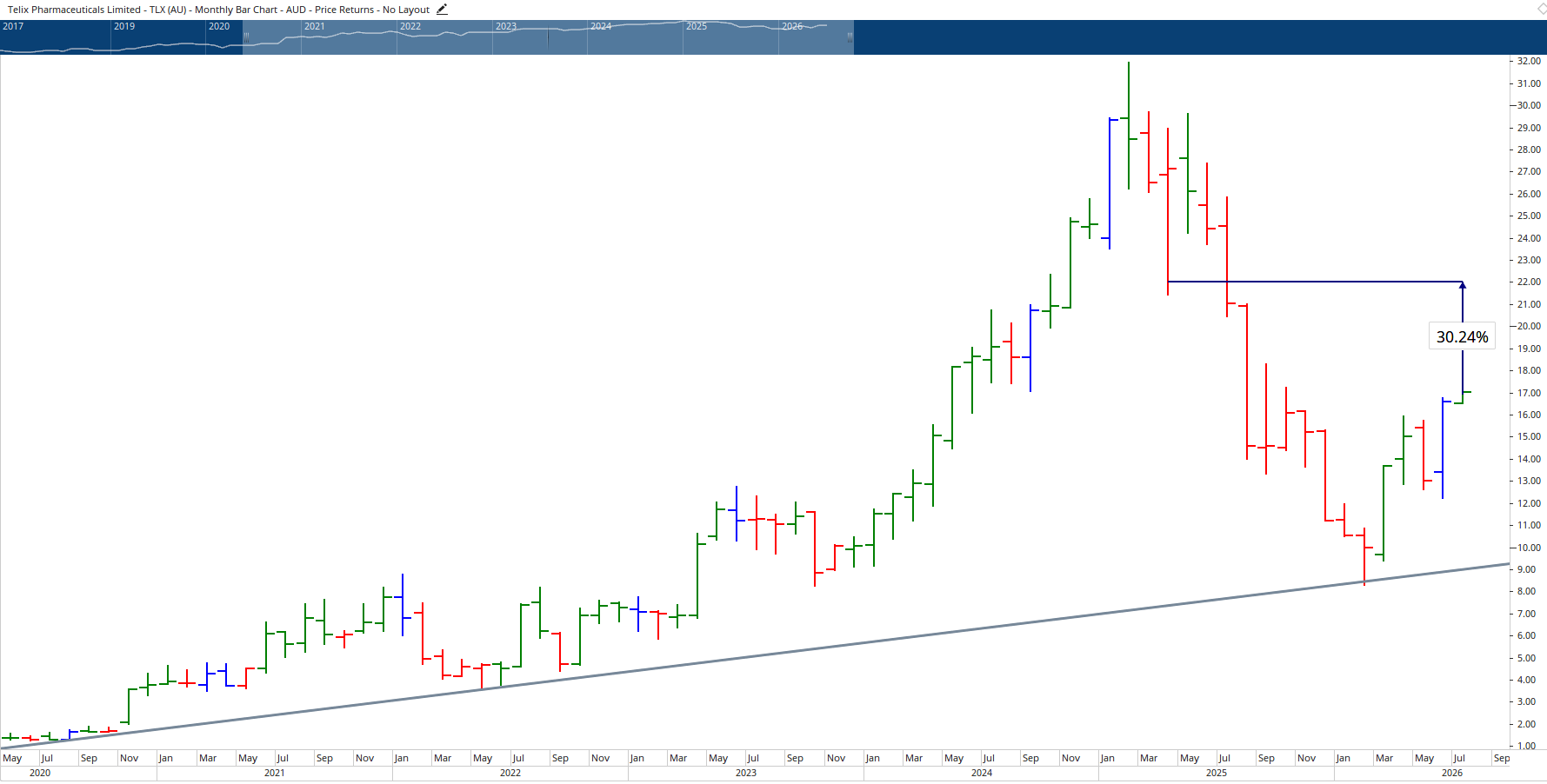
Telix has recently tested support in the first week of June and has been rising steadily since, taking out the previous peak. On the long-term chart, the stock has come back to a critically important level with the trend still intact, which is a bullish setup for those willing to be patient.
The near-term price action needs to hold up over the coming weeks. Some sideways consolidation or a further pullback would be acceptable, but the risk-reward equation is compelling. Short-term upside potential sits around 30%, and possibly more if the momentum extends. As a smaller stock, expect more volatility on both sides, which means the stop loss placement becomes especially important.
Telix has been generating significant interest from investors and mentoring students, and the recent price action confirms why. The retest at the trend line was clean, and the reversal off that support is exactly what you want to see when hunting for turnaround opportunities in the healthcare space.
Trending Topic: The ASX's Hottest Trade Right Now
Many investors are uncertain about where to put their money as the market tone becomes increasingly defensive. If the hottest trade on the ASX is not mining or banks, what is it? The answer may surprise you.
The big four banks have come off the boil as hedge funds increase short positions, and shares have fallen around 20%. Headlines about catastrophic collapses in individual bank stocks like Judo Bank need to be put in perspective. Judo represents around 1% of Australian business lending, whereas CBA alone is valued at around $277 billion. Reading headlines without context is genuinely dangerous, and fear is exactly what hedge funds want investors to feel.
On the mining side, BHP and Rio Tinto are trading close to all-time highs but around 10% off the peak. Both are worth watching closely for the next major opportunity. But right now, the surprising outperformers are Woolworths and Coles.
Coles Group (COL)
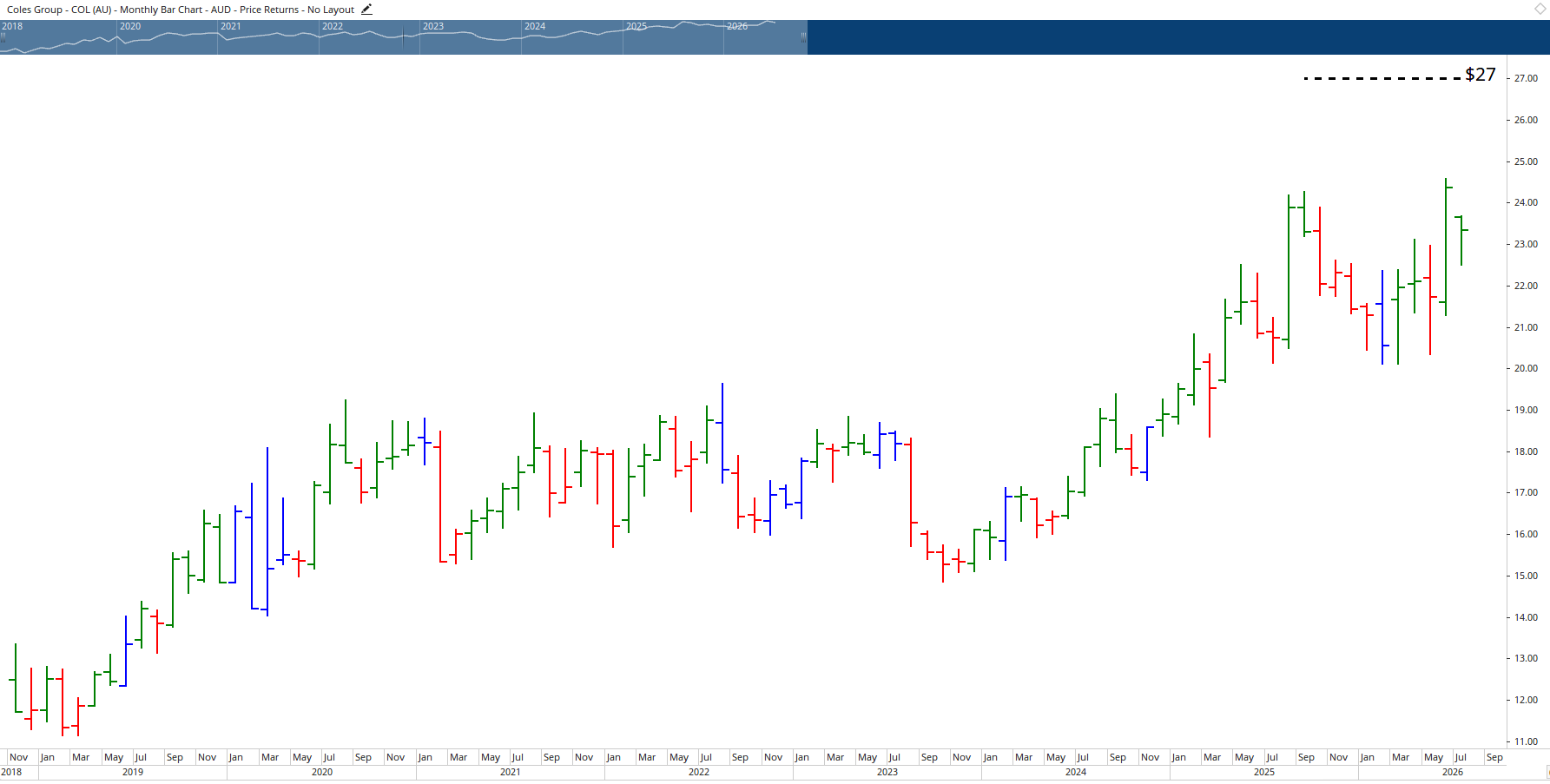
Coles has broken out to fresh all-time highs, which is a strong sign of underlying strength. The stock typically runs for around six to eight weeks, then consolidates and pulls back before the next leg higher. Short-term upside potential sits at $26 to $27, with the possibility of extending toward $28 to $29 and eventually $30. The dividend is a nice bonus for medium-term holders. Some caution is warranted at these lofty levels, because activist involvement can sometimes pump prices temporarily, but the underlying technical structure is genuinely strong.
Woolworths Group (WOW)
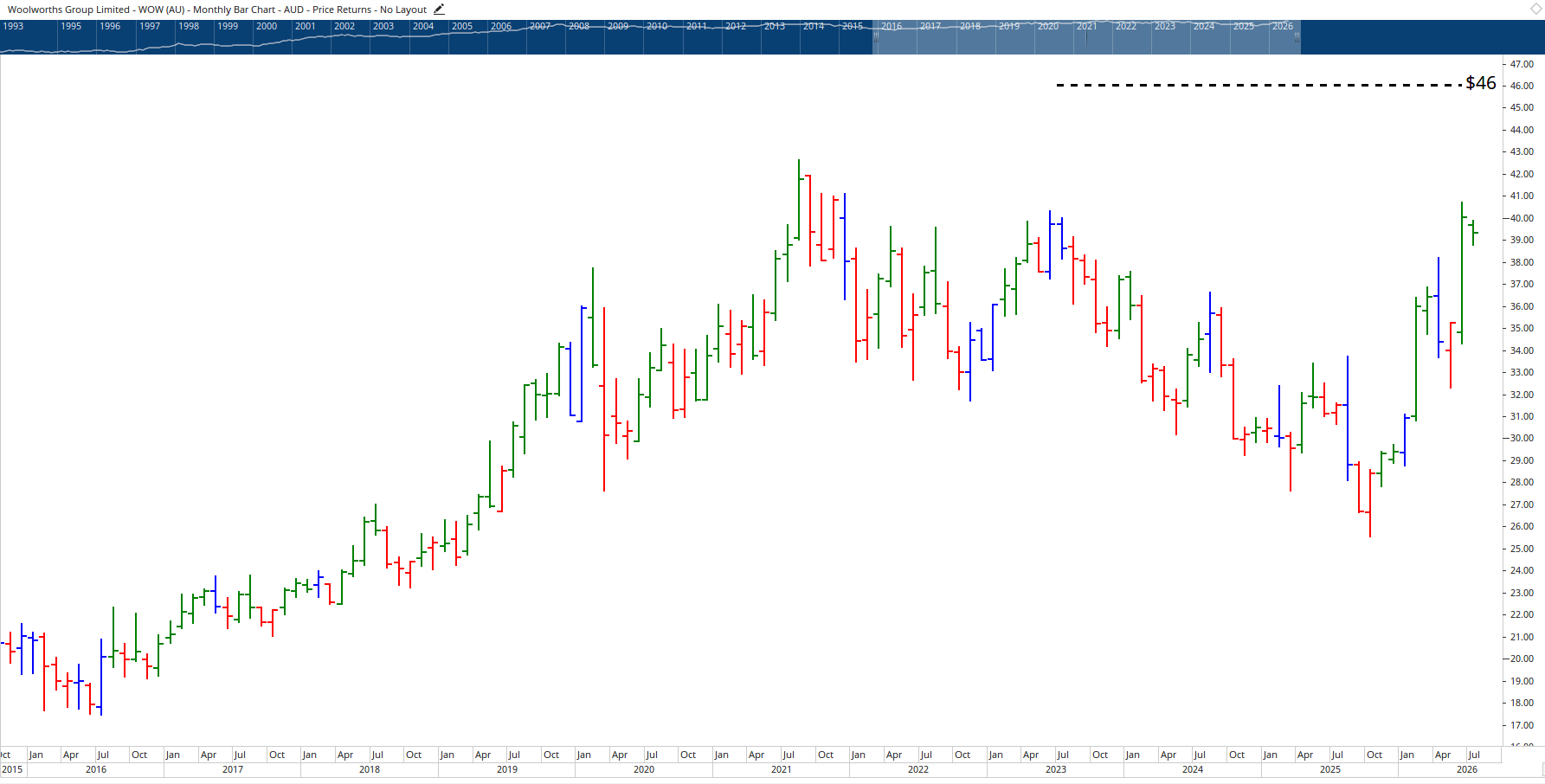
Woolworths has been a stellar performer, but the recent gap higher suggests a short-term pullback is likely before the next major move. A test of the August 2021 all-time high followed by a pullback would be the healthiest way for this to unfold. Beyond that, a break to new all-time highs opens the door to $44 to $46 in the short term, and $50 in the medium term. Both Coles and Woolworths are good portfolio underpinnings for medium-term holders, but the best of the short-term run may already be behind us. Be patient, be nimble, and let the pullbacks give you the entries.
5. Ansell Limited (ANN)
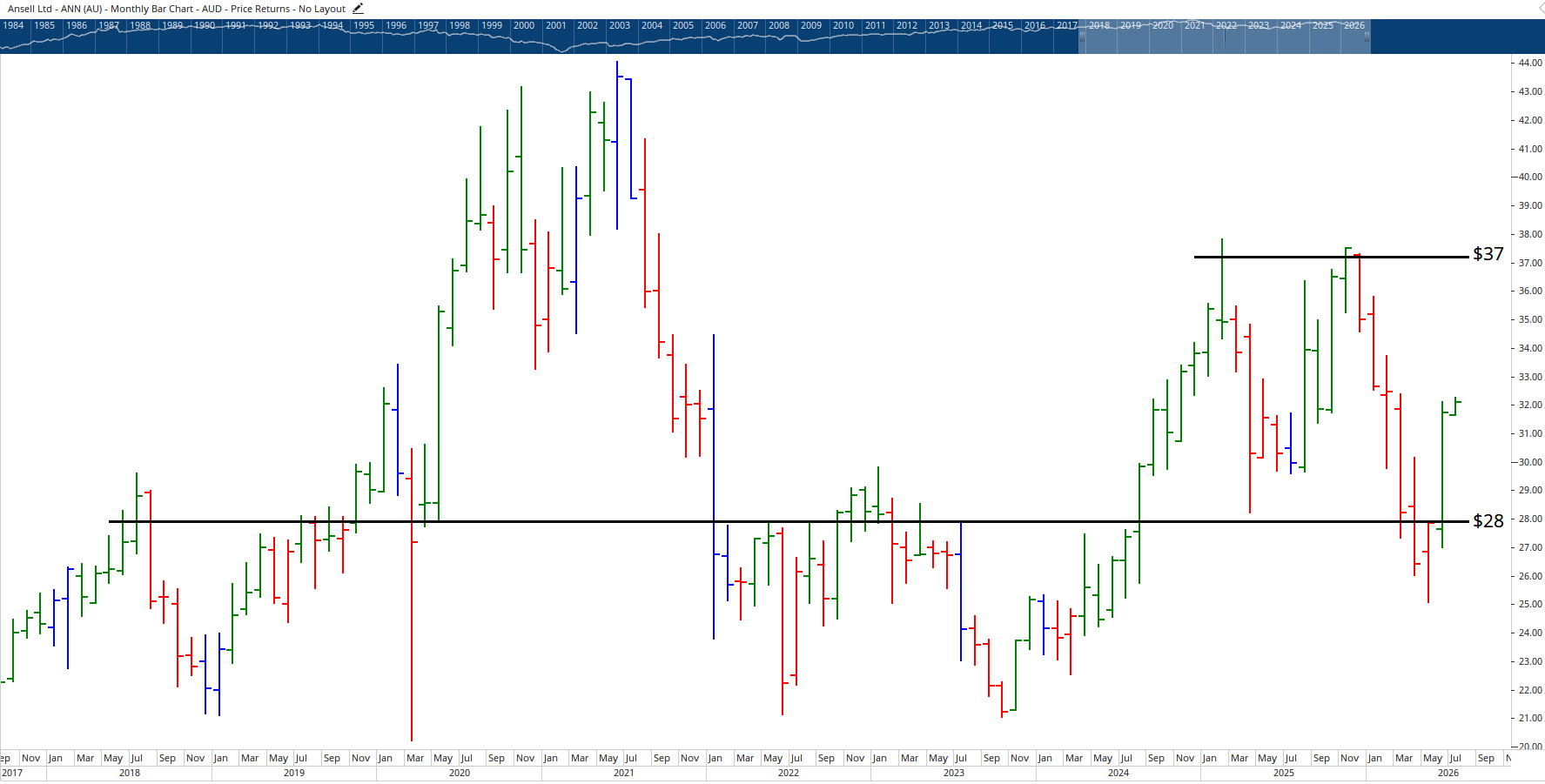
Ansell is a genuine growth story that has been on the ASX for decades. Since 2001, the stock is up around 702%, and the $28 to $29 zone has been a critically important level of support and resistance since 1987. The stock rejected that level multiple times before finally breaking through, and price memory around this zone is exceptional.
Currently trading around $32, Ansell has cleared the historical resistance and is showing strength, though it looks somewhat extended in the short term. A pullback to retest the $29 support would be ideal for new entries, with upside potential to around $37 representing approximately 16% growth. As a nice trading stock with regular opportunities to enter, Ansell rewards those who wait for the right setup rather than chasing extended moves.
6. Clinuvel Pharmaceuticals (CUV)
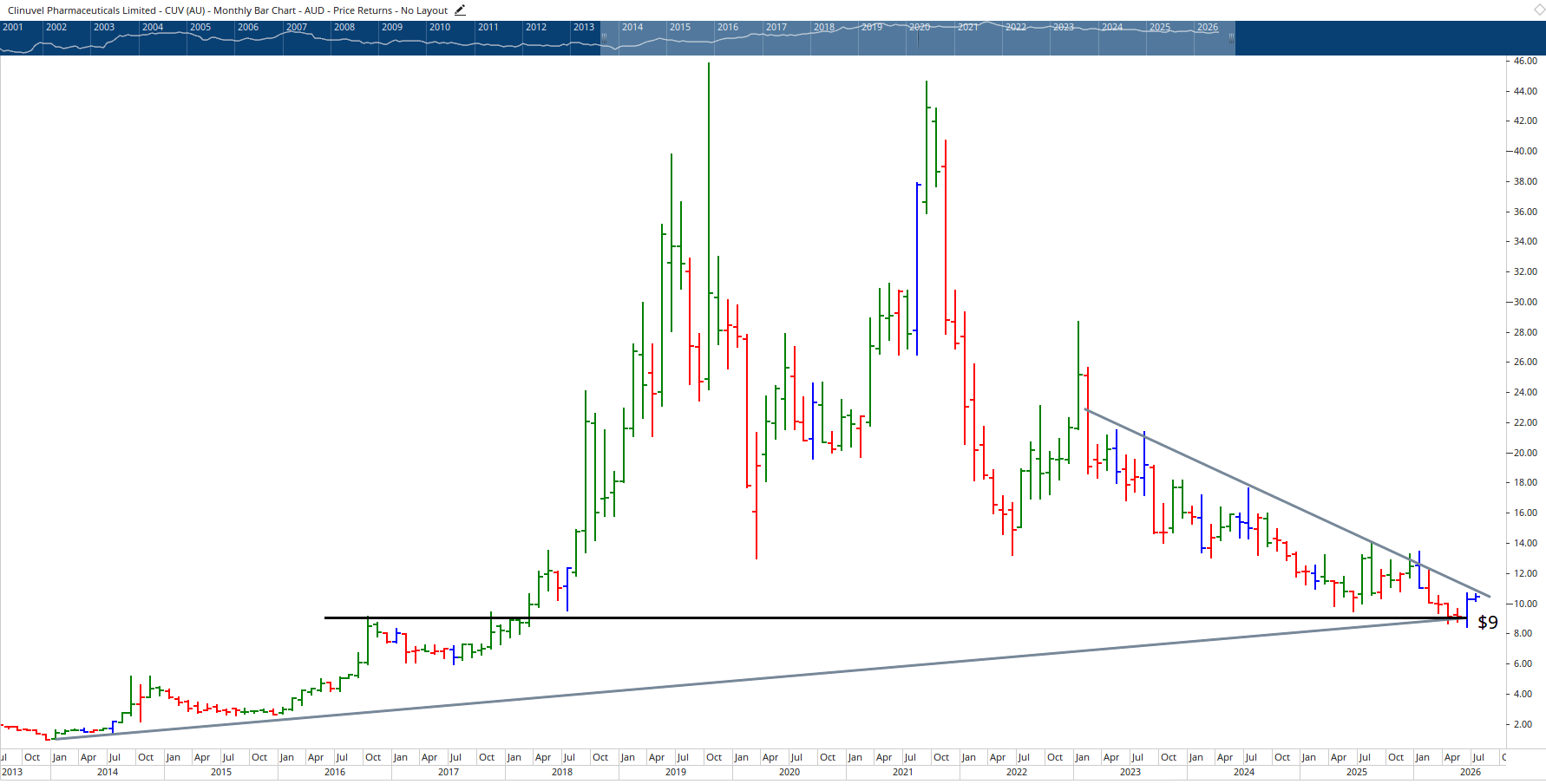
Clinuvel is a classic falling knife scenario that is now showing early signs of a reversal at a hugely important $9 support level. That zone has provided strong support and resistance dating back to 2004 and 2007, and price memory at this level is significant.
The pattern analysis on Clinuvel is textbook, offering multiple opportunities for pattern recognition and price action study. The stock has been compressing against both the $9 support and the downward momentum line, and the breakout direction will determine the next major move. On the weekly chart, volume spiked on the recent up move and the trend has continued, though not too abruptly. This is exactly the kind of setup worth having on the watchlist because the stock has not yet run, but the early indications suggest something meaningful is developing.
7. Nanosonics (NAN)
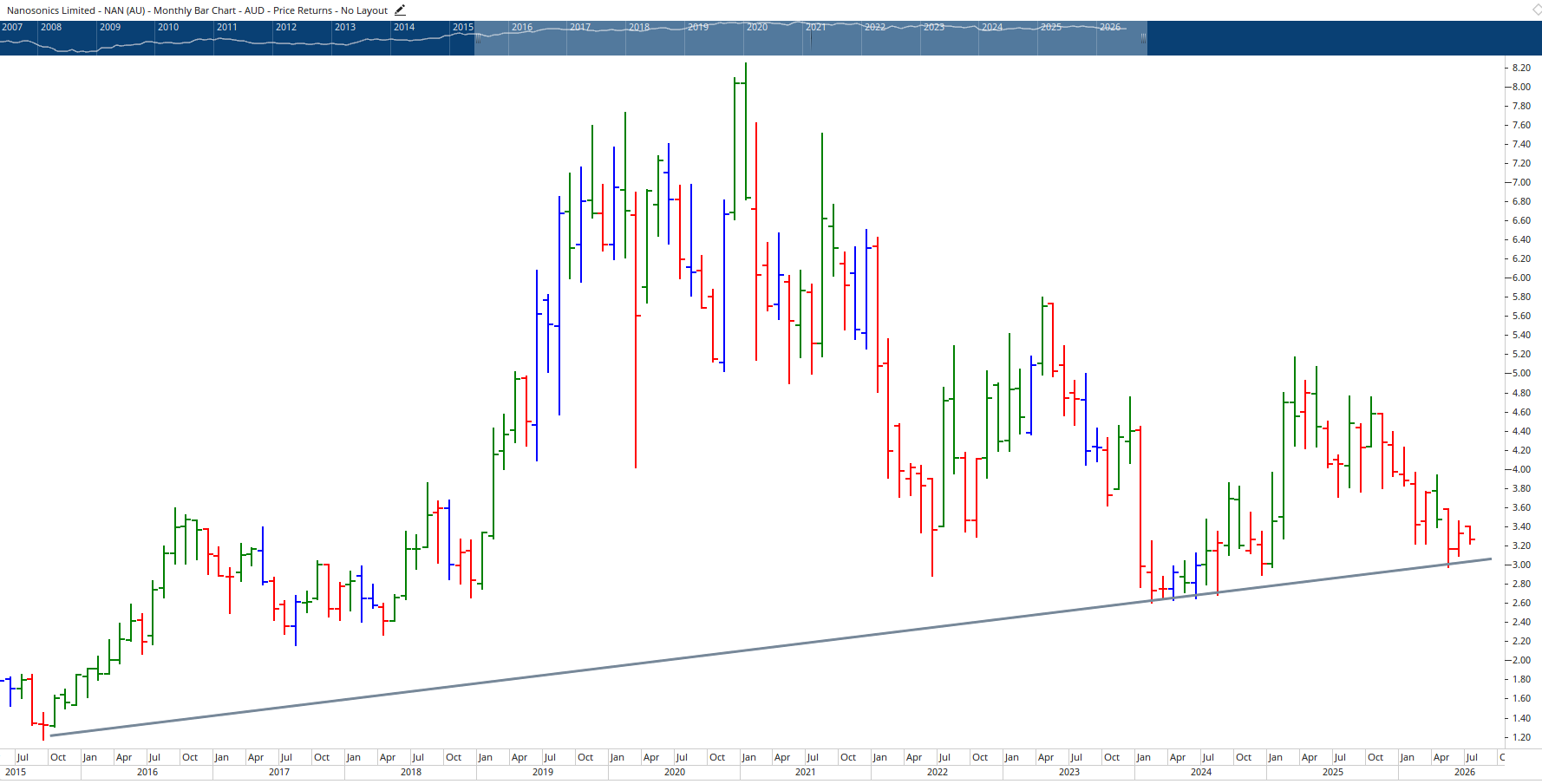
Nanosonics is at a more speculative stage of the reversal setup. The stock has come back to test the long-term trend line, but that same line could easily prove to be resistance rather than support. The retest of the low is constructive, but the stock would need to break above significant overhead resistance before the setup becomes genuinely compelling.
Short-term traders may try to trade the bottom, but this is the highest-risk point to be involved. Patience is the right call here. Wait for the confirmation before committing capital, because there is no shortage of better setups elsewhere in the healthcare space.
Viewer Questions
Cauldron Energy (CXU)
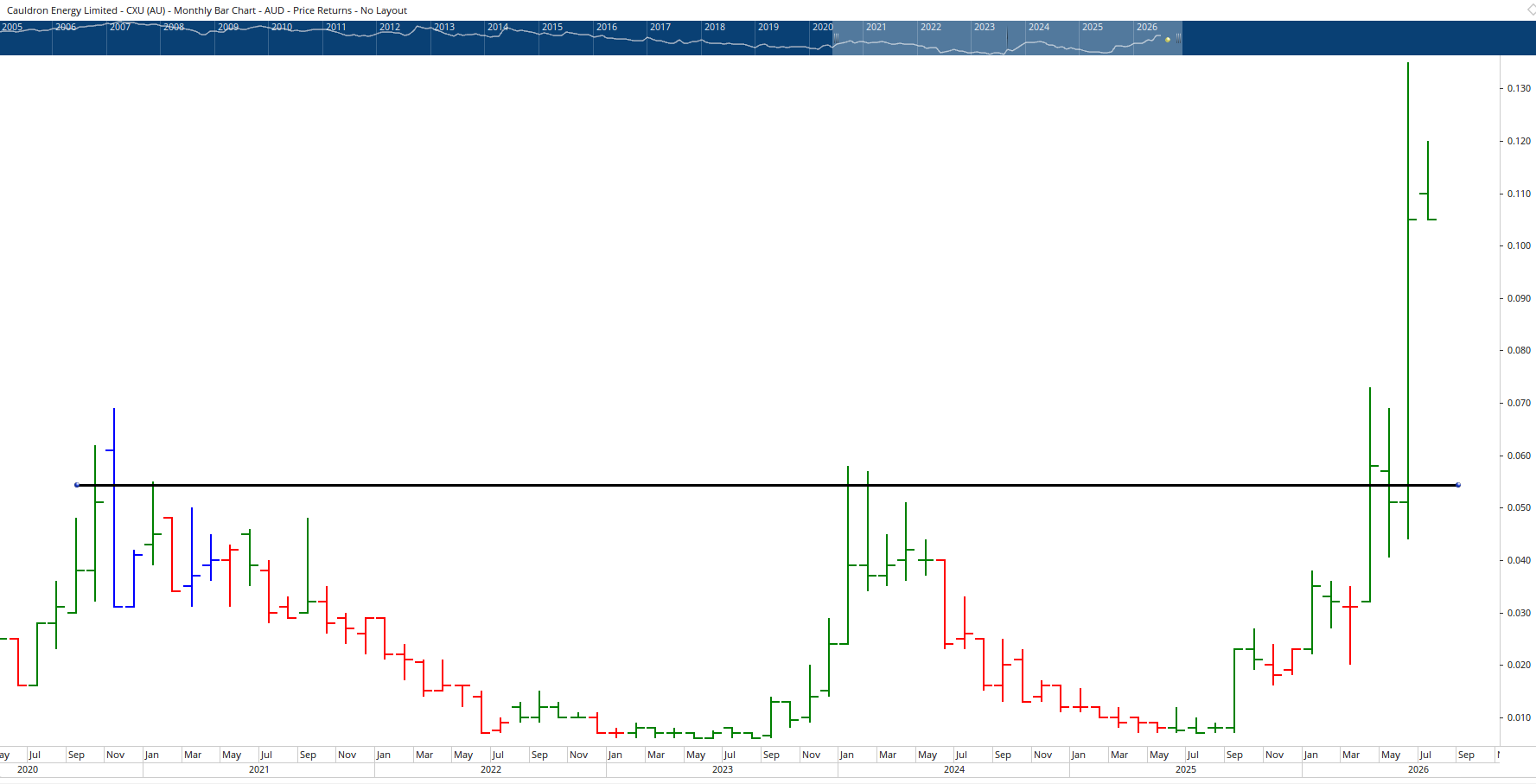
Barry asked about entering CXU after his order at 72 cents was skipped over when the stock spiked and continued higher. The lesson here is fundamental. When you are trading small, low-liquidity stocks with high volatility, trying to be perfect on the entry is a losing strategy. The stock will not wait for you.
The fact that CXU has broken through a natural resistance level is a positive sign. Waiting for a pullback to retest that support gives you a second bite at the setup. But the deeper issue is preparation. Before entering these stocks, you need pre-planned statements about what you will do if the price whips through your level, gaps up, or extends further than you expected. Understanding market depth, using conditional orders, and knowing exactly how much higher you are willing to buy are all critical parts of professional execution. Unless the stock gapped above your entry, there is usually no reason you should not have been filled at your target. The problem is often execution rather than the level itself.
Upside potential on CXU is significant, potentially reaching 23 cents or higher if the setup plays out, but the risk-reward equation only makes sense if you can execute cleanly.
Green Critical Minerals (GCM)
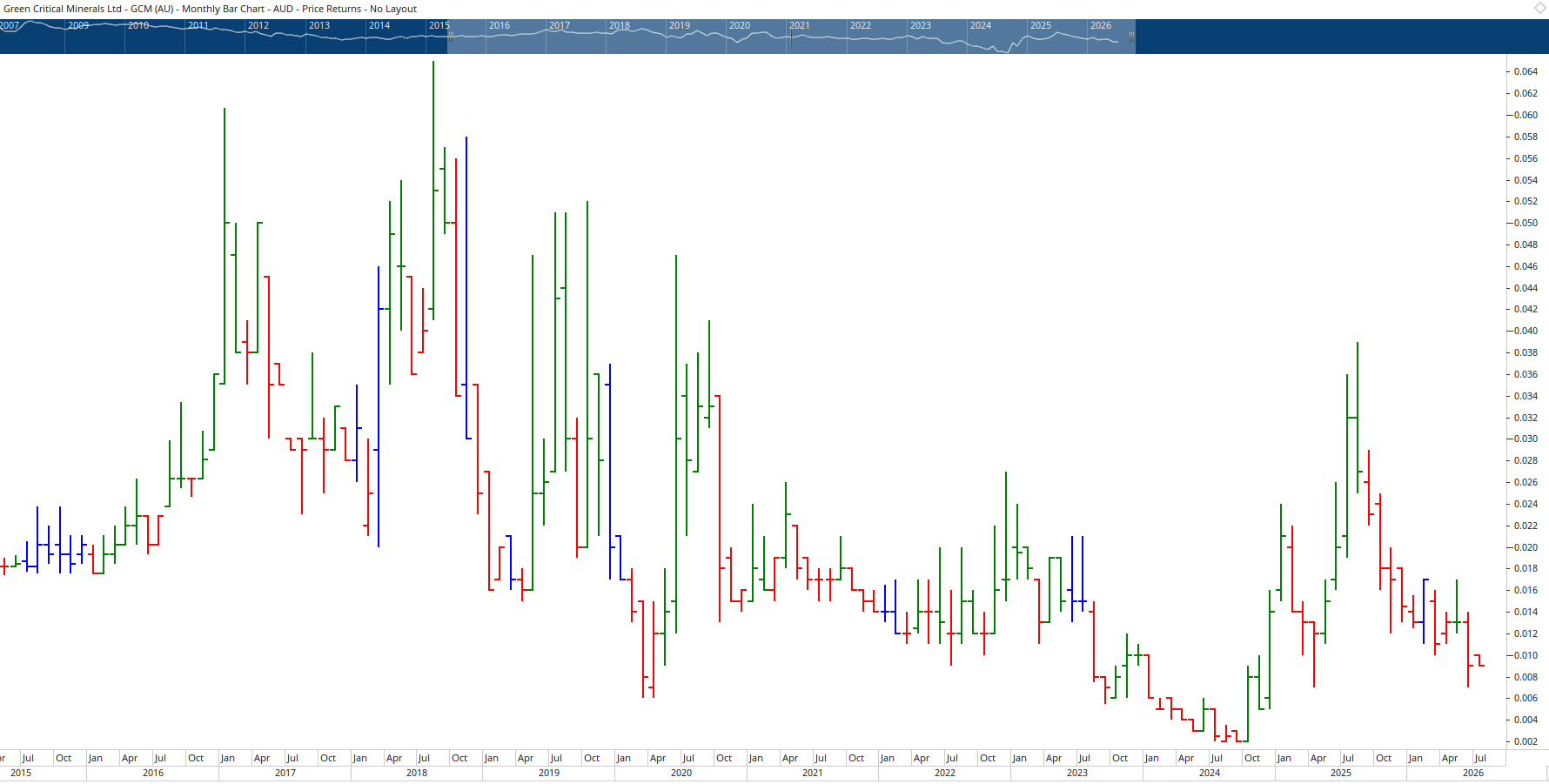
Adam asked about GCM after holding for a year based on the story around graphite applications for AI data centre cooling. The critical point here is that no technical reason was mentioned for owning the stock. Buying a story without a technical framework is one of the most common mistakes investors make.
The chart shows a highly illiquid speccy stock with irregular volume, occasional pump-and-dump characteristics, and support that has broken down multiple times. Even the best material in the world does not translate to share price gains without investor interest and technical demand. If you are a beginner or intermediate trader, this is not a stock you should be looking at. There are plenty of stocks in the top 50 or top 100 that offer similar volatility with far more manageable technical structures.
Remember, you are not buying the story. You are buying the future profit you will extract from the market, and that only comes from getting the technicals right.
Xero (XRO)
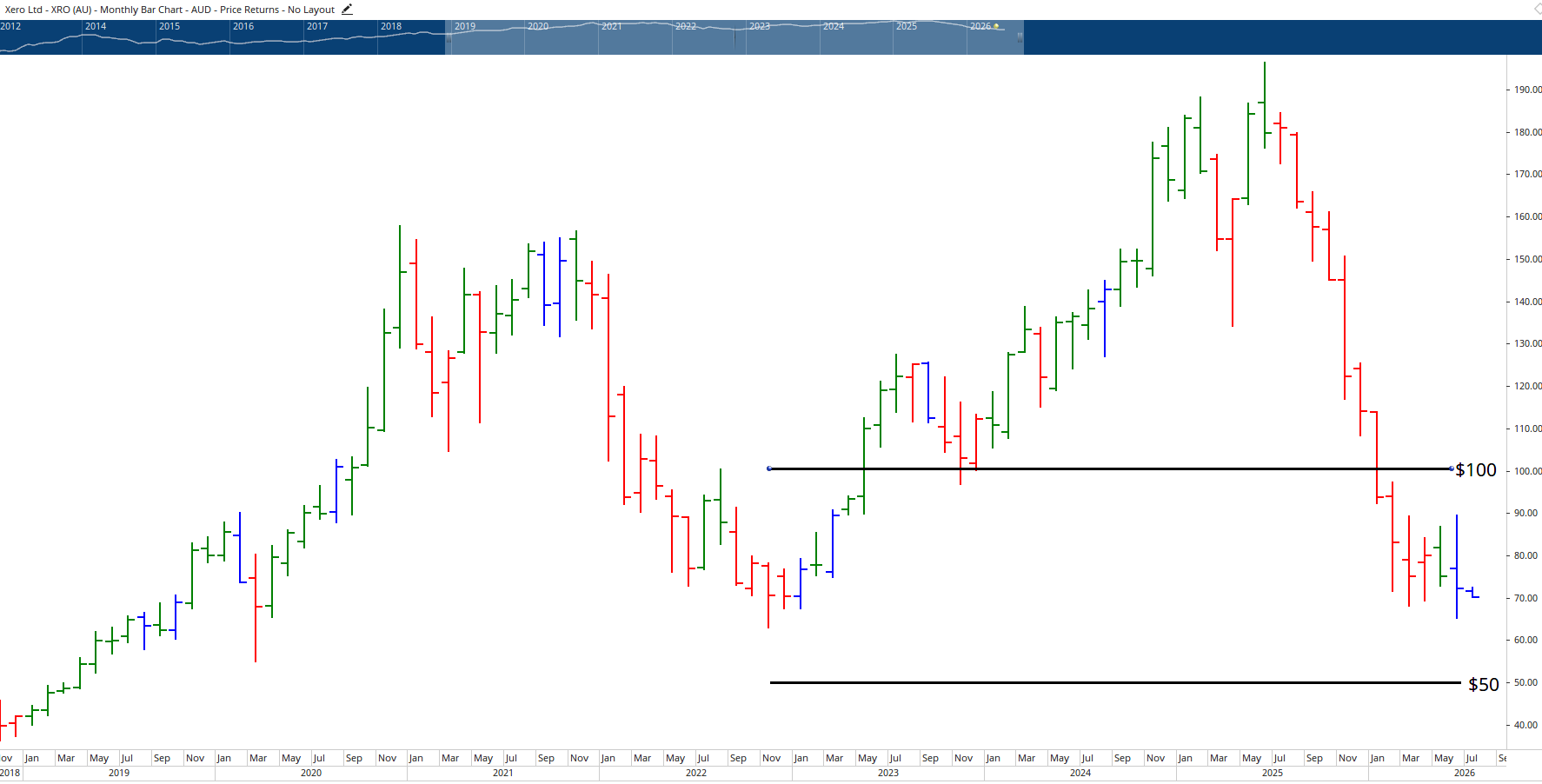
Hendrick asked about Xero and the recovery window. This is where an important distinction needs to be made. The consensus among many investors is that tech will recover, but the reality is that tech is not one homogeneous group anymore. AI is booming, but a lot of traditional software companies are being slaughtered because AI is superseding what they offer.
Xero sits in the area of tech that is being hurt rather than helped by the AI revolution, which changes the recovery thesis considerably. Technically, the stock has come back to the trend line and is at a potentially interesting support level, but it is still making lower lows and lacks the strong buying action needed to confirm a turn. Ramsay-style base building has begun with three tests of the low, but the momentum is not there yet.
The risk is that Xero breaks below $50 if it turns south from here. On the upside, if it can push through the recent highs and start rising, a realistic target sits just above $100. This is one to watch carefully rather than commit to prematurely.
Hot Stock Tip: Life360 (360)
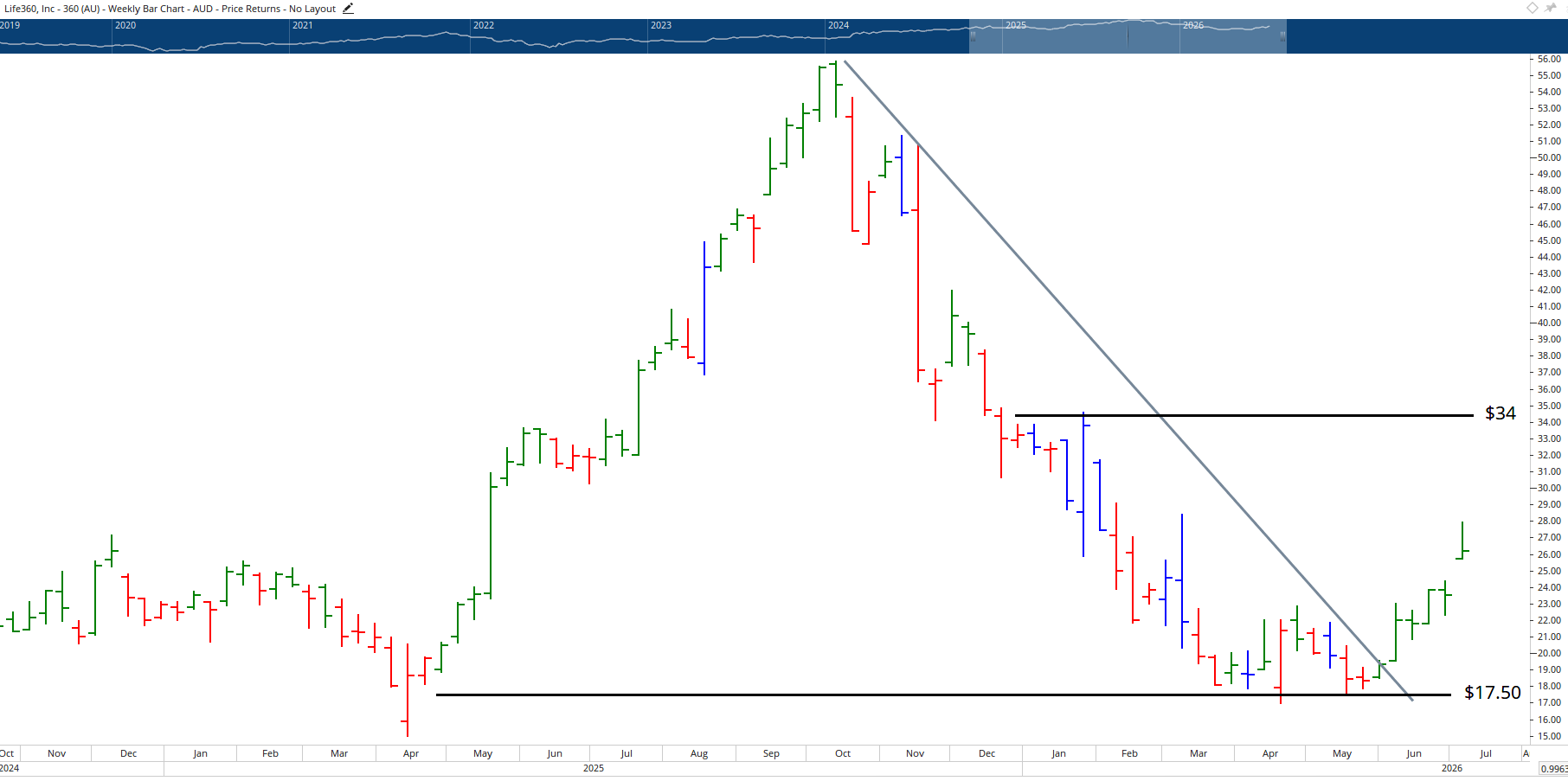
Life360 is the hot stock tip this week, and the setup is genuinely compelling. The company will release its Q2 2026 results in August, and management has already upgraded full-year 2026 guidance to revenue of US$650 million to US$655 million with adjusted EBITDA of US$130 million to US$140 million.
Analysts expect another strong quarter driven by growth in premium subscriptions and advertising revenue. What is happening technically is that investors appear to be front-loading positions ahead of the announcement, expecting positive results. The weekly chart shows the stock breaking through downward momentum, volume coming in, horizontal support at $17.50 holding firm, and resistance at $25 now cleared.
The upside targets are clear. The first gap sits around $34, and a second gap around $40 represents the medium-term target as the stock moves into the reporting period. The risk, of course, is that if guidance is missed even slightly, the stock could sell off on news and come back to fill the recent gap. This is why timing entries around earnings requires structure and discipline.
For now, everything is lining up bullishly, and Life360 offers a nice opportunity to ride the next wave higher, provided you have a plan for what happens if the reporting date does not go as expected.
The Real Insight: Structure Wins
The thread running through every stock discussed in this episode is the same. Identifying a stock is only the first step. The real edge comes from having a structured framework for entries, exits, risk-reward measurement, and psychology. Without structure, you attack the market without a plan and miss the very moves you were watching for. With structure, you can take multiple attempts at a setup, know exactly what your risk and reward looks like, and pull the trigger with confidence when the opportunity appears.
This is exactly what we focus on at Wealth Within. Our trading courses are designed to give you the structured framework professional traders use, so you can identify these setups, execute cleanly, and manage positions in any market condition.
For those new to the markets, the Short Course in Share Trading provides the foundational skills to read charts, identify trends, and manage risk. If you are ready to commit to a comprehensive, government-accredited program, the Diploma of Share Trading and Investment teaches the full five-step approach we use to identify and trade these opportunities professionally.
Final Thoughts
The most unloved sector on the ASX is quietly building the foundations of what could be a multi-year reversal. Healthcare offers structural demographic tailwinds, forecast earnings growth of nearly 25% annually over the next five years, valuations well below historical averages, and multiple individual stocks showing textbook technical setups.
CSL, Ramsay, Sonic Healthcare, Telix, Ansell, Clinuvel, and Nanosonics each offer different entry points into the same underlying theme. Some are further along in the reversal than others, but the sector-wide setup is genuinely rare. Combined with the short-term opportunities in Coles and Woolworths, the ASX is offering a diverse set of high-conviction setups for investors who know how to read them.
As always, the difference between catching these opportunities and watching them pass is education, structure, and discipline. With the right framework, you can stop reacting to headlines and start positioning yourself for the reversals that matter most.
Disclaimer: This article is general in nature and does not constitute personal financial advice. Always conduct your own research or consult a licensed adviser before making investment decisions.