How Much Money Do You Need to Retire Comfortably in Australia?

By Dale Gillham
Reading Time: 11 minutes
General Advice Disclaimer
This article is for general educational purposes only and does not take into account your personal financial circumstances, objectives or needs. Before making any investment decisions, consider your individual circumstances and seek independent financial advice if necessary.
Retirement isn't simply about reaching a certain age or building a seven-figure superannuation balance.
It’s about having the financial resources and freedom to live the life you want when you no longer need to work full-time.

That distinction matters. Two people can retire with identical superannuation balances and end up with different outcomes.
One may own a home, have few expenses and enjoy a comfortable lifestyle. Another may rent, support family members, or plan frequent travel.
The question is not just how much money you have. It is how much income you need, what you want to do with your time and how you intend to fund it.
Australia’s superannuation system can play an important part in that plan. So can other savings and investments.
But relying on contributions and hoping everything works out is not the same as understanding how your retirement money is invested, what risks it faces and how it can support you for decades.
What does a comfortable retirement actually cost?
The Association of Superannuation Funds of Australia (ASFA) publishes estimates for modest and comfortable retirement lifestyles.
For the June quarter of 2026, its comfortable standard was $56,166 a year for a single homeowner and $78,998 for a couple. Its modest standard was $36,548 for singles and $52,690 for couples.
| Lifestyle (homeowner) | Single, annual | Couple, annual |
|---|---|---|
| Modest | $36,548 | $52,690 |
| Comfortable | $56,166 | $78,998 |
These amounts are benchmarks, not instructions. ASFA’s estimates generally assume retirement around age 67 and homeownership.
A renter, someone with substantial medical expenses, or someone who travels frequently may need a different budget.
Start by writing down two figures: the income you need for essential expenses and the income you want for your preferred lifestyle.
Include housing, food, healthcare, transport, insurance and home maintenance. Then add travel, hobbies, entertainment and support for family.
You may find that what you actually need differs quite a bit from the figure quoted in the media.
Do you really need $1 million to retire?
Not necessarily. The idea that everyone must accumulate $1 million confuses an investment portfolio's size with the income it can provide.
A million dollars will not fund the same lifestyle for everyone, and a smaller balance does not automatically make retirement impossible.
ASFA’s 2026 benchmark estimates that a single homeowner retiring at 67 needs around $630,000 in savings for a comfortable lifestyle, while a couple needs around $730,000 combined.
Importantly, these estimates assume access to a partial Age Pension and other modelling assumptions. They do not guarantee a particular income in every circumstance.
Consider a simple illustration.
An investment balance of $500,000 earning a hypothetical 5% before fees and tax produces $25,000 in returns in one year.
At 8%, the same balance would produce $40,000.
Yet neither return is guaranteed, and investment returns aren't the same as a safe, sustainable annual withdrawal.
Prices can fall, returns vary year to year, and withdrawing during a downturn can shorten how long the capital lasts.
That is why the better planning question isn’t “How do I reach a million dollars?”
It's “What combination of income, investments and potential pension entitlements could support the lifestyle I want without taking unacceptable risks?”
Why the Age Pension should not be your entire retirement strategy
The Age Pension is a valuable source of income for eligible Australians, but it doesn't cover every aspect of an individual’s preferred lifestyle.
As of October 2026, Age Pension eligibility generally begins at age 67 and is subject to residence, income and assets rules.
Recent Australian Bureau of Statistics data shows how significant this support remains. In 2024–25, the government pension was the most common main source of income for retirees.
It was the main source for approximately 42% of retired men and 41% of retired women aged 45 and over.
Superannuation was the main source for around 35% of retired men and 23% of retired women.
Rather than assuming you will receive a full pension, work out whether you could qualify for any payment and how changes in your income or assets could affect it.
Part-pension arrangements may form a sensible part of a broader retirement plan.
But financial independence can offer greater choice if government support changes or your spending needs increase.
Superannuation is a structure, not an investment strategy
Superannuation provides a tax-advantaged environment for retirement savings, but the money inside a super account is invested in assets.
Depending on the fund and the option you choose, those assets may include Australian and international shares, bonds, property, cash and other investments.
Returns therefore depend on investment performance, fees and the decisions made about the portfolio.
The statutory super guaranteed rate is 12% for the 2026–27 financial year.
These employer contributions provide an important foundation, but they do not tell you whether the resulting balance will support the retirement you want.
Review your super regularly rather than treating it as something you only look at in the final few years before retirement.
Check the investment option, the long-term returns against comparable options, fees, insurance cover and whether the fund still matches your circumstances.
A more active approach can start with informed decisions about those settings, not necessarily by buying and selling shares every week.
Can you take greater control of your super investments?
Yes, but greater control can mean different things.
Many industry and retail super funds let members choose from growth, balanced, conservative or cash options.
Some also offer direct investment facilities that permit members to select eligible shares, ETFs or other investments within the fund’s rules.
The investment menu, minimum balances, transaction fees and restrictions vary.
A self-managed superannuation fund (SMSF) offers wider control in many circumstances.
However, it also brings trustee obligations, administration, accounting, audit costs and responsibility for compliance.
It's not automatically a better or cheaper solution.
The key point is that retirement savings do not have to be managed on autopilot.
However, being involved is not the same as being constantly in the market.
The objective is to make informed decisions appropriate to your time horizon, skills, risk tolerance and need for dependable retirement income.
Why protecting capital becomes increasingly important after 40
Let's consider what a major market decline can mean for someone nearing retirement.
Imagine a $100,000 portfolio falls by 50%. It is now worth $50,000.
A subsequent 50% rise only restores the value to $75,000. Recovering to the original $100,000 requires a 100% gain.
| Portfolio decline | Gain needed to recover |
|---|---|
| 10% | 11.1% |
| 20% | 25% |
| 30% | 42.9% |
| 50% | 100% |
This arithmetic applies whether you invest the money directly or through superannuation.
As you approach retirement, you have fewer working years left to rebuild your savings following a major market decline.
This becomes even more important when you begin withdrawing money to meet your living expenses, as those withdrawals can make it harder for your portfolio to recover.
This is why protecting the capital you have already accumulated becomes increasingly important.
Understanding risk vs reward and how to manage potential losses is an important part of developing a retirement investment strategy.
For retirees drawing income, keeping sufficient cash available for near-term living expenses can also reduce the pressure to sell shares during a market downturn.
How regular investing and compounding can grow your retirement savings
One way to build greater wealth for retirement is to regularly invest some of your surplus income and allow your returns to compound over time.
The table below illustrates how increasing your annual contributions can reduce the time it takes to accumulate $1 million, assuming a hypothetical annual compounded return of 10%.
| Annual investment | Years to reach approximately $1 million |
|---|---|
| $2,000 | 41 years |
| $4,000 | 34 years |
| $10,000 | 25 years |
These examples assume a hypothetical 10% annual compounded return, with regular annual contributions. Actual returns will vary, and the calculations exclude fees, taxes and inflation.
As you can see, increasing the amount you invest each year can make a significant difference to how quickly your wealth grows.
While $1 million is used for illustration, it doesn't mean everyone needs that amount to retire comfortably. What matters is building sufficient capital to support the income and lifestyle you want in retirement.
What if you are over 40 and your super balance is low?
It is easy to look at your current balance, compare it with a headline retirement target and decide that you are too far behind.
That reaction can encourage two unhelpful behaviours: giving up or taking excessive risks to catch up quickly.
A more constructive approach is to reassess the plan.
First, work out how much money you need each year and when you hope to reduce or finish paid work. Then estimate the likely sources of retirement income.
Review current super balances, contributions, investment fees, other assets, housing costs and any expected Age Pension eligibility.
Consider whether saving longer, reducing expenses, or working part-time could improve the outcome.
If you have several super accounts, consolidating may reduce duplicate fees and make balances easier to track, but check insurance and any other benefits before moving money.
The earlier you begin planning for retirement, the more time you have to build your wealth.
But whether you're in your 40s, 50s or 60s, it's never too late to take greater control of your financial future.
By developing your investment knowledge and learning how to manage your money more effectively, you can make informed decisions that put you in a stronger position to achieve your retirement goals.
How share trading can fit into retirement planning
The Australian share market can help you accumulate capital and potentially generate income outside superannuation, or through eligible investment choices inside super.
Shares offer opportunities for capital growth and dividends, but prices can fall substantially if you don't manage the risk, and dividend payments can be reduced or suspended.
For someone who wants more control, learning to assess businesses and price movements, understand market cycles and apply risk and money management rules can be valuable.
This does not mean that every retiree should actively trade, or that trading will necessarily outperform a diversified fund.
Direct share ownership places research, portfolio monitoring and decision-making responsibilities on the individual.
Education matters before taking that responsibility.
Building wealth through knowledge and disciplined investing
Building sufficient wealth to support your retirement doesn't have to rely solely on superannuation.
Investing surplus income outside super can help you accumulate additional assets and create greater financial flexibility.
As I explain in the laws of wealth creation, developing sound financial habits and learning how to invest wisely can make a significant difference to your long-term wealth.
A written trading plan can help you take control of your investments by setting clear rules for what you buy, why you buy it, how much capital you allocate and when you exit.
By following longer-term price trends and applying predetermined exit rules, you can aim to reduce the impact of market volatility on your portfolio.
You can also protect your capital and give your investments a better opportunity to compound over time.
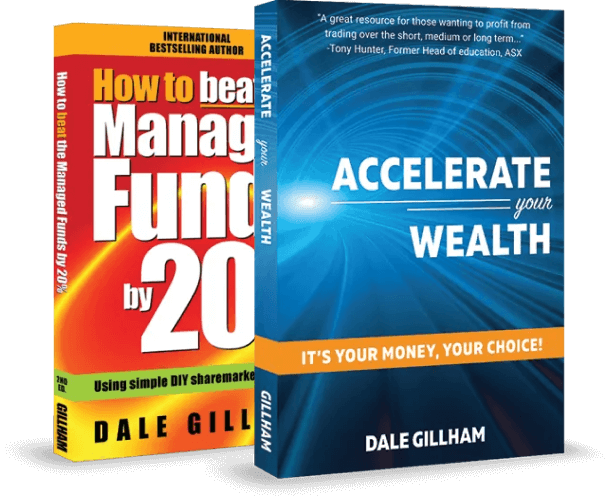
This is outlined in Dale Gillham's bestselling book, How to Beat the Managed Funds by 20%.
You can also read my guide on investing in shares for beginners.
While there are no guarantees, achieving these outcomes requires knowledge, discipline and a willingness to actively manage your investments.
You can learn and test these skills before committing substantial retirement capital.
Retirement is about more than money
Leaving full-time employment shouldn't mean leaving behind purpose, learning, and personal goals. Some people want to travel.
Others want to volunteer, spend more time with family, work part-time or begin an entirely new project.
Financial freedom can be a more useful goal than retirement as a fixed destination. It means working towards a position where employment becomes a choice rather than a necessity.
The amount needed to reach that position will vary, but the planning process starts with clarity about what matters to you.
Consider the next stage of life in its entirety. How will you spend your time? What will keep you engaged? What physical and financial demands might change with age?
A budget answers one part of the problem. A purpose gives you a reason to build and follow the plan.
Seven steps towards a more comfortable retirement
Below are seven practical steps to help you take greater control of your retirement planning, make informed investment decisions and work towards the lifestyle you want in retirement.
- Define the lifestyle you want and calculate its realistic annual cost.
- Separate essential expenditure from optional spending to set a clear minimum income target.
- List current super, other savings, investments, debt and likely future income sources.
- Review your super investment options, long-term performance, fees and insurance.
- Understand the risks of major market declines and set written rules for managing investments.
- Build your knowledge before taking direct control of a share portfolio or considering an SMSF.
- Revisit the plan regularly as markets, legislation, health and personal priorities change.
Retirement planning is not about finding a magic savings number.
It’s about building the knowledge, capital, and income sources that let you make choices.
Superannuation can be part of that. The Age Pension may also play a role. Direct investments may also have a role.
What matters is understanding how these pieces fit together for the life you want to live.
Continue building your financial knowledge
If you want to understand the share market and how to manage investment risk, explore Wealth Within’s trading courses.
The aim is to develop practical knowledge and a disciplined approach before making decisions involving retirement savings.