It Feels Like Cheating Trading ETFs Like This: Do This Now
By Janine Cox and Fil Tortevski
Reading Time: 11 minutes
General Advice Disclaimer
You acknowledge that the information provided by Wealth Within is intended for general use only and does not take into account your investment objectives, financial situation or advisory needs, nor does the information provided constitute investment advice. For this reason, any individual should consider the appropriateness of the information, having regards to the individual's objectives, financial or taxation situation and needs before acting on this information, and, if necessary, seek appropriate professional advice. In addition, it is important to understand that the risk of investing in the stock market is that you could lose some or all of your money. For more information please refer to our Terms and Conditions.
Exchange traded funds are officially Australia's new favourite investment. According to recent reporting, 72 new ETFs have launched this financial year alone, more than 50 billion dollars has flowed into the sector, and over 458 exchange traded products are now listed on the ASX, with the market on track to surpass 500 within the next year. With momentum this strong and product choice this deep, ETFs have become the entry point for a whole new generation of Australian investors.
But here is the catch. The explosion of new products and the marketing narrative around ETFs being "safe" and "simple" has created a false sense of security. In the latest Australian Stock Market Show, Senior Analysts Filip Tortevski and Janine Cox, and Blueberry Markets' Zoran Krezovic broke down exactly how to approach the ETF boom strategically, and analysed ten ASX ETFs positioned for potentially massive moves.
Why ETFs Still Need a Trading Strategy
The single biggest mistake new investors make with ETFs is assuming the diversification built into the product removes the need for a strategy. Nothing could be further from the truth. The first question you need to answer is what you are actually trying to achieve. Are you seeking sector-driven exposure? Broad market participation? Thematic plays like technology or clean energy? The answer to that question shapes everything else.
The second non-negotiable is risk management. It does not matter what you are investing in. You need a strategy for managing the risk, and a good place to start is understanding trends. Understanding how trends form tells you whether they are likely to continue, which in turn tells you whether you are getting in at the right time or right at the top. And if you do enter near a top, you need to know how to protect your capital when the move reverses.
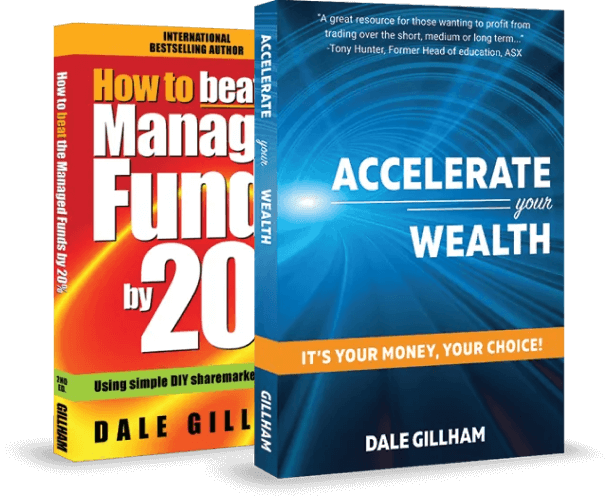
The beauty of a simple technique like a trend line is that it works across any chart, any timeframe, and any asset class. There is a story shared in the office some years ago of a Wealth Within client who came in specifically to thank Dale Gillham for writing his book, because a single trend line had saved him from riding the GFC crunch all the way down. That is the power of having a structured approach.
Timeframes and Techniques for the ETF Space
Different markets suit different strategies, and in a super bullish cycle like the one we are currently seeing across the ASX and US equities, momentum lines and trend lines are working exceptionally well. When markets go parabolic, you want to capture as much of the move as possible while having a solid exit strategy for when momentum fades.
Pattern breakouts are another useful technique, but they can be challenging when strong momentum is producing consistent higher highs and higher lows, because breakout patterns typically require longer consolidation periods to mature.
On time frames, ETFs are generally more suited to medium to long term horizons. Product managers designing these funds tend to focus on lower volatility and income-oriented outcomes. That said, there is no right or wrong. A trader with a solid understanding of the market can absolutely trade ETFs on shorter timeframes, particularly during periods of strong momentum.
Ten ASX ETFs Set for Big Moves
1. BetaShares Global Cash Flow Kings ETF (CFLO)
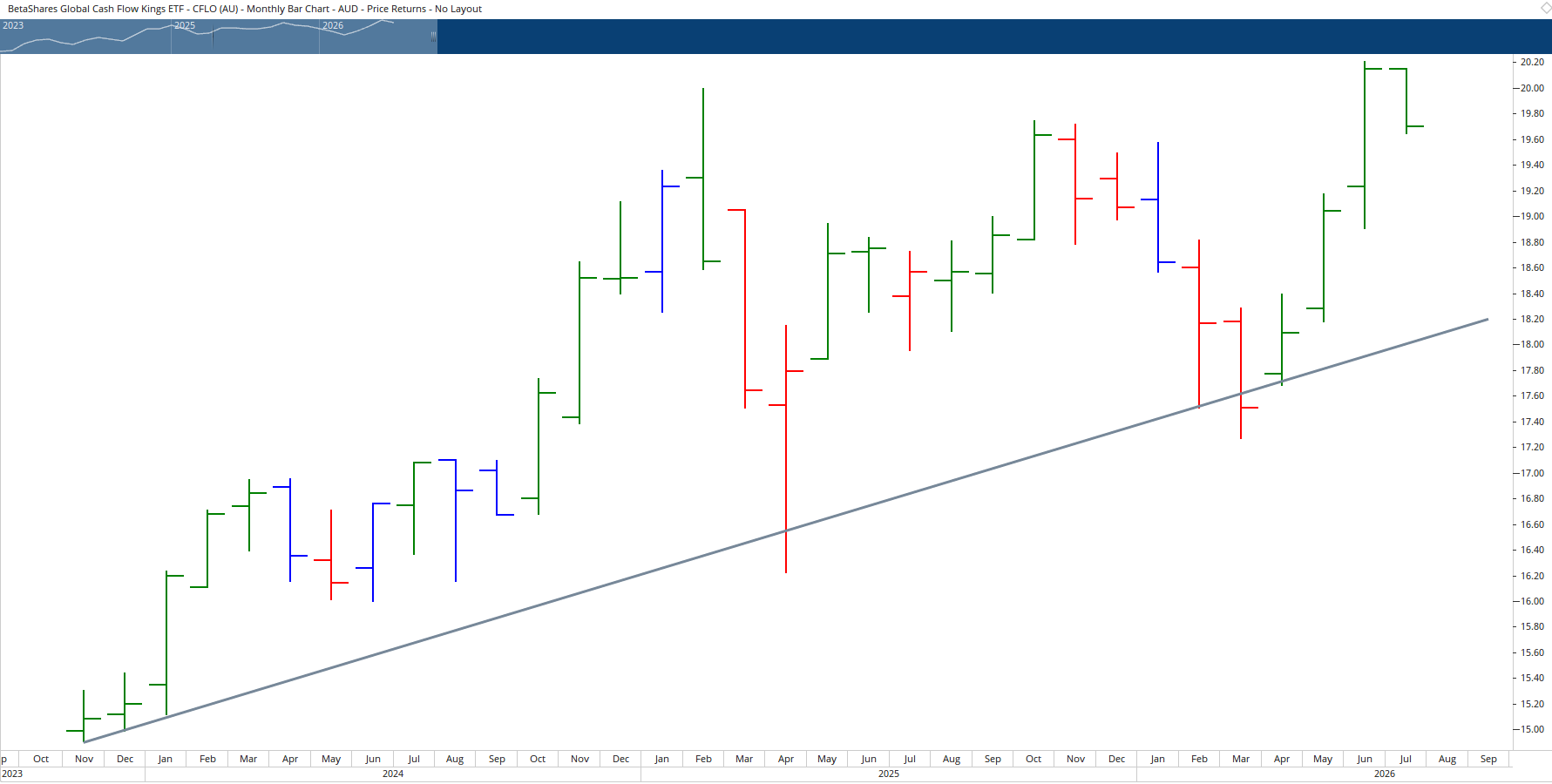
This ETF invests in 200 global companies with strong, consistent free cash flow and relatively low debt, targeting financially robust businesses. Even so, the fundamentals alone do not protect you in a crunch. As we saw during the GFC, even the most liquid and well-positioned stocks fell significantly. A simple monthly trend line here is holding beautifully. While price bounces along that line, everything is fine. If it changes direction significantly, the line will be your first warning.
2. VanEck Global Clean Energy ETF (CLNE)
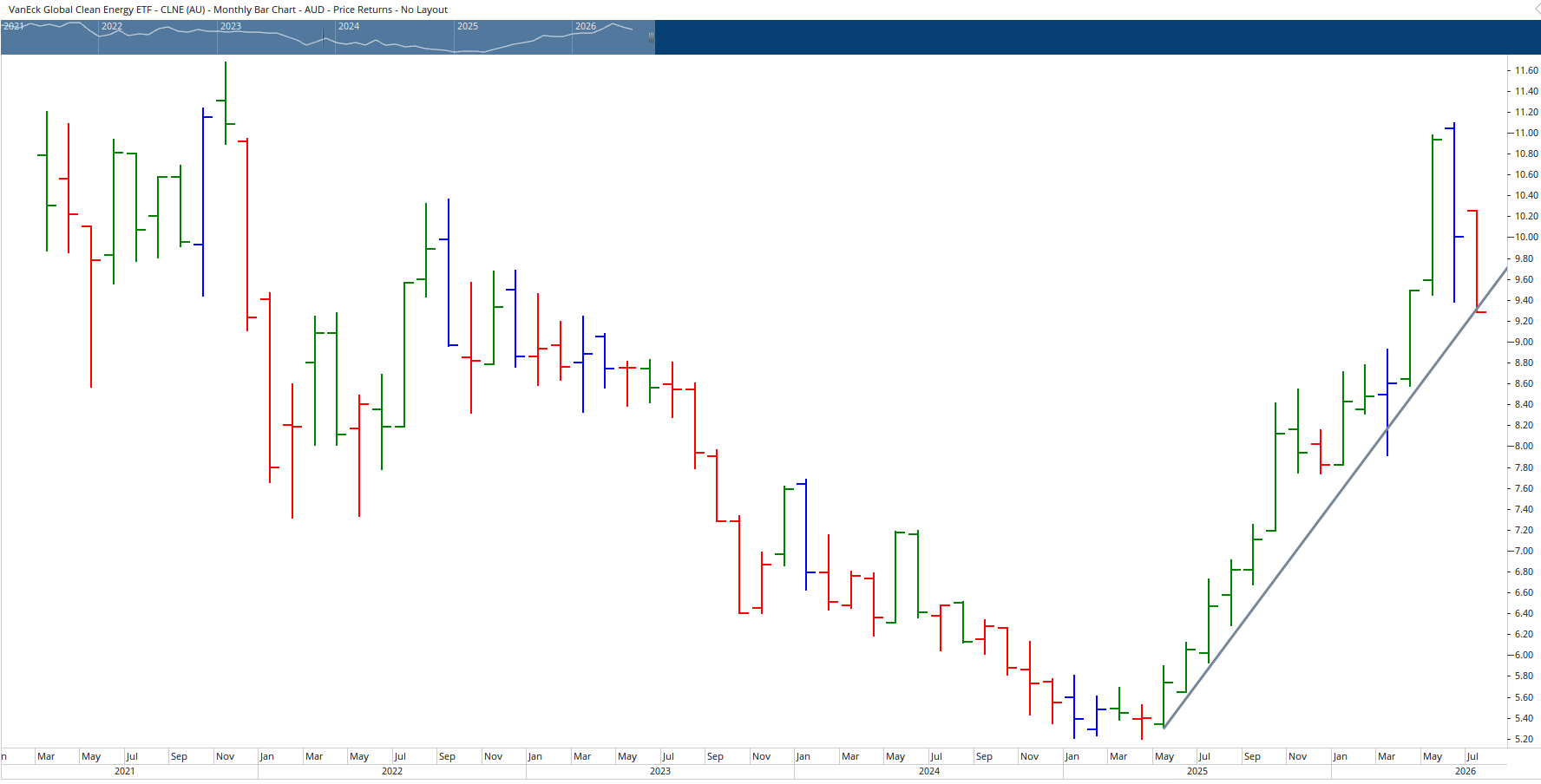
Holding around 30 of the world's largest clean energy companies, this ETF has been on a tear since the April 2025 lows, which coincided with the tariff-driven market bottom under the Trump administration. Despite a recent 10 to 15 percent pullback, the momentum line protecting the trend remains intact. For a trader with the right tools, this kind of pullback is not a cause for panic. It is simply part of a healthy uptrend.
3. VanEck China New Economy ETF (CNEW)
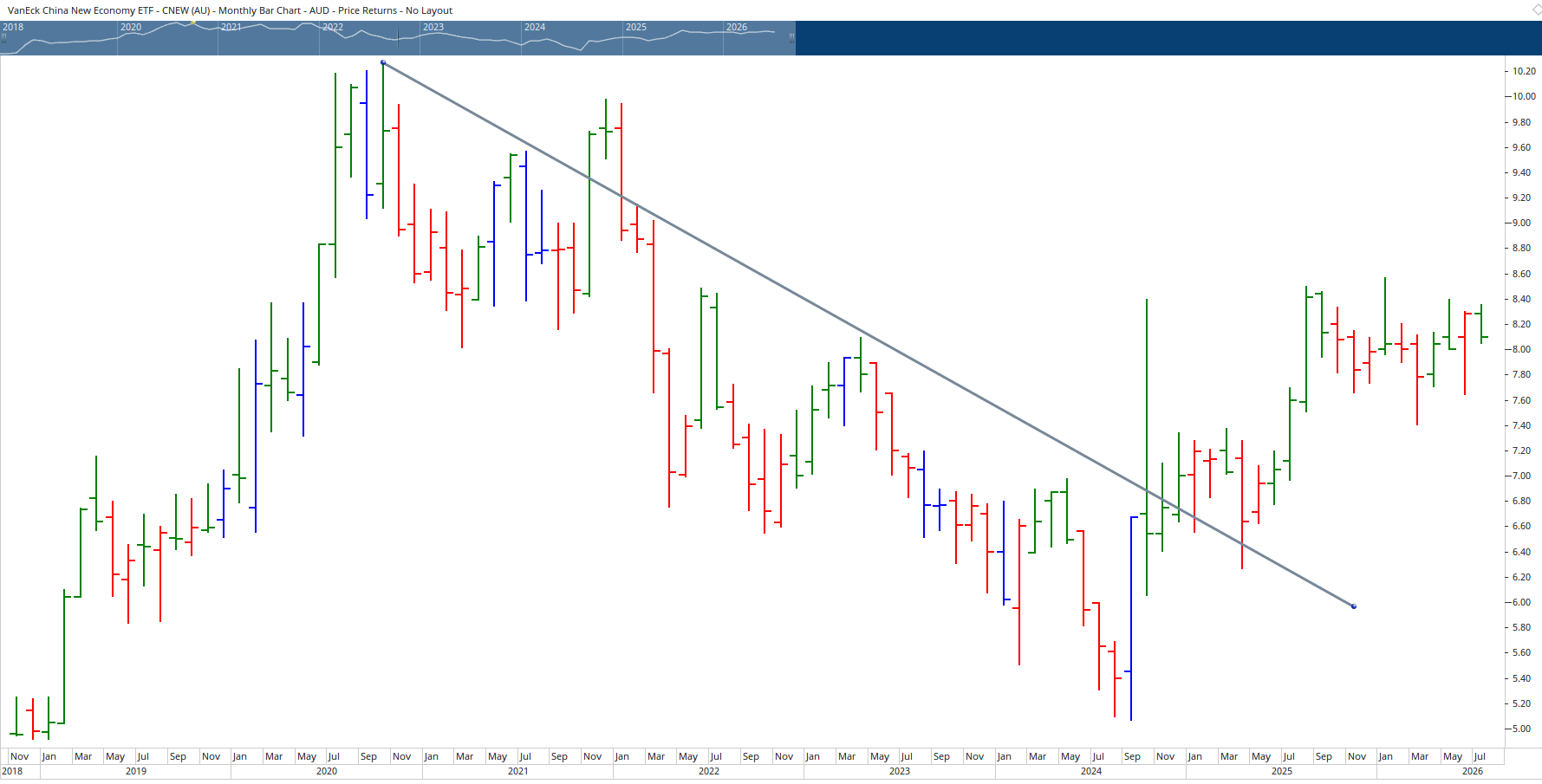
Invests in Chinese companies driving the country's new economy across technology, healthcare, consumer, communications, and advanced manufacturing. The monthly chart shows a genuine change in the fundamental view of Chinese equities. What was previously a long downward momentum has reversed decisively. A simple trend line makes the shift obvious, and after a brief sideways consolidation, the stock is on its way again. On the broader Asia thesis, emerging economies in the region look poised for robust growth over the next few years, and if Asia has a strong run, Australia typically benefits alongside it.
4. Betashares Crypto Innovators ETF (CRYP)
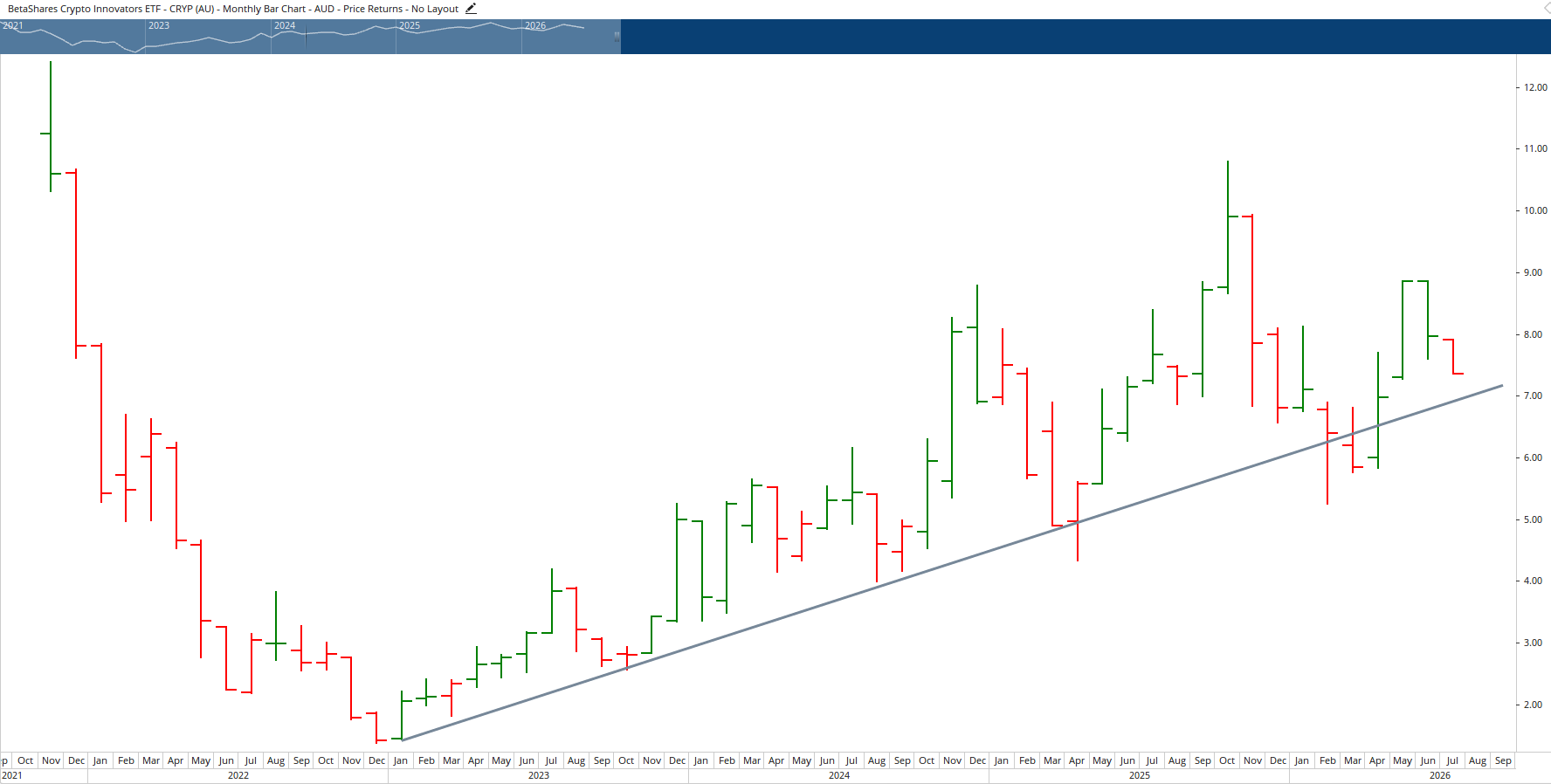
Invests in global companies building the cryptocurrency ecosystem including exchanges, miners, infrastructure providers, and blockchain businesses, rather than directly in cryptocurrencies themselves. This is the classic "sell the shovels in a gold rush" play. The ETF is tracking its trend line nicely and holding its own, and importantly it is beginning what looks like a new phase of movement. Do not be fooled by the "low volatility" marketing around ETFs. This one has seen a 50 percent fall in its history. Trend line management is essential.
5. Global X S&P Biotech ETF (CURE)
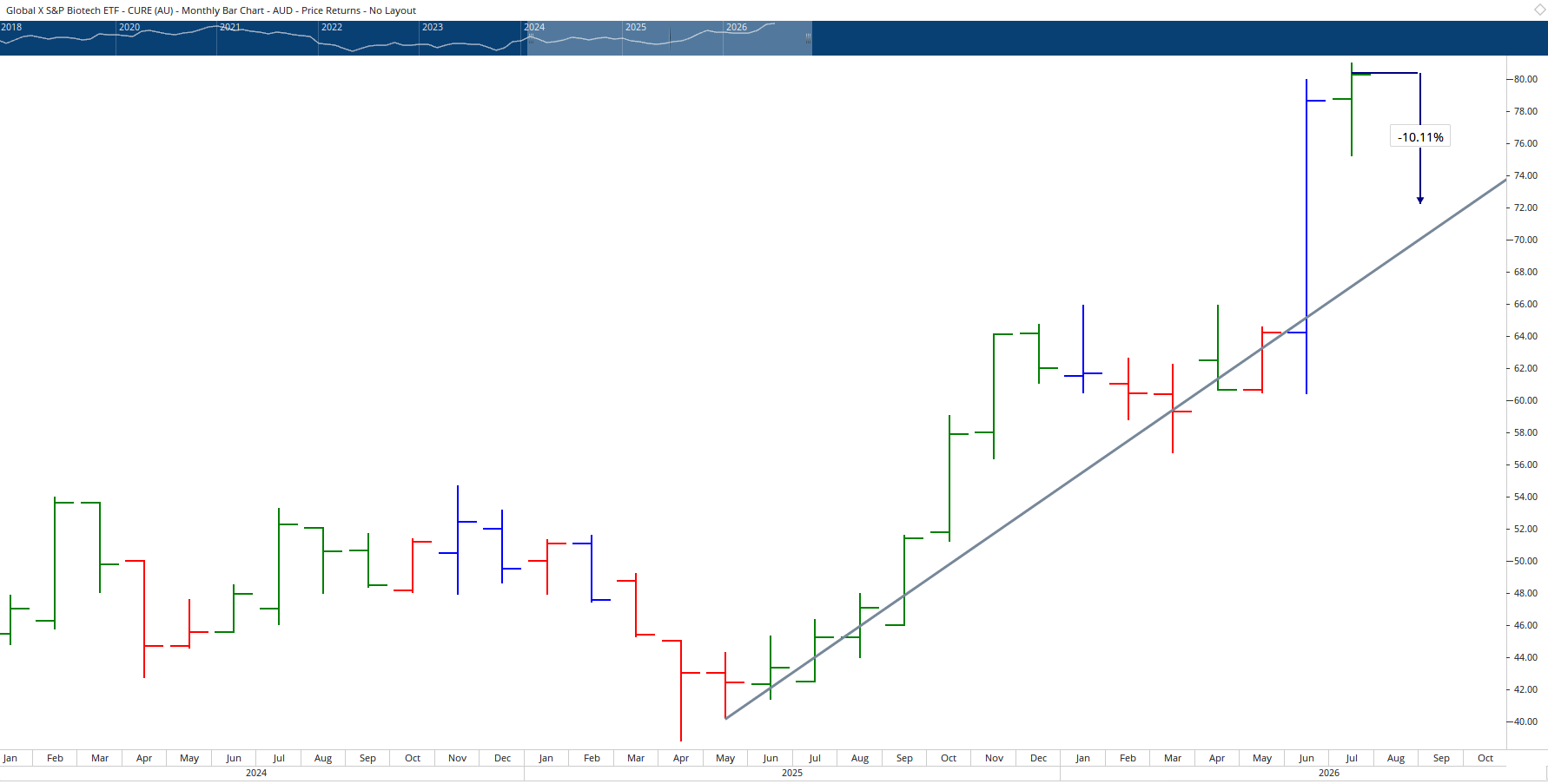
Global healthcare innovators across biotechnology, pharmaceuticals, medical devices, and healthcare technology. This one has gone parabolic recently, up around 21 percent, likely helped by the AI-in-healthcare narrative. The textbook setup here is sideways consolidation in an upward market, then an explosive move out of the range. A 5 to 10 percent pullback would create an ideal re-entry, and volume is supporting the move, which is always a positive sign.
6. Betashares Climate Change Innovation ETF (ERTH)
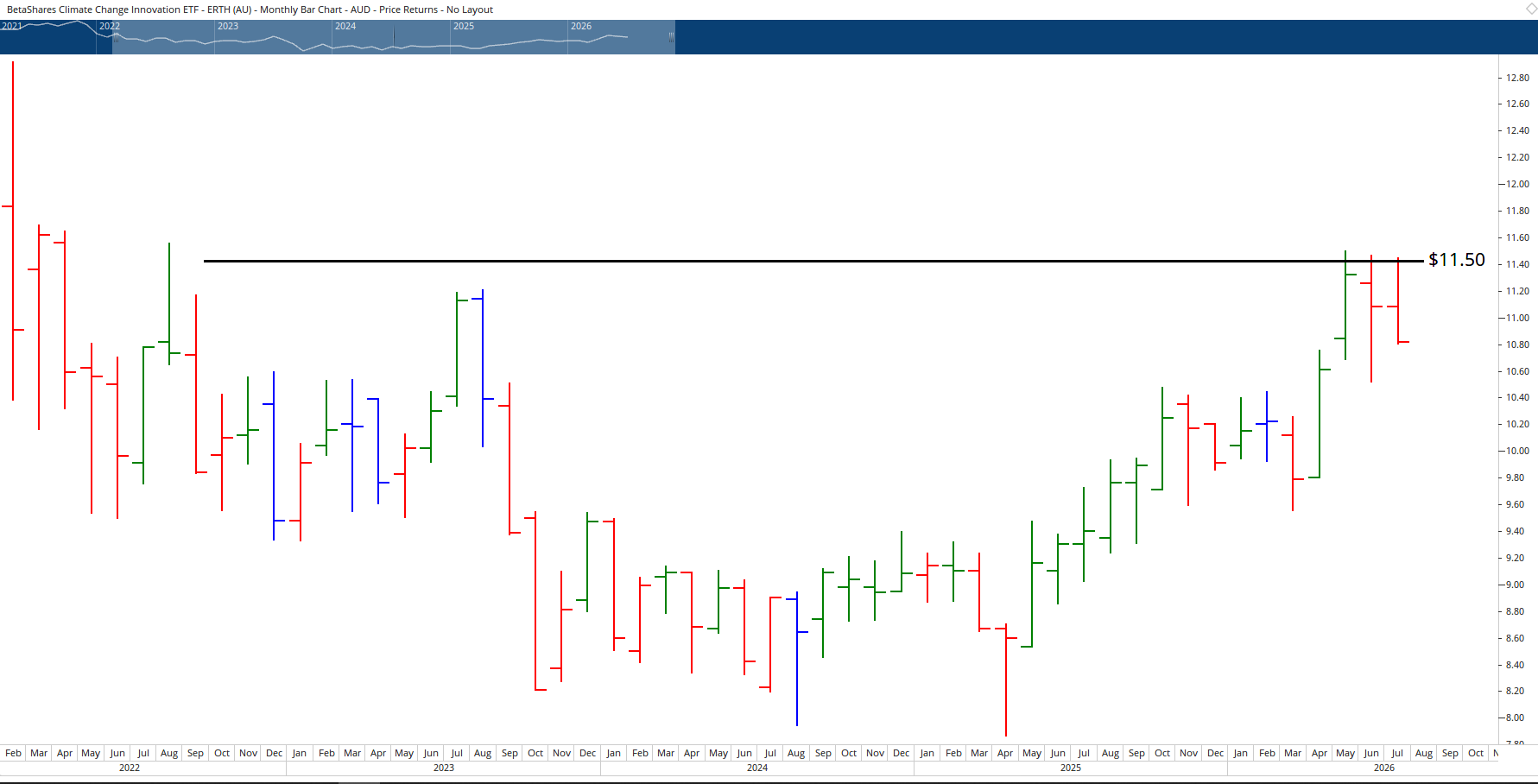
Invests in global companies whose products help tackle climate change including clean energy, electric vehicles, sustainable food, water efficiency, and pollution control. This one has broken out of a long sideways consolidation and come back to test the breakout, which is exactly the behaviour you want to see. A break above 11.50 could provide a clean buy signal. Regardless of political debate, the underlying mandates driving investment in this space have not changed, which means the structural tailwind remains.
7. BetaShares Global Agriculture ETF (FOOD)
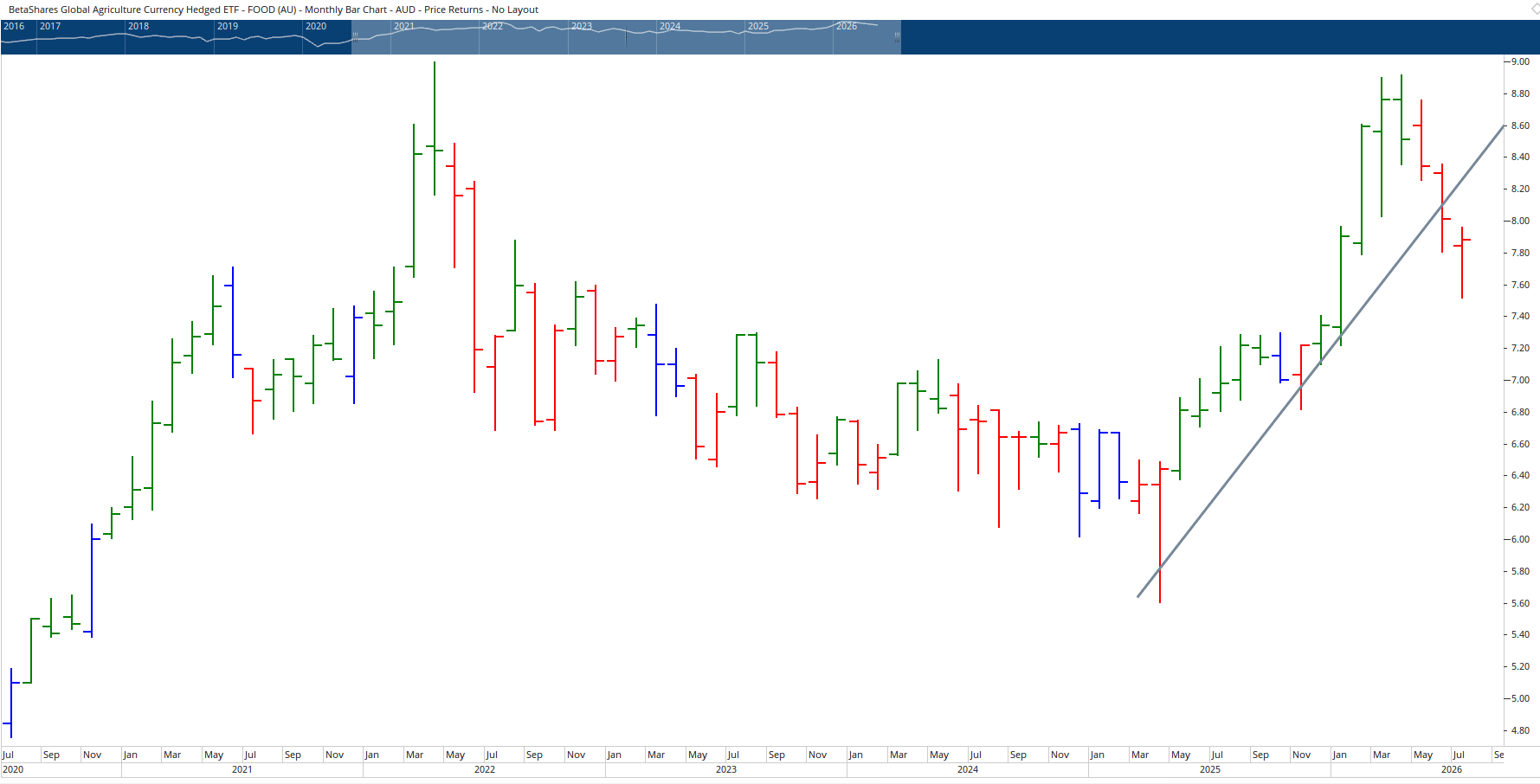
Currency hedged exposure to the world's largest agriculture companies including fertiliser producers, farm equipment manufacturers, seed companies, and agricultural chemicals businesses. Already broken out, currently pulling back below the trend line where support was expected. Given its history of consolidating for extended periods, there is nothing to suggest anything different this time. Wait for it to reclaim the trend line before acting.
8. BetaShares Global Energy Companies ETF (FUEL)
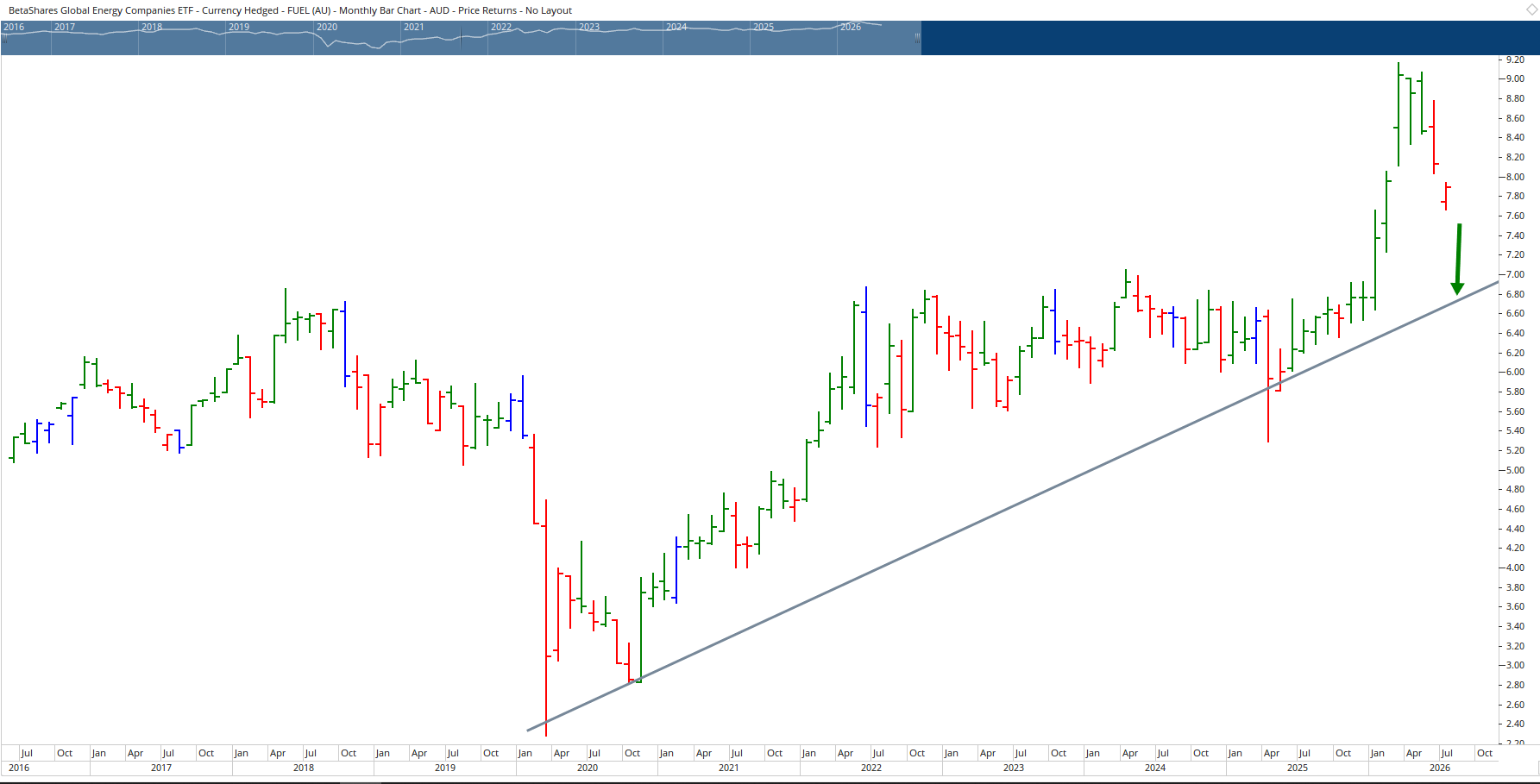
Currency hedged exposure to the world's largest integrated energy companies including Chevron, ExxonMobil, and Shell. This one moves with global crude and Brent prices and is not for the faint-hearted given the heavy geopolitical influence. If you trade this, size your position conservatively. Skew the risk down and let the percentage profits compensate if the trade works.
9. VanEck Morningstar Wide Moat ETF (GOAT)
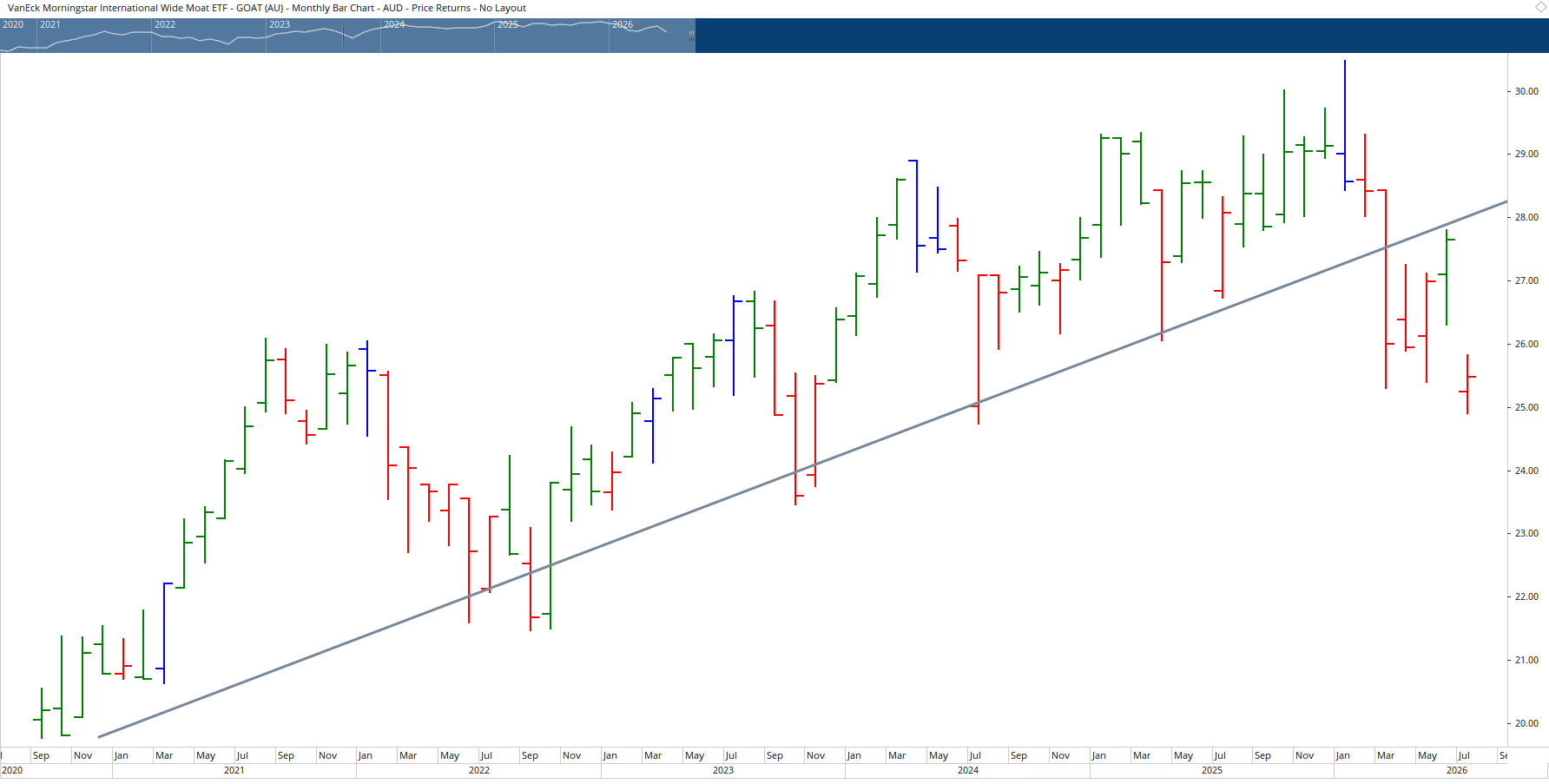
Invests in companies considered best-of-breed across global industries, targeting market leading businesses with strong competitive advantages. This one is a critical lesson. Do not fall in love with the idea of a product. The chart shows that things have clearly changed for this ETF, and it is trying to test old levels with significant resistance overhead. Even Warren Buffett style moat companies are not immune from falls. Just look at CSL or Cochlear.
10. Global X Hydrogen ETF (HGEN)
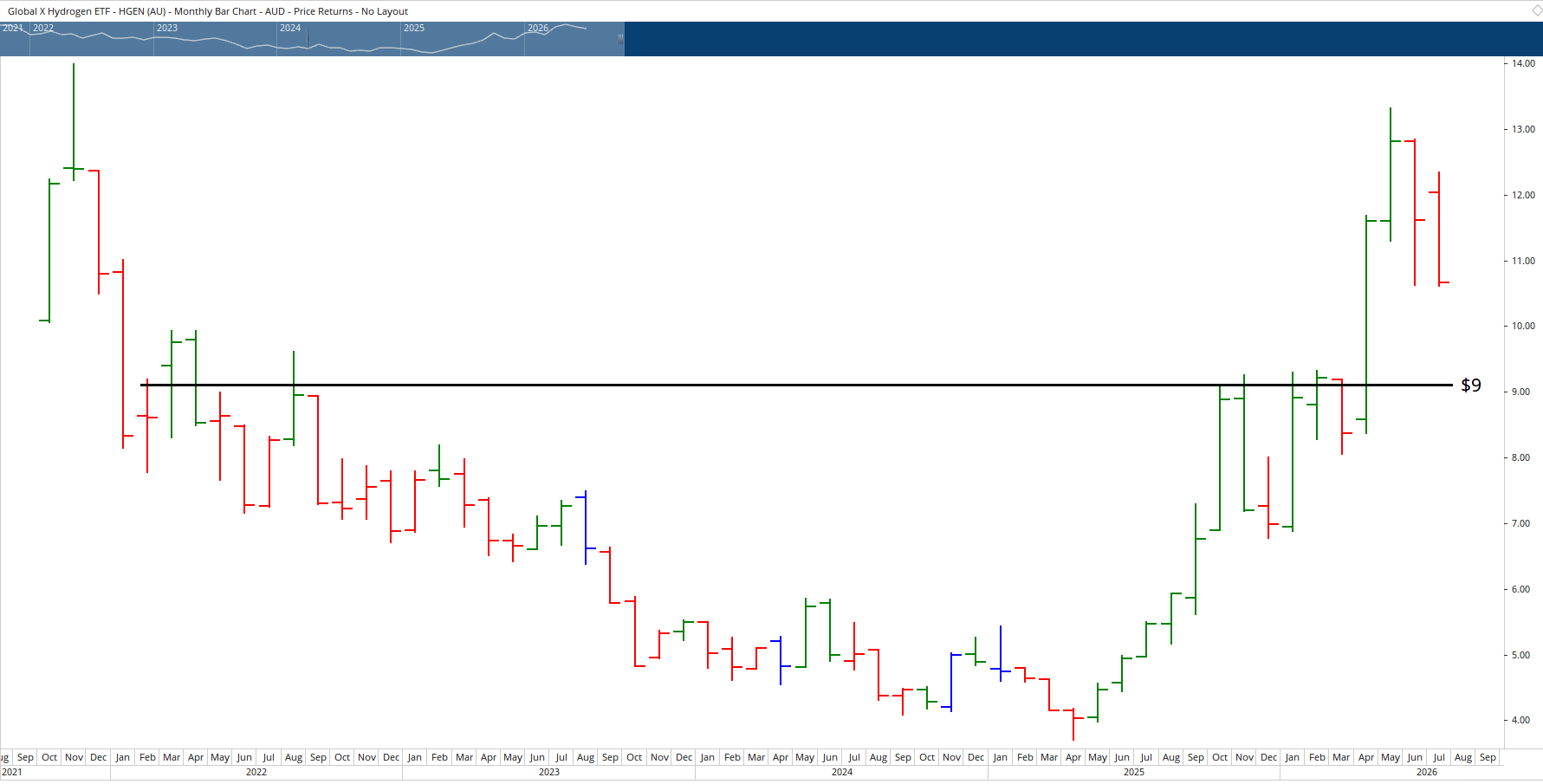
Invests in the hydrogen economy including production, fuel cells, electrolysers, storage, and infrastructure. This one has shot through the roof, executing a massive V-shaped reversal from the lows and now approaching the November 2021 all-time high. Weekly signals suggest it may pull back further, potentially toward the 9 dollar mark. If you hold it, the momentum line remains functional. If you do not, chasing here is not advisable.
Trending Topic: The Qantas Class Action
Over one million Qantas customers have been notified of the 105 million dollar flight credits class action settlement. On the surface, that sounds enormous. But for a company generating more than 22 billion dollars in annual revenue, it is less than half of one percent of sales. Markets tend to overreact to legal headlines, and once the announcement is made and costs are factored in, the share price generally continues on its underlying trajectory.
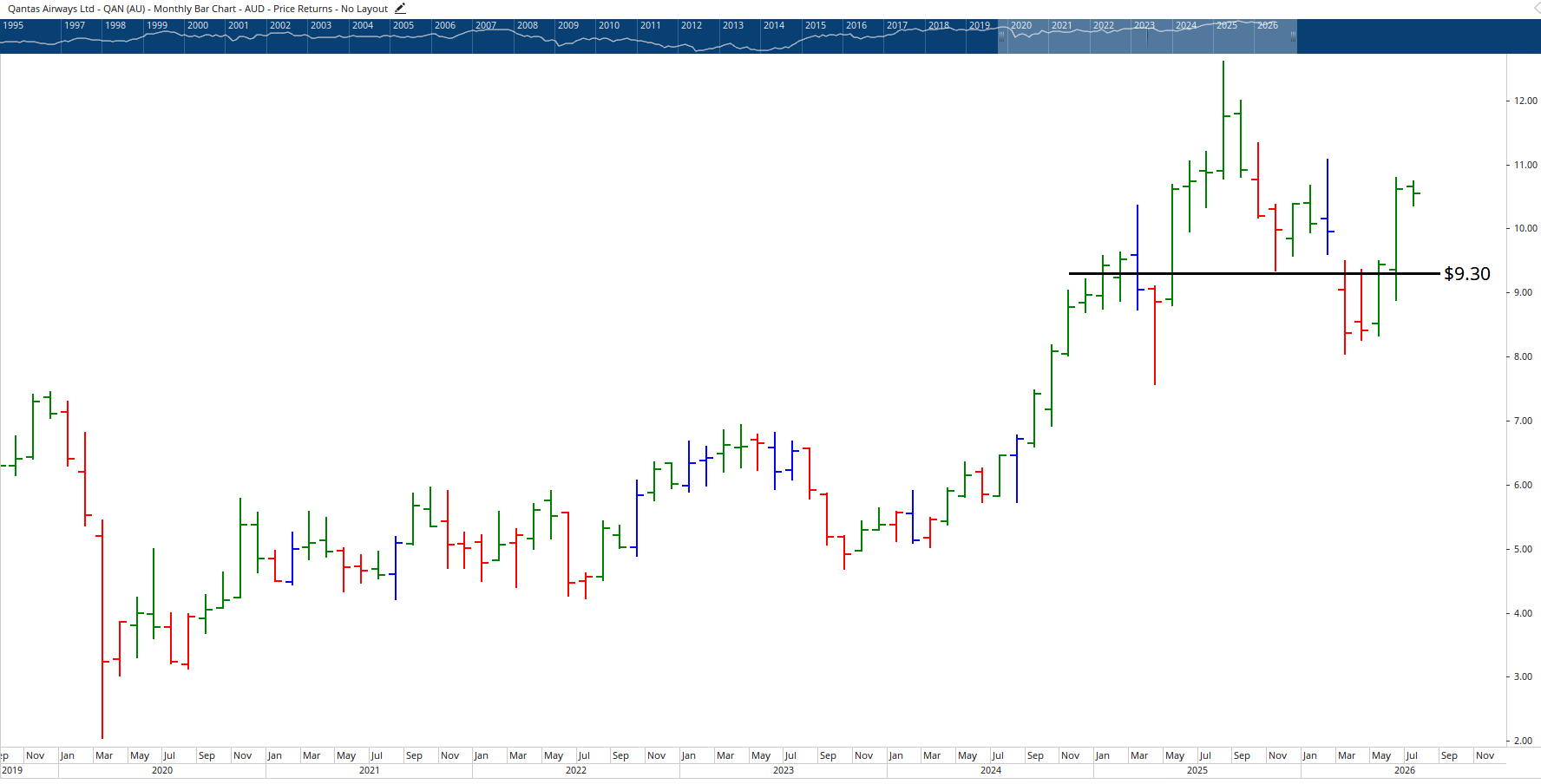
From a charting perspective, Qantas has had a decent pullback which is healthy. The angle of the current trend is holding, so anyone considering selling from a medium to long term perspective is probably too early. For potential buyers, wait for a pullback that holds support above the 9.30 zone, then watch for the next rise. Historically Qantas has spent long periods hanging around key levels, so patience is required.
Common Mistakes: Answering Viewer Questions
Two viewer questions in the show highlighted the exact mistakes most traders make, and both come down to the same issue. Trying to pick bottoms without confirmation and swimming against the tide of the bigger picture.
In one case, a viewer bought a spec stock in April with what appears to be no exit strategy, and now sits on a 25 percent loss with a position sized at 8 percent of the portfolio. That is potentially 42 percent of that position at risk of being given away with no plan to prevent it. In another case, a Telstra holder has done a much better job with a defined entry and a stock that is in what looks like a healthy consolidation, but still lacks a formal exit strategy.
The lesson repeats itself. You never enter a position without knowing where you will exit. And you always zoom out to the bigger picture before drilling into a shorter timeframe. Bigger moves create bigger direction, and starting on the weekly or monthly chart before scaling down to the daily is the correct sequence.
Hot Stock Tip: CSL Limited (CSL)
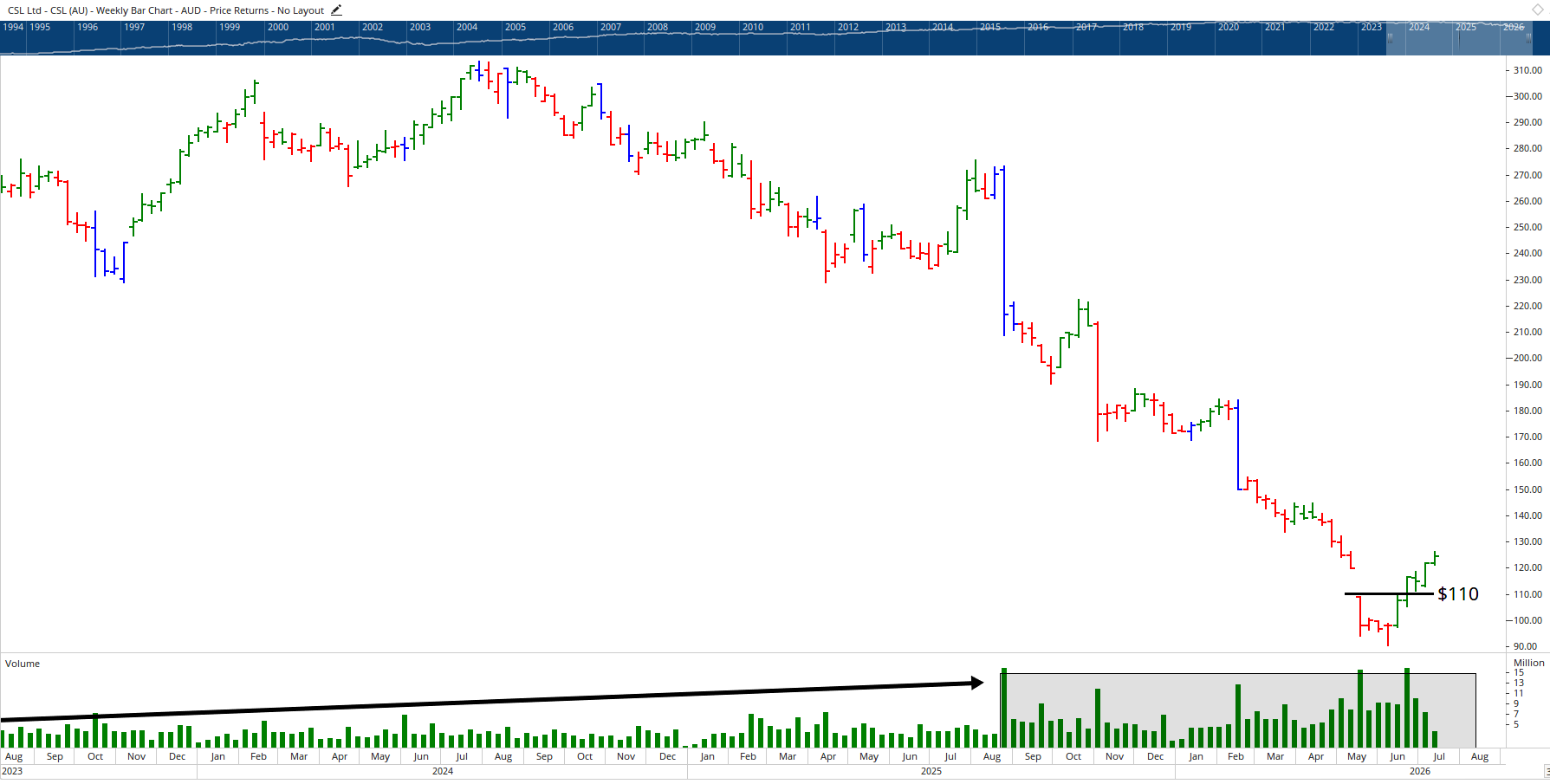
CSL has staged an impressive recovery with the biotech giant on track for its strongest close since late April. The stock has rallied more than 25 percent over the past month after being heavily sold in May when it downgraded earnings guidance and announced significant non-cash impairments. Investors are rotating back into defensive stocks like healthcare as momentum fades in banks and miners, lifting the broader healthcare sector.
Technically, CSL is still not out of the woods. It has closed the recent gap and volume is supporting the move, suggesting some smart money is returning, but this is not a straightforward buy signal. The ideal setup would be a period of consolidation around current levels, potentially a pullback to the 110 dollar mark, followed by a re-entry with a tight stop loss. A small initial position with the ability to top up as strength confirms is the sensible approach for medium to long term investors.
The Bigger Picture: Never Before Has There Been This Much Opportunity
The transformation of the Australian retail investor's global reach over the last decade is genuinely remarkable. A generation ago, retail investors were largely limited to the ASX 200 or 300, with hefty brokerage fees to access global markets. Now, thanks to the ETF explosion, exposure to US tech, Chinese consumer brands, global healthcare, agriculture, clean energy, and hydrogen is a single trade away, all while remaining inside an Australian trading account.
Markets are performing exceptionally well across almost every sector globally. Tech in the US, materials and energy locally, and healthcare recovering as a defensive rotation begins. Bullish, one directional markets are far easier to profit from than choppy, sideways markets, and right now the opportunity set is genuinely enormous. But only if you have the skills to identify what to buy, when to buy, and critically when to sell.
That is exactly what our trading courses teach. For those wanting to build a solid foundation of trend analysis, chart reading, and risk management, the Short Course in Share Trading provides the essential techniques used throughout this analysis. For those ready to commit to the complete government accredited program, the Diploma of Share Trading and Investment delivers the full five-step approach used by professional traders. You can also learn more About Wealth Within and the two decades of results our students have achieved.
Final Thoughts
The ETF boom is genuine, the product choice is unprecedented, and the opportunity across global markets is arguably the largest it has ever been for Australian retail investors. But the marketing narrative of "safe, simple, low volatility" hides a truth that every experienced trader knows. All markets can fall, all products carry risk, and all positions need a strategy for entry, management, and exit.
The ten ETFs analysed here span a broad range of themes and phases of the market cycle. Some are in strong uptrends where trend line management is the primary tool. Others are consolidating and waiting for confirmation. A few are showing warning signs that experienced traders would already be acting on. The difference between profit and loss across all of them comes down to the same thing. Skills, structure, and discipline.
Trading with confirmation rather than speculation is the mindset that separates consistently profitable traders from the rest. And that mindset does not develop by accident. It is built through education, practice, and the right framework.