Falling Australian House Prices: Crisis or Investor Opportunity?

By Dale Gillham
Reading Time: 6 minutes
Australian property prices are falling; at least, that's what you'd think if you only read the headlines. Sydney prices are down 4.2 per cent, and Melbourne is down 3.5 per cent over the latest quarter, while the five-capital-cities aggregate has fallen 2.7 per cent.
Sounds ugly, but before declaring another property crisis, investors need to ask a bigger question: is the Australian economy behaving like it's in crisis? Because underneath the headlines, the picture tells a different story.
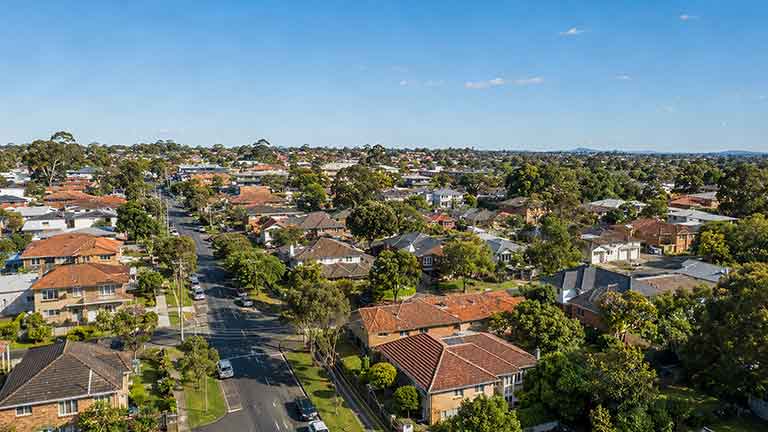
Are Australian Property Prices Really Heading for a Crash?
Even after the recent falls, the five-capital-cities aggregate for Australian properties is still up 3.2 per cent over the past year. Zoom out further, and Australia's real house price index rose around 26.5 per cent between March 2016 and March 2026. Property has softened, but a correction and a collapse are two very different things.
The latest bank financial year earnings results give us an even better look under the bonnet. CBA reported a record $10.98 billion full-year cash profit. New loan applications have fallen 15 per cent since the budget in May, while ANZ reported a 12 per cent decline.
Yet the biggest revelation in CBA's report was the growth in business lending. That's important, because if the economy was really falling apart, you'd expect businesses to pull back, unemployment to rise sharply and borrowers to start falling behind on their mortgages. We're not seeing that combination.
Unemployment remains relatively healthy at 4.4 per cent, while CBA's 90-plus-day home-loan arrears were 0.73 per cent and ANZ's were 0.86 per cent, hardly numbers that warrant panic. Westpac also said households and businesses continued to demonstrate resilience, although stressed exposures are increasing. Taken together, the bank results suggest financial pressure is building, but we're still not seeing the widespread distress that would normally threaten the property market.
Could Falling Property Prices Create an Opportunity for Investors?
That's an important distinction, because property markets don't normally crash simply because prices fall for a few months. The real danger comes when economic conditions deteriorate to the point where large numbers of homeowners can no longer service their mortgages and are forced to sell. Right now, Australia doesn't appear to be there.
The next question is: could property fall further? Absolutely, but falling prices can also create opportunities when sentiment becomes more negative than the fundamentals. As Warren Buffett famously said, “Be fearful when others are greedy, and greedy when others are fearful.”
So rather than panic over falling prices, ask yourself: are the fundamentals breaking down or is everyone simply becoming fearful at the same time? Because if the fundamentals aren't breaking and it’s fear that's driving the market, maybe this is exactly the kind of moment Buffett was talking about.
Best and Worst Sectors
Utilities was the best-performing sector last week, rising more than 7 per cent on the back of strong moves in its largest stocks, including AGL and Origin Energy, which reported FY26 earnings. Healthcare and Information Technology both gained more than 3 per cent, continuing their recent form over the last two months. Information Technology was particularly interesting, as there has been a shift in sentiment toward software companies out in the US, following the really strong earnings release from some of their software giants like Microsoft and Oracle and that positivity is flowing through to many of our software stocks.
At the other end of the market, Financials was the weakest sector, falling over 3 per cent as new home loan applications were lower, spooking investors' outlook for the banks. Industrials fell over two and a half per cent, suggesting a short-term breather for a sector that has seen resilient buying since May this year.
Real Estate also had a subdued week, falling more than 2 per cent, as the market is split in two on forward sentiment and value. Last week's reporting showed mixed results, with investors favouring REITs with genuine rental and earnings growth, particularly those exposed to industrial, data centres and other structural growth themes, while punishing defensive property businesses where earnings growth has stalled.
Best and Worst Stocks
Cleanaway Waste Management led the gains in the ASX Top 100 this week, climbing more than 13 per cent, due to an attractive takeover proposal from EQT Infrastructure. This was followed by Origin Energy and Car Croup, which both gained over 11 per cent, benefiting from the strong earnings report and FY27 guidance
Life360 was the weakest performer, falling more than 17 per cent following the release of its FY26 report, which raised concerns about whether the company can deliver the acceleration implied by the upper end of its FY27 targets. SGH Limited fell over 9 per cent after the company projected a weaker outlook in their FY26 report last week, while Westpac Bank fell over 6 per cent as the market started to question future value given the current strong share price and significant drop in loan demand.
All Ordinaries Index Update
The All-Ordinaries Index took a small breather this week, falling 1.4 per cent after last week's explosive run to a new all-time high the week prior. Given the strength of that rally, this week's decline has been relatively restrained and, for now, looks more like a healthy pullback than anything else.
We've seen the market retreat after reaching record highs before. When the All Ords broke to a new high in October 2025, it was followed by an 8 per cent, while the February 2026 high was followed by a 10 per cent fall. I'm not suggesting history will repeat itself, but it's a good reminder that pullbacks are a normal part of markets, particularly after a strong run.
That's why 9,200 is now the most important level I'm watching. If the All Ords pulls back towards this level and strong buying emerges, it could prove to be one of the most important signals we've seen all year. Holding the 9,200 level would give greater confidence that the market is finally ready to break free from the sideways grind we've been stuck in since October last year and begin a genuine push towards 10,000 points.
On the reporting season front, it's been so far, so good. The big three banks have now reported, with nothing significant enough to shake the broader market, while the major miners are still to come. Utilities were the standout sector this week, helped by strong moves in AGL and Origin Energy, highlighting the sector's ability to pass higher costs through to customers.
So, while the index may have taken a breather this week, there's still plenty happening beneath the surface. With reporting season creating winners and losers and the market sitting near record highs, opportunities continue to emerge. For investors who know what to look for, this remains a buyer's market.
Good luck and good trading.
Dale Gillham is the Chief Analyst at Wealth Within and the international bestselling author of How to Beat the Managed Funds by 20%. He is also the author of the award-winning book Accelerate Your Wealth—It’s Your Money, Your Choice, which is available in all good bookshops and online.
Disclaimer
This article contains general information and educational market commentary only. It does not take into account your objectives, financial situation or needs and should not be treated as personal financial advice or as a recommendation to buy, sell or hold any financial product.
Any stocks, sectors, strategies or market scenarios discussed are provided for educational purposes to illustrate the concepts covered in the article and should not be considered individual investment recommendations.