Why Q4 2026 Could Be Different for ASX Investors
By Dale Gillham, Janine Cox and Fil Tortevski
Reading Time: 8 minutes
The final quarter of 2026 is shaping up differently.
History suggests the fourth quarter of a US midterm election year can be particularly strong for share markets. But seasonality alone is never a reason to buy a stock. What matters is whether the underlying market, sector and individual share-price behaviour support the historical pattern.
In this week’s Australian Stock Market Show, Chief Analyst Dale Gillham and Senior Analysts Janine Cox and Filip Tortevski look at where the opportunities may emerge in Q4 if markets strengthen into the end of the year.
Our attention is centred on two very different areas of the ASX: energy, which has already shown strength, and healthcare, where several stocks are attempting to recover after significant falls.
The question is not simply whether Q4 will be bullish. It is which stocks show evidence that buyers are returning.
Why the fourth quarter matters
Historically, US midterm election years have produced an unusually strong final quarter. The important point, however, is not to treat seasonal statistics as a trading signal.
History can tell us when conditions have previously been favourable, but it cannot tell us which stock to buy or whether the same outcome will occur this time.
For us, seasonality is supporting evidence.
If a stock already has improving price behaviour, stronger momentum, increasing volume and a constructive sector behind it, a historically strong period can add another factor to the analysis.
But if the chart is falling, October in a midterm year does not suddenly make it a good opportunity. That distinction matters most in the two sectors we examined.
Energy has momentum but is also highly sensitive to geopolitical developments. Healthcare has been beaten down, but that creates the possibility of recovery if buyers genuinely return.
Energy: Strength with a different kind of risk
Energy stocks have benefited from renewed attention as geopolitical tensions influence oil and gas markets. The challenge is that the story can change quickly.
If geopolitical conditions improve, some of the stocks that have benefited from the theme may come under pressure. That means traders need to distinguish between a longer-term business opportunity and a shorter-term thematic move.
Amplitude Energy: Is the market starting to recognise the story?
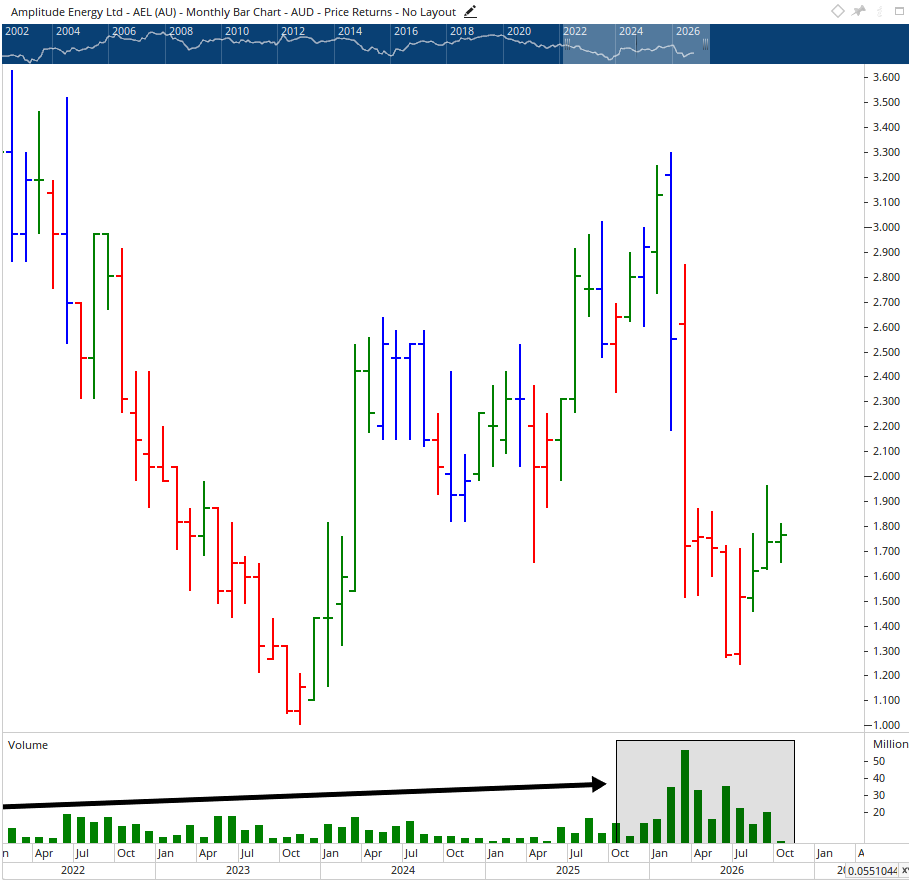
Amplitude Energy (ASX: AEL) was one of the most interesting examples. The company delivered record FY26 production, revenue, underlying EBITDAX and adjusted operating cash flow, while its East Coast Supply Project has moved forward with development, targeting up to 90 terajoules a day of production from 2028.
But the chart hadn't risen as much as some other energy stocks. That's what made it interesting.
Around the levels discussed on the show, the stock appeared to be finding buyers after an extended period of consolidation. Volume had also remained elevated, suggesting considerably more activity in the stock than before.
The technical question is whether buying develops into a sustainable trend. Rather than assuming fundamentals must eventually push the share price higher, we want price itself to confirm investors are willing to keep buying.
That difference between what a company may do and what its share price is actually doing is critical.
Omega Oil & Gas: Opportunity comes with exploration risk
Omega Oil & Gas (ASX: OMA) presents a very different setup. The company had around $102 million in cash at 30 June 2026 and no debt while progressing its multi-well drilling program in Queensland’s Taroom Trough.
That gives Omega a strong financial position from which to pursue exploration, but the share price remains heavily dependent on drilling and flow-test results. This is where traders can get themselves into trouble.
The upcoming announcement may sound exciting, but anticipated news is not the same as confirmed price strength.
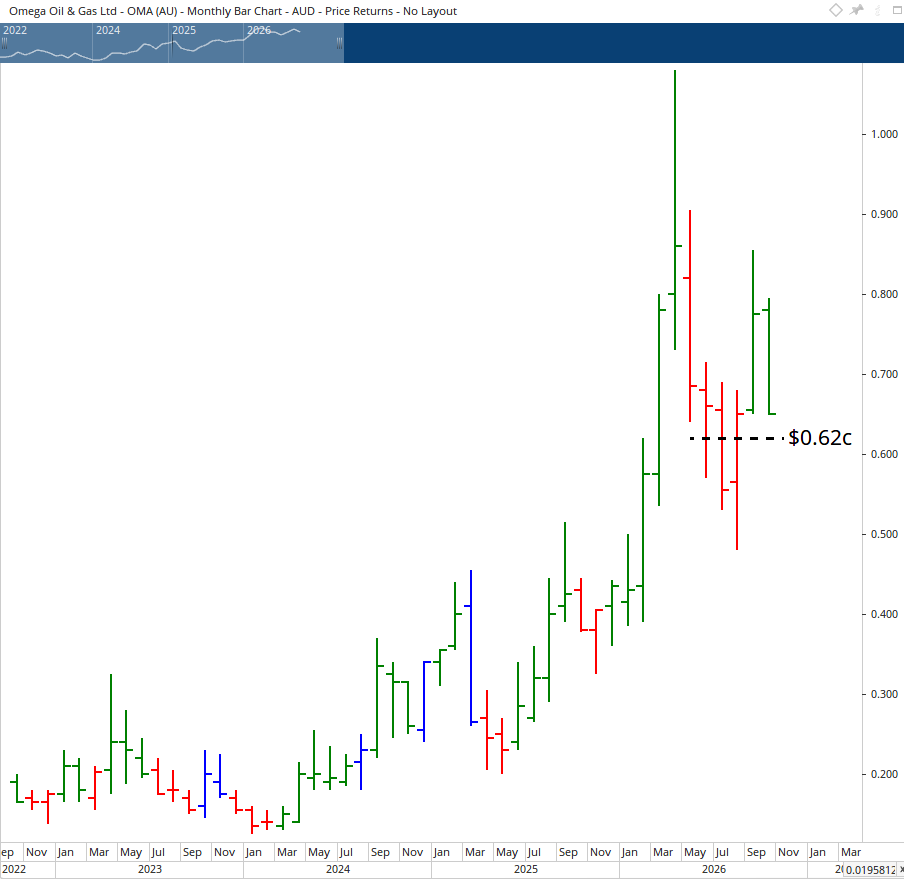
At the time of the show, Omega had pulled back substantially from its previous high and was approaching the 60 to 62 cents area, which could become technically important.
If buyers return around that area and the price begins to strengthen, the setup changes. If support fails, the analysis changes.
The lesson is simple: do not trade what a company is “going to do”. Analyse what the market is actually showing you.
Healthcare: Can the recovery continue?
Healthcare presents almost the opposite situation. The sector has been heavily sold down, which means several stocks now have the potential to recover from much lower levels.
But beaten down does not automatically mean cheap. We still need evidence that buyers are taking control.
Imricor Medical Systems
Imricor (ASX: IMR) is commercialising technology that enables cardiac procedures using real-time magnetic resonance imaging rather than traditional X-ray-based approaches.
The company recently began its US commercial rollout, including its first commercial US hospital customer.
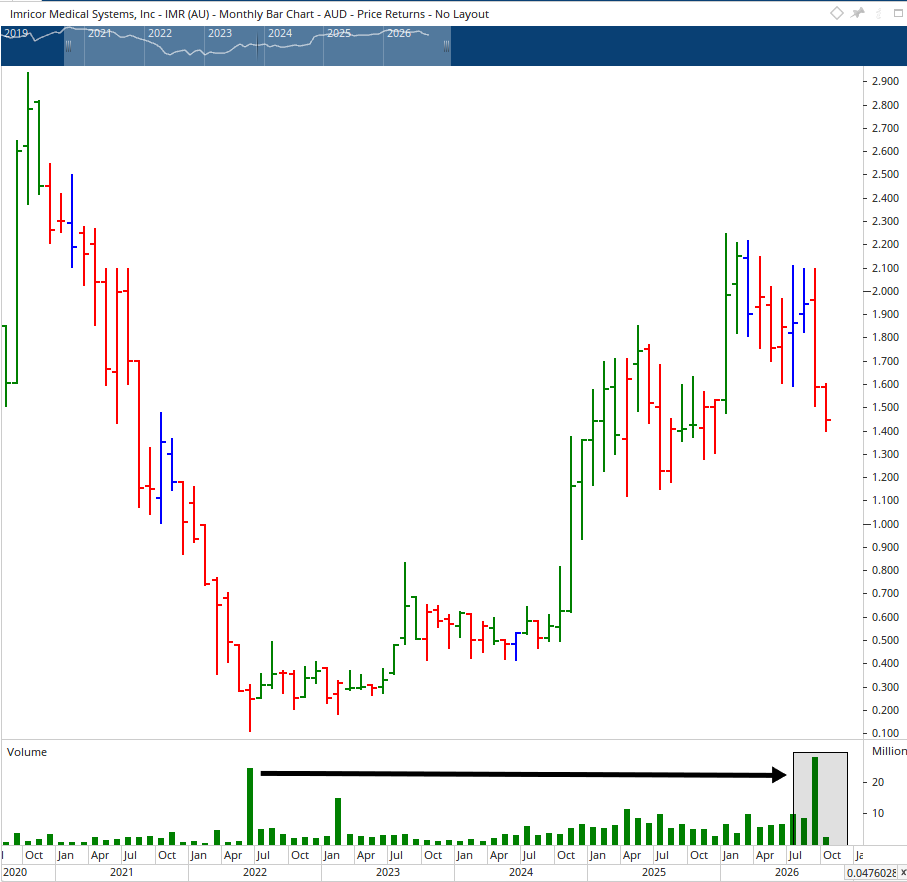
Technically, the stock followed the familiar pattern of an early-listed company: initial excitement, a substantial decline, and then a long period of base building.
What caught our attention was the significant increase in volume around an important support level.
Previous periods of heavy volume had occurred near major turning points. That does not guarantee another one, but if price can regain and hold above the levels discussed in the show, it could indicate the stock's character is changing.
4DMedical
4DMedical (ASX: 4DX) is another healthcare stock where expectations have risen rapidly. Its CT:VQ technology provides functional lung imaging using standard CT scans, and the company continues to expand its US commercial presence.
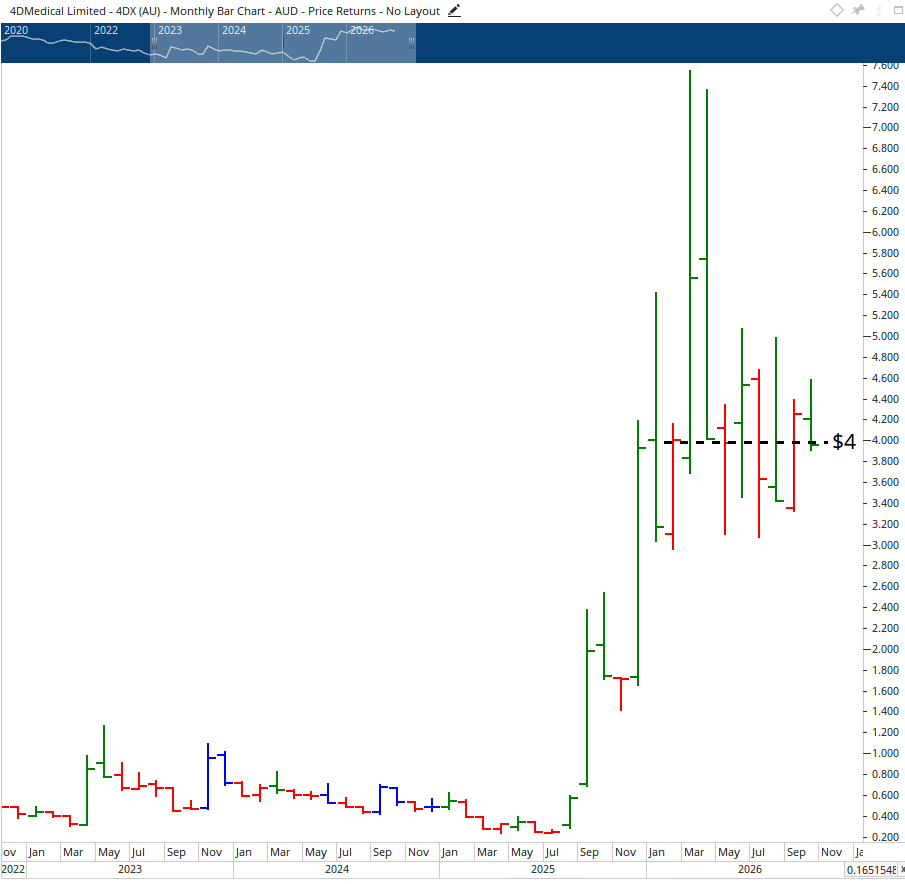
The share price had already experienced a substantial re-rating before consolidating around the $4 level. That creates a different challenge.
When expectations run high, even good companies can experience sharp corrections. The question is whether consolidation becomes a platform for another advance or whether sellers take control.
Again, price needs to provide the answer.
PYC Therapeutics
PYC Therapeutics (ASX: PYC) is developing RNA therapies for rare genetic diseases, with several programs progressing through clinical development.
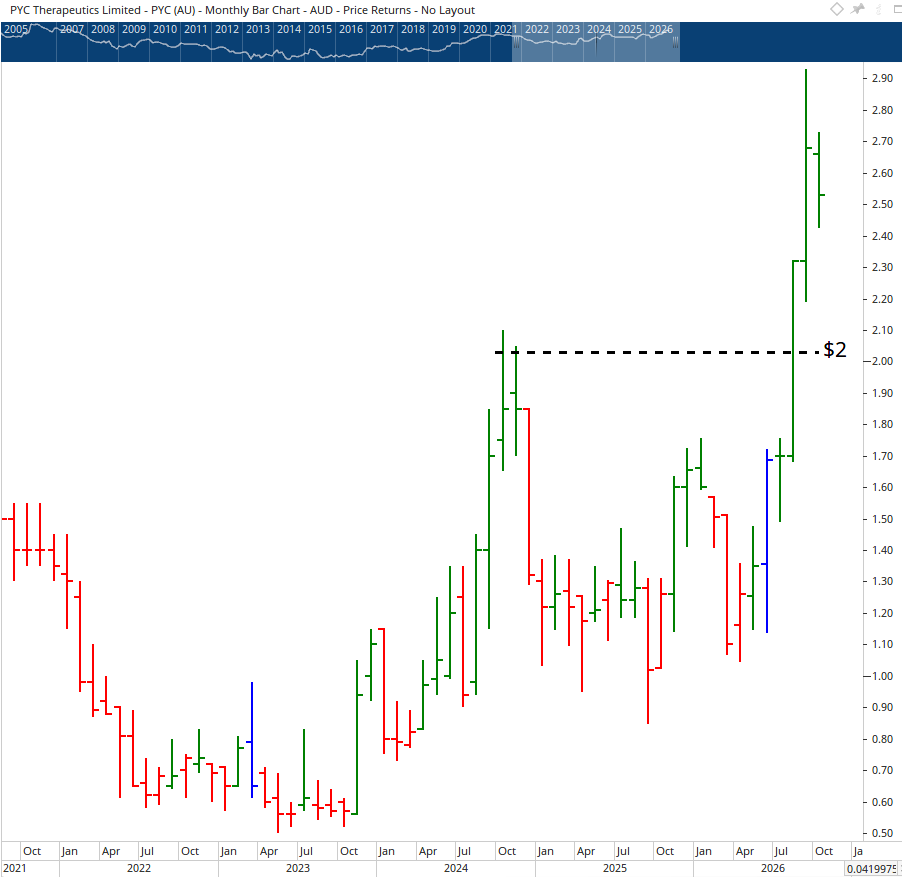
The market had pushed the stock above a long-standing area around $2 that had previously acted as resistance. That level now becomes important.
If the price stays above it, it suggests buyers are starting to accept a higher valuation. If it falls back below and fails to recover, the breakout becomes less convincing.
Clinical-stage biotechnology stocks can also react dramatically to trial results, making position structure and risk management especially important.
Being right about a therapy's long-term potential doesn't necessarily mean the trade will move in a straight line.
Trending topic: Are Woolworths shares setting up again?
Woolworths (ASX: WOW) generated a very different discussion. The broader debate around supermarket competition may attract plenty of political attention, but investors still have to look at the chart.
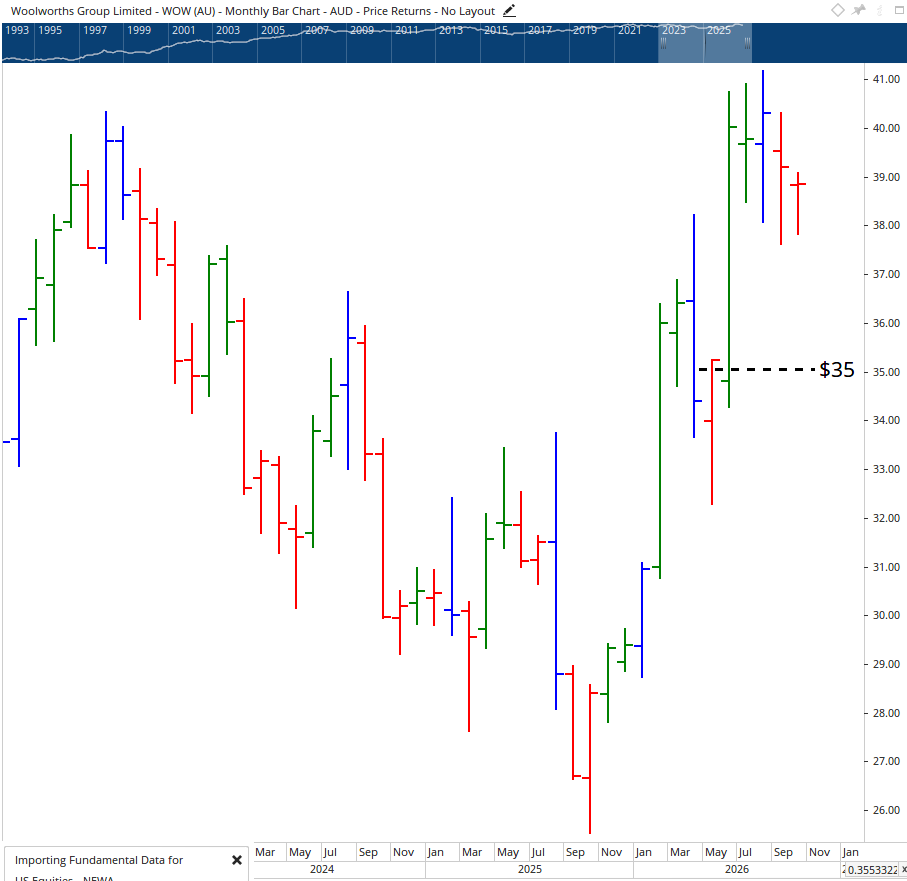
We believe Woolworths could see further short-term weakness before presenting a more attractive setup. We identified an area around $35 as a level to watch if the pullback continues.
From there, the important question is whether the stock can stabilise and begin another sustained rise.
If the broader Australian market remains bullish into 2027, Woolworths could eventually challenge considerably higher levels. But the chart needs to establish the next low first.
That is far more useful than simply deciding Woolworths is a “blue-chip stock” and assuming that makes it safe.
Hot stock of the week: RocketBoots
RocketBoots was our hot stock of the week after the company began installing its first US stores under an agreement with a tier-one multinational retailer.
The broader agreement represents about $9.1 million in annual recurring SaaS revenue once rolled out, plus about $3.3 million in activation revenue.
The announcement matters because the project has moved from integration towards actual commercial deployment.
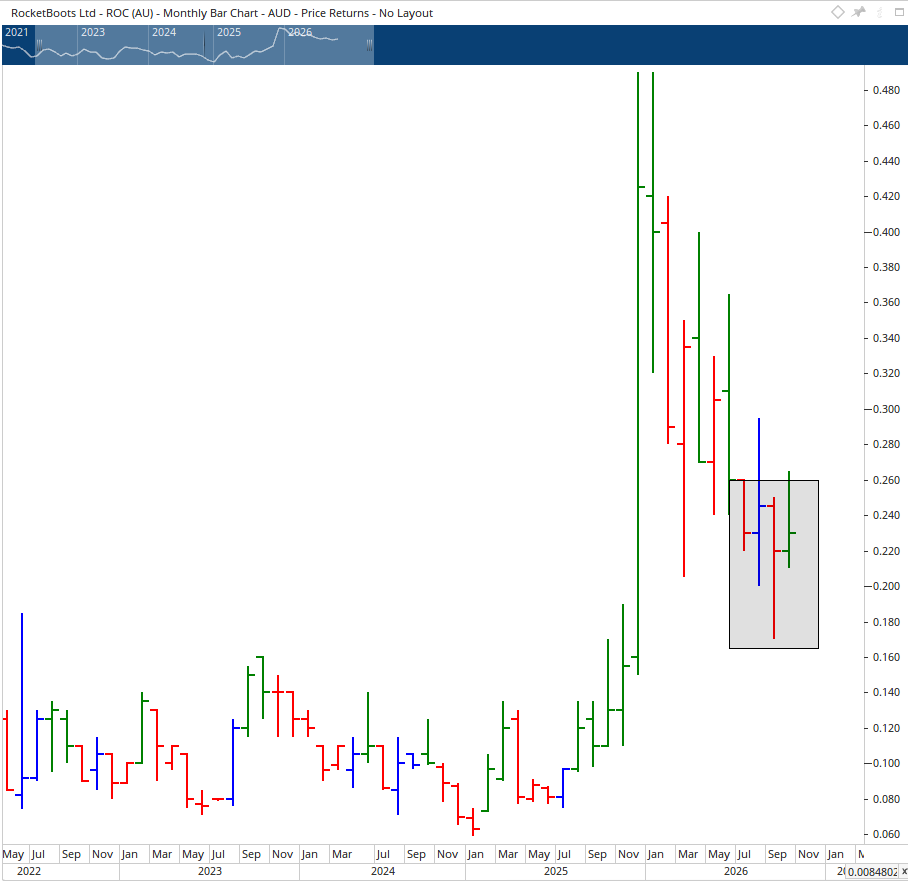
Technically, however, the stock was still in a falling short-term trend. That means one positive announcement is not enough.
The area around the previous major buying surge matters, and the next phase of price action should tell us whether sellers are being absorbed and a genuine trend change is developing.
This is exactly why analysing the business and analysing the chart are two different jobs.
The broader lesson: Trade what is happening
One theme appeared repeatedly. A major difference exists between what we believe a company can do and what its share price is actually doing.
Exploration companies can have exciting drilling programs. Biotechnology companies can have promising clinical trials. Technology businesses can sign large contracts.
But traders still need a process. What is the trend? Where are buyers and sellers becoming active? Is volume confirming the move? Where is support?
What would prove the analysis wrong? And, just as importantly, what is the exit strategy?
Knowing how to enter a stock without knowing how to exit it is not a complete trading strategy.
Building the skills
These opportunities demonstrate why trading requires more than finding interesting companies.
We used sector analysis, price trends, support and resistance, volume, market cycles, and risk-versus-reward to assess very different stocks.
At Wealth Within, we teach traders to bring these skills together so they can determine what to trade, when conditions support a trade, and how to manage risk if the market moves against them.
The objective is not to predict every move correctly. It's to develop a repeatable decision-making process rather than relying on tips, news or speculation.
Final thoughts
Q4 may have history on its side, but history is only part of the picture.
Energy has momentum but remains sensitive to geopolitical developments. Healthcare may offer recovery opportunities, but only where the charts confirm that buyers are returning.
The strongest opportunities will be the stocks where the story, sector and price action begin to line up. If those conditions strengthen as the quarter progresses, Q4 could provide some very interesting opportunities.
If they don't, the market will tell us that too.