Is the World Really Running Out of Oil?

Reading Time: 8 minutes
Two oil headlines caught my attention this week, and at first glance, they didn’t seem to belong together.
The first was about the disruption around the Strait of Hormuz. Oil exports were being interrupted, production was being shut down, and fuel supplies were under pressure.
The second was from the United States, where crude oil inventories had unexpectedly risen by almost three million barrels.
That got me thinking. If we are facing an oil supply shortage, why is America putting more crude into storage?
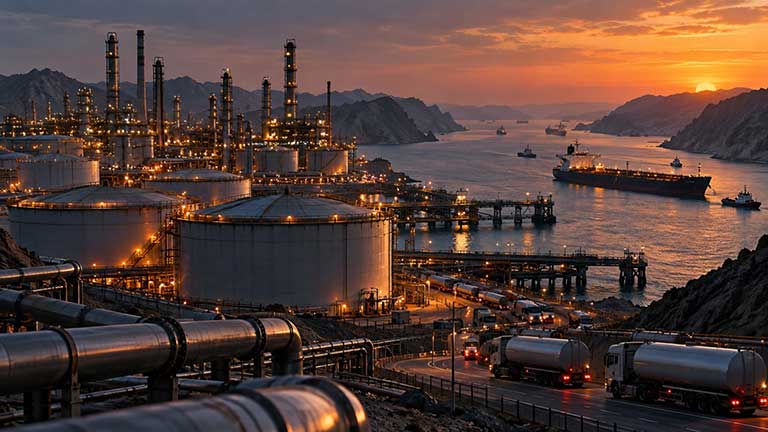
Then another number jumped out at me. The Trump administration says it has secured US majority control of more than 65 billion barrels of proven Venezuelan oil reserves.
So, what exactly is scarce?
That became the question I wanted to investigate. Not simply whether plenty of oil lies underground, but whether enough of the right oil can actually reach the places that need it.
Because having oil and having usable fuel available today are very different things.
Why rising US crude inventories don't tell the whole story
Let's start in America. For the week ending 18 September, US commercial crude stocks rose by almost three million barrels to around 426 million barrels.
You could look at that figure and assume the supply problem must be improving. But keep digging and the picture changes.
Gasoline inventories fell by 1.7 million barrels, while distillate inventories, which include fuels such as diesel, fell by around 400,000 barrels.
When the wider commercial petroleum inventory was added together, the total increase was only around 100,000 barrels. In other words, almost nothing changed overall.
There was another important detail. US refineries were processing around half a million fewer barrels of crude per day than the previous week.
A refinery takes crude out of storage and converts it into products such as petrol and diesel. If refineries take less crude, more can remain sitting in storage.
So, a rise in crude inventories doesn't automatically tell us more oil has suddenly become available.
It highlights something I think matters whenever we're looking at markets: be careful about building a conclusion around one headline number.
The world entered the crisis with a huge oil buffer
The next part surprised me even more. The world didn't enter the disruption around Hormuz with empty tanks.
During 2025, global oil supply had been running ahead of demand and observed inventories had grown substantially. By the time the current conflict began, around 8.2 billion barrels of oil were sitting in storage.
That included commercial inventories, government reserves, oil stored in China and crude sitting on ships.
Initially, you might look at 8.2 billion barrels and think: what shortage? But storage is a buffer, not an endless source of supply.
Think of it like having money in a savings account while spending more each month than you earn. You’re not broke today because the savings covered the shortfall. But if the gap continues, that buffer eventually shrinks.
That's effectively what has been happening with oil. Countries and companies have been drawing down inventories to replace barrels that are no longer travelling through their normal routes.
The International Energy Agency estimated global observed inventories fell by 507 million barrels between February and August, including around 95 million barrels during August alone.
That explains how apparently contradictory headlines can both be true. US crude inventory can rise for a week while global inventories fall over several months.
The real problem is getting oil where it needs to go
This is where I think the oil story becomes much more interesting.
When people talk about oil supply, they often treat it as one number. But there are several stages between finding oil underground and putting petrol into a car or diesel into a truck.
Oil has to be produced. It has to reach a pipeline or port. It then needs to travel safely to a buyer.
A refinery needs to be capable of processing that particular grade of crude. Finally, the finished fuel has to reach the customer.
A problem at any point can create a shortage.
The Strait of Hormuz provides a perfect example. Before the conflict, around 20 million barrels per day of oil flowed through the Strait. During March, April and May, that average dropped to roughly 2.7 million barrels per day.
That's an enormous disruption. But the oil itself didn't necessarily disappear.
Some producers found alternative routes. Saudi Arabia increased exports through its pipeline towards the Red Sea. The United Arab Emirates also has infrastructure capable of bypassing Hormuz, while suppliers outside the Gulf increased shipments.
That's one reason oil prices don't simply rise every day while Hormuz is disrupted. Markets adapt.
But these workarounds have limits.
We discussed how geopolitical disruption can reshape markets beyond simply moving the oil price in an earlier Talking Wealth Podcast, Middle East Crisis: Where's the Next Big Trade?
Do Venezuela's massive reserves solve the problem?
Venezuela added another twist to the story.
The White House stated that the United States had secured majority control of more than 65 billion barrels of proven Venezuelan oil reserves.
That's an enormous number. But reserves and current supply aren't the same thing.
Venezuela was exporting around 1.17 million barrels per day in August, and its terminals were already struggling to handle significantly more volume.
The type of oil also matters. Much of Venezuela's oil is heavy crude, while refineries and storage facilities are designed around particular grades.
The US Energy Secretary even discussed the possibility of swapping Venezuelan heavy crude for lighter or medium American crude.
So having access to billions of barrels doesn't mean those barrels can immediately become usable fuel.
The best comparison I can make is owning a farm.
Owning the farm doesn't put food on a supermarket shelf tomorrow. Someone still needs to grow it, harvest it, transport it and get it to the customer.
Oil works the same way.
Are we watching the wrong oil price?
This leads to another part of the investigation that I think people are overlooking.
Most of the headlines focus on crude prices.
Brent breaks above US$100. Brent falls back. West Texas Intermediate rises or falls.
But households and businesses don't buy crude oil. They buy petrol, diesel and other finished fuels.
That's where some of the real pressure has been showing up.
Gulf exports of refined products and LPG remained dramatically below earlier levels in August, while exports of diesel and gasoline were also well below pre-war levels.
This creates an interesting situation. Crude oil can fall in price while diesel remains expensive.
A freight business doesn't care that Brent fell on a particular day if the diesel going into its trucks remains costly. Those higher transport costs can then work their way into the price of goods throughout the economy.
So, the crude oil chart and what businesses experience on the ground can tell two different parts of the same story.
Why oil can fall below US$100 while supply remains tight
I started this investigation wondering why oil repeatedly moves through US$100 and then falls back.
There isn't one explanation.
The first possibility is genuine supply improvement. More oil gets through pipelines, Hormuz traffic improves, or reserve releases reach the market.
That's the straightforward scenario. The second is expectations.
Markets move before tankers do. If traders believe a ceasefire is coming or shipping conditions will improve, they can sell oil before physical supply has recovered.
The third possibility is much less comfortable: demand falls.
If high fuel prices force households and businesses to cut spending, economic activity can slow and demand for oil can fall.
In that situation, oil isn't getting cheaper because the supply problem has disappeared. It's getting cheaper because buyers are under pressure.
As I see it, the same move on an oil chart can therefore tell two completely different stories.
Is the world really running out of oil?
After following the barrels through this story, I don't think "running out of oil" accurately describes what is happening.
Plenty of oil clearly exists.
The pre-war stockpile was real. America's crude inventory build was real. Venezuela's enormous reserves are real. Alternative routes around Hormuz are real.
But the disruption is also real.
Global inventories have been drawn down. Normal Gulf flows have been interrupted. Some crude can't easily reach buyers; some isn't the right grade for particular refineries, and shortages are showing up further down the chain in finished fuels.
So, the question I'm watching isn't whether the world has oil.
It's whether we can deliver enough of the right oil and enough finished fuel to the right places before the buffer runs down.
Over the coming weeks, I'll be watching four things:
- whether Gulf exports improve consistently,
- whether global inventories begin rebuilding,
- what happens to diesel and other finished fuels, and
- whether falling oil prices are driven by improving supply or weakening demand.
Because the next time oil pushes above US$100 and falls back, I won't automatically assume the crisis is over.
I'll be asking a different question.
Did more fuel reach the people who needed it, or did fewer people manage to buy it?
One signals recovery. The other could be a warning.
If you want to build the skills to make informed trading decisions using price, pattern and time, Wealth Within offers a range of trading courses. These include the Short Course in Share Trading and the government-accredited Diploma of Share Trading and Investment.
You can also explore Dale Gillham’s bestselling books, including How to Beat the Managed Funds by 20% and Accelerate Your Wealth, which provide practical insights into trading, investing and building wealth through the share market. Browse Wealth Within’s investment books.