How to Stop Overtrading and Improve Your Trading Results

Most traders believe their biggest challenge is finding the perfect trading strategy. In reality, it's often something far simpler and far more destructive. Overtrading quietly erodes profits, increases risk and undermines even the best trading plans. The good news is that once you understand why it happens, you can take practical steps to stop it.
Whether you're new to trading or have years of experience, chances are you've taken trades you shouldn't have. Maybe you felt you were missing out on the next big opportunity, wanted to recover a recent loss or simply felt compelled to do something because the market was open. These behaviours are more common than you might think, yet they're also one of the biggest reasons traders struggle to achieve consistent results.
The irony is that many traders don't realise they're overtrading. They assume the problem lies with their strategy, the market or even their psychology. So they spend countless hours tweaking indicators, changing entry rules or searching for the next "holy grail" system, when the real issue is a lack of discipline and structure.
In this article, we'll explain what overtrading really is, why it happens and, most importantly, how to stop overtrading so you can become a more disciplined trader and improve your results.
What is Overtrading?
Most people define overtrading as simply taking too many trades. While that's partly true, it's also misleading.
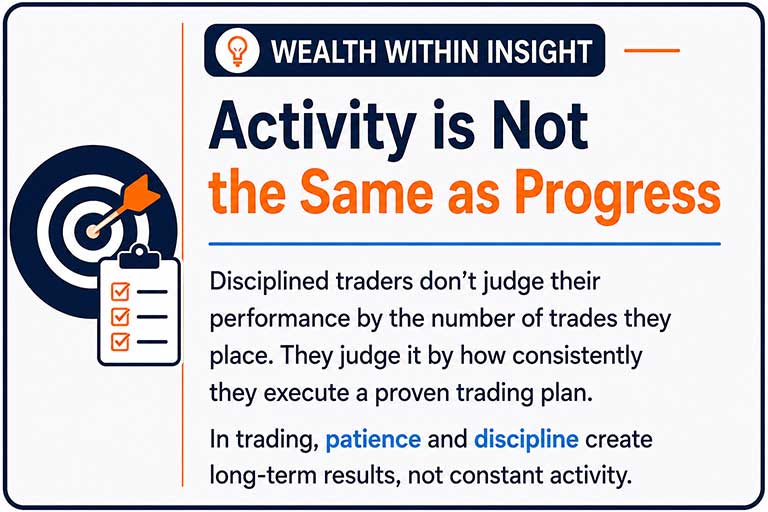
Overtrading isn't determined by the number of positions you take in a day, week or month. A disciplined trader may execute significantly more trades than a beginner yet still be trading with purpose because every trade follows a proven plan.
The real question isn't "How many trades are you taking?" It's "Why are you taking them?"
If every trade is supported by a proven trading strategy, meets your predefined criteria and fits within your trading plan, then you're simply following your edge. However, if you're placing trades because you're bored, chasing losses or reacting emotionally to market movements, you're overtrading, even if you've only taken one unnecessary trade.
This distinction is critical because it shifts the focus away from arbitrary trading limits and onto what really matters, following a structured process.
Why Traders Overtrade
Overtrading rarely begins with the market. More often, it starts with our emotions and the way we respond to uncertainty.
Fear of Missing Out (FOMO)
One of the biggest drivers of overtrading is the fear that you'll miss the next big move. Watching a stock rally without you can create the urge to jump into the next opportunity, regardless of whether it meets your trading criteria.
Unfortunately, chasing opportunities usually leads to entering trades too late, increasing risk while reducing potential reward.
Boredom
Many traders believe they should always be doing something.
If they're sitting in front of the charts with no positions open, they begin questioning whether they're being productive. This often leads to taking marginal trades simply to justify the time they've spent analysing the market.
The reality is that disciplined trading isn't about constant action. It's about patiently waiting until the right opportunity appears.
Revenge Trading
Losing trades are part of every trader's journey.
The problem begins when a trader feels the need to immediately recover those losses. Instead of objectively analysing the next opportunity, emotions take over and decisions become reactive.
Revenge trading rarely ends well because it's driven by frustration rather than logic.
Pressure to Produce Income
Many traders eventually hope to generate an income from the market. While this is a worthwhile goal, it can also create unnecessary pressure.
When you feel you have to make money today, you're far more likely to force trades that don't meet your rules.
The market doesn't reward activity. It rewards discipline.
The Industry Encourages More Trading
Another factor many traders overlook is the way the trading industry is designed.
Many platforms promote constant activity through competitions, leaderboards, challenges and notifications designed to keep traders engaged. While these features may appear harmless, they encourage more trading rather than better trading.
Disciplined traders understand that profitability comes from making quality decisions consistently, not from placing more trades.
The Biggest Myth About Overtrading
One of the most common misconceptions is that disciplined traders simply trade less.
That's not necessarily true.
Imagine a casino. A casino has a mathematical edge built into every game. Because of that edge, it wants as many people as possible walking through the doors. More participants simply mean more opportunities for the probabilities to work in its favour.
Trading is no different.
If your trading strategy genuinely has a positive expectancy, meaning it produces profits over a large sample of trades, then more high-quality opportunities can actually improve your long-term returns.
The key phrase is high-quality opportunities.
Trading more isn't the problem. Trading without an edge is.
This is why setting arbitrary rules such as "I'll stop after three losing trades" doesn't always make sense. If your strategy has been thoroughly tested and your next setup meets every criterion in your trading plan, why would you ignore it simply because you've already experienced a few losses?
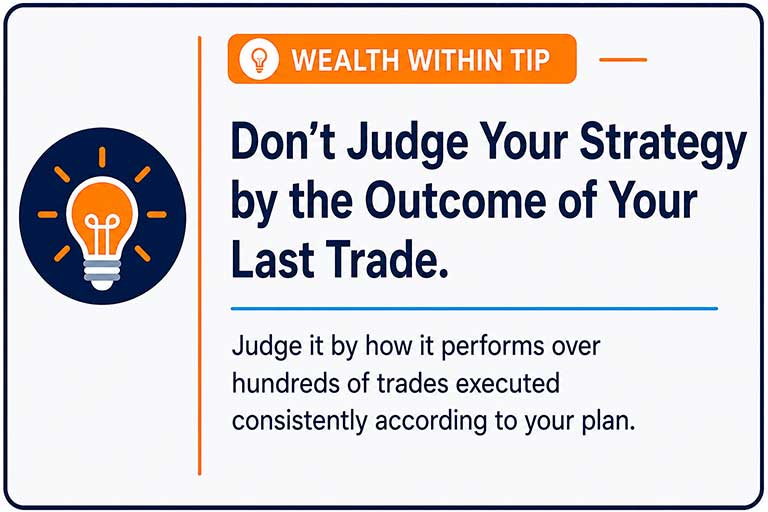
Individual trades are random. Long-term results come from consistently applying an edge across many trades.
Are You Trading to Be Right or to Make Money?
This is one of the most important questions every trader should ask themselves.
Many traders unknowingly build strategies designed to maximise their winning percentage. At first glance, that sounds sensible. After all, who doesn't want to win more often?
The problem is that focusing solely on being right often leads traders to continually add more filters, indicators and rules in an attempt to eliminate losing trades. Eventually, the strategy becomes so restrictive that genuine opportunities disappear altogether.
Disciplined traders think differently. Rather than asking,
"How can I win more often?" they ask, "Does the potential reward justify the risk?"
This subtle shift changes everything.
A trader who consistently looks for opportunities where the potential reward significantly outweighs the risk doesn't need to win every trade to become highly profitable.
Instead of trying to avoid every losing trade, they're focused on ensuring their risk and reward remain in balance so their winning trades more than compensate for inevitable losses.
This is one of the biggest mindset shifts that separates disciplined traders from everyone else.
7 Practical Ways to Stop Overtrading
If you recognise some of the warning signs discussed above, don't worry. Every disciplined trader has experienced them at some point.
The key is developing habits that remove emotion from your decision-making process.
1. Create a Written Trading Plan
Your trading plan should clearly define exactly when you'll enter a trade, when you'll exit and how you'll manage risk.
If a setup doesn't meet every requirement, don't trade. Simple.
2. Define Your Trading Edge
Many traders talk about having an edge without ever proving it exists.
A genuine edge is based on testing, not hope.
Before risking capital, ensure your strategy has demonstrated consistent positive expectancy over a meaningful sample of trades.
3. Accept That Cash Is a Position
One of the hardest lessons for traders is understanding that you don't always need to be invested.
Holding cash while waiting for higher-quality opportunities isn't inactivity. It's discipline.
Sometimes the best trade is no trade at all.
4. Stop Chasing Every Opportunity
Markets will always create new opportunities.
Missing one trade doesn't matter.
Forcing poor trades because you're afraid of missing out does.
Disciplined traders understand that another opportunity is always around the corner.
5. Review Your Trades Objectively
When results decline, resist the temptation to immediately change your strategy.
Instead, ask yourself:
- Did I follow my trading plan?
- Was the market suitable for my strategy?
- Have market conditions changed?
- Was my execution correct?
Often the problem isn't your strategy. It's how consistently you're applying it.
6. Continue Expanding Your Knowledge
Markets constantly evolve.
The more you understand topics such as market cycles, risk management, trading psychology, sector rotation, correlation and macroeconomic influences, the easier it becomes to recognise when your strategy is likely to perform well and when it isn't.
Knowledge builds confidence.
Confidence reduces emotional decision-making.
7. Focus on Discipline Before Psychology
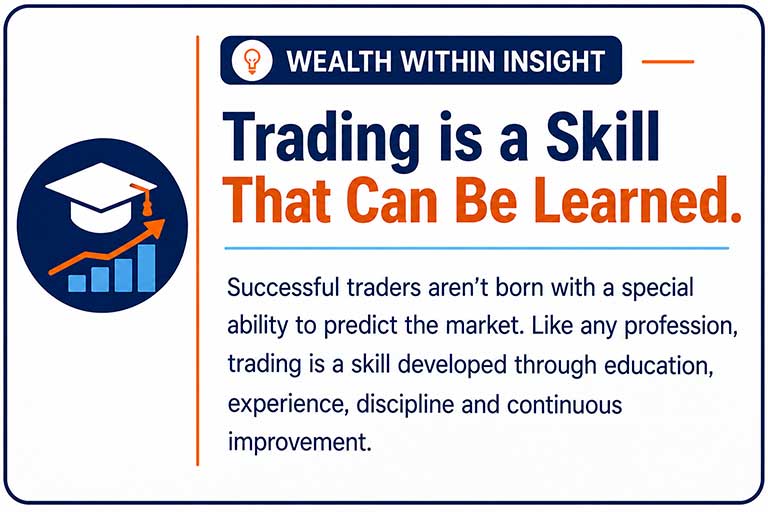
Many traders believe they need to improve their psychology first. In reality, psychology often improves naturally once discipline becomes a habit.
Following your trading plan consistently removes uncertainty and builds trust in your process.
Discipline isn't just part of trading. It forms the foundation of long-term success.
Final Thoughts
Overtrading isn't about taking too many trades.
It's about taking trades for the wrong reasons.
When decisions are driven by boredom, fear, frustration or excitement rather than a proven strategy, your trading becomes emotional instead of disciplined.
The most disciplined traders aren't constantly searching for more opportunities. They patiently wait for the right opportunities, then execute their plan with confidence and consistency.
Developing this level of discipline doesn't happen overnight. It comes from building the right skills, understanding market behaviour and applying a structured process every time you trade. If you're looking to build that foundation, our guide on How to Become a Successful Stock Trader is an excellent place to start.
Remember, the market doesn't reward activity. It rewards discipline.
The sooner you stop measuring success by how often you trade and start measuring it by how consistently you follow your trading plan, the sooner you'll put yourself in a position to achieve better trading results over the long term.
Continue Learning How to Stop Overtrading
Learning about stock trading is only the first step towards building the knowledge, skills and discipline needed to trade with confidence. To consistently grow and protect your wealth, continue developing your knowledge of share market analysis, technical analysis, fundamental analysis, risk management and investment strategies. Wealth Within offers a range of free and premium resources to help you build your knowledge and invest with confidence.
Building your knowledge also means understanding the practical steps involved in buying shares. If you're ready to place your first trade, read our How to Buy ASX Shares: A Step-by-Step Guide, which explains how to choose a broker, open an account and buy your first ASX-listed shares.
Investment Books
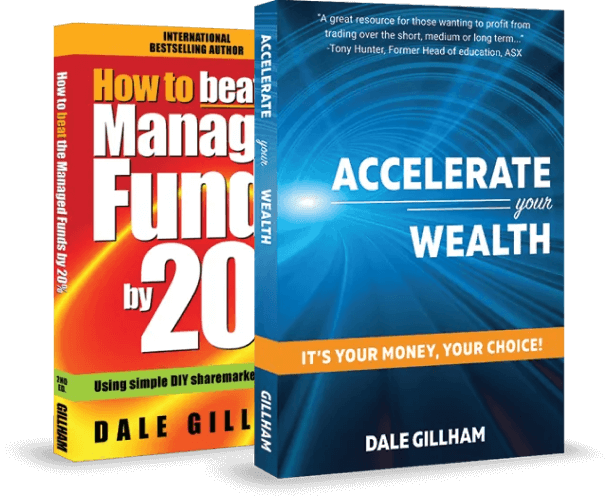
Dale Gillham is one of Australia's leading investment educators and the bestselling author of How to Beat the Managed Funds by 20% and the award-winning Accelerate Your Wealth: It's Your Money, Your Choice. His books provide practical, easy-to-follow strategies to help you understand the share market, avoid common investing mistakes and build long-term wealth.
Learning Centre
Wealth Within's Learning Centre features hundreds of free articles, videos and educational guides covering share trading, investing, technical analysis, fundamental analysis, risk management and wealth creation. Whether you're looking to master the basics or deepen your investing knowledge, it's an excellent resource to support your ongoing learning.
Australian Stock Market Show
The Australian Stock Market Show is Wealth Within's weekly YouTube program where our analysts review the latest market trends, analyse leading ASX shares and answer viewers' questions. It's a practical way to stay informed about the market while learning how experienced traders and investors identify opportunities.
Hot Stock Tips
Looking for new investment opportunities? Hot Stock Tips is Wealth Within's weekly video series where our analysts examine ASX stocks using technical analysis to identify potential opportunities. It's a great way to learn how experienced traders analyse shares while discovering companies worth adding to your watchlist.
Talking Wealth Podcast
Hosted by Wealth Within's experienced analysts, the Talking Wealth Podcast delivers weekly insights into the Australian share market, investing strategies, market trends and wealth creation. Whether you're just getting started or looking to expand your investing knowledge, each episode provides practical ideas to help you become a more informed investor.
Government-Accredited Diploma of Share Trading and Investment
If you're serious about becoming a consistently profitable trader or investor, Wealth Within's government-accredited Diploma of Share Trading and Investment provides a structured pathway to mastering the share market. You'll learn how to identify high-quality investment opportunities, analyse markets using technical and fundamental analysis, manage risk and develop a proven trading and investment strategy. Designed for beginners through to experienced investors, the Diploma equips you with the practical skills, confidence and discipline to succeed in all market conditions.